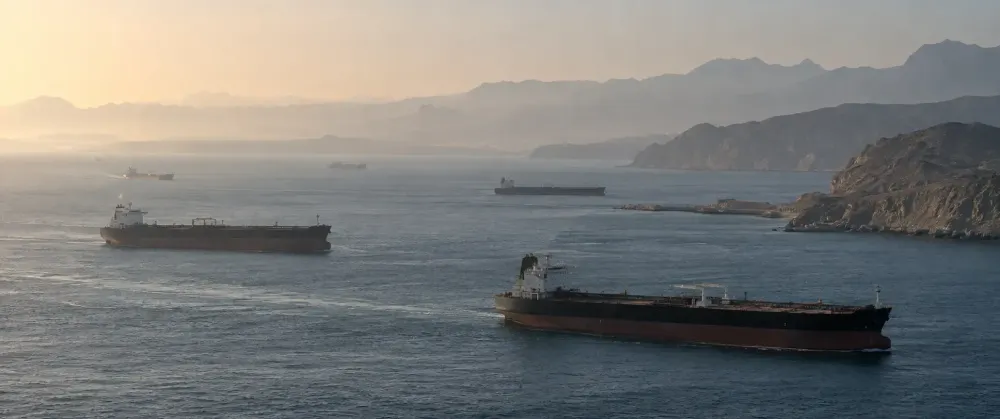
U.S. and Iranian officials held separate talks with mediators Monday, reopening a diplomatic channel after seven months of war and the collapse of two earlier ceasefires. The renewed effort centers on a revised Iranian proposal that would restore maritime traffic through the Strait of Hormuz in exchange for economic relief and a broader halt to hostilities, according to parallel accounts from Reuters and the Associated Press.
The talks are indirect, and officials have not announced an agreed text, timetable or enforcement mechanism. That distinction matters: both sides are signaling interest in a negotiated exit, but their public positions still diverge over sanctions, frozen Iranian assets, the U.S. blockade of Iranian ports, nuclear restrictions and whether a ceasefire must also cover fighting involving Iran-aligned forces elsewhere in the region.
A seven-day proposal with larger conditions
Iran’s plan, presented around last week’s United Nations General Assembly, would begin a sequence intended to reopen the strait within seven days. Reporting on the proposal indicates that Tehran is seeking an end to U.S. attacks, relief from oil sanctions, access to frozen funds and the lifting of restrictions on Iranian ports. Iran has also tied the arrangement to a cessation of hostilities in Lebanon, expanding the prospective bargain beyond a bilateral U.S.-Iran ceasefire.
Washington has not accepted those terms. President Donald Trump said he rejected the initial proposal but expected further negotiations, while later confirming that U.S. officials had spoken with mediators. American officials have emphasized nuclear concessions and renewed inspection access as necessary parts of any durable agreement. The gap is therefore not simply over whether shipping resumes; it concerns the order in which military de-escalation, economic relief, maritime access and nuclear steps would occur.
That sequencing problem helped undermine earlier agreements. Ceasefires reached through mediation in April and June unraveled rapidly, leaving each government distrustful of promises that are not matched by verifiable action. Any new accord would need clearer triggers for implementation and consequences for violations, especially if it tries to settle several theaters of conflict at once.
Hormuz makes the dispute a global economic risk
The Strait of Hormuz is the central source of international pressure because it is not merely a regional shipping lane. Before the war, roughly 20 million barrels a day of crude oil and petroleum products moved through the waterway, according to the International Energy Agency. Few alternative pipelines can absorb a disruption of that scale, making restrictions in the strait capable of tightening fuel supplies far beyond the Middle East.
The early economic shock was severe. The U.S. Energy Information Administration estimated that Gulf producers collectively shut in 7.5 million barrels a day of crude production in March and projected the loss would rise to 9.1 million barrels a day in April as limited shipping caused storage to fill. The agency’s assessment covered production in Iraq, Saudi Arabia, Kuwait, the United Arab Emirates, Qatar and Bahrain, showing how the conflict constrained exporters that were not direct combatants.
Some flows later recovered, but the system remains fragile. The IEA calculated that cumulative Middle Eastern supply losses had exceeded 1.3 billion barrels by late June, with Hormuz flows averaging only 2.7 million barrels a day during March through May. Its analysis described the episode as the largest supply disruption in oil-market history, even as producers outside the Gulf increased output and traders rerouted cargoes.
Markets see diplomacy, but not yet a settlement
Oil prices reflect both the potential value of an agreement and the likelihood that negotiations could fail. Early Tuesday, Brent crude rose 1.4% to $106.77 a barrel and U.S. West Texas Intermediate gained 1.5% to $93.94, according to market data. Major Middle Eastern exporters shipped about 12.8 million barrels a day in September, their highest total since the conflict began, but costly workarounds and uncertainty around Hormuz kept a substantial risk premium in prices.
Higher oil and refined-fuel costs transmit the conflict into transportation, manufacturing and household expenses. They also complicate central-bank decisions by raising inflation even when economic growth is slowing. A credible maritime agreement could therefore deliver benefits well outside the region, but a temporary opening without security guarantees could reverse quickly and leave buyers reluctant to commit ships and insurance capacity.
What would make the diplomacy credible
The first test is whether mediators can produce a written sequence that both governments acknowledge. Essential details include when attacks stop, when commercial passage becomes reliably available, how mines or other hazards are addressed, what sanctions relief takes effect, and what nuclear monitoring Iran permits. Without agreed verification, each step could become a new point of dispute rather than a bridge to the next one.
The second test is whether the agreement can contain regional linkages without becoming too broad to implement. Iran’s attempt to include Lebanon may be designed to secure a wider reduction in fighting, but it also adds actors whose decisions Tehran and Washington do not fully control. The United Nations has repeatedly urged the two governments to return to diplomacy; in July, Secretary-General António Guterres called for renewed negotiations in an official statement after renewed military action.
Monday’s contacts establish that diplomacy is active, not that peace is near. The evidence of progress will be an agreed text, observable reductions in attacks, sustained commercial transit and enforceable nuclear provisions. Until those elements appear together, the talks are best understood as a consequential opening in a conflict that still carries immediate military and global economic risks.