
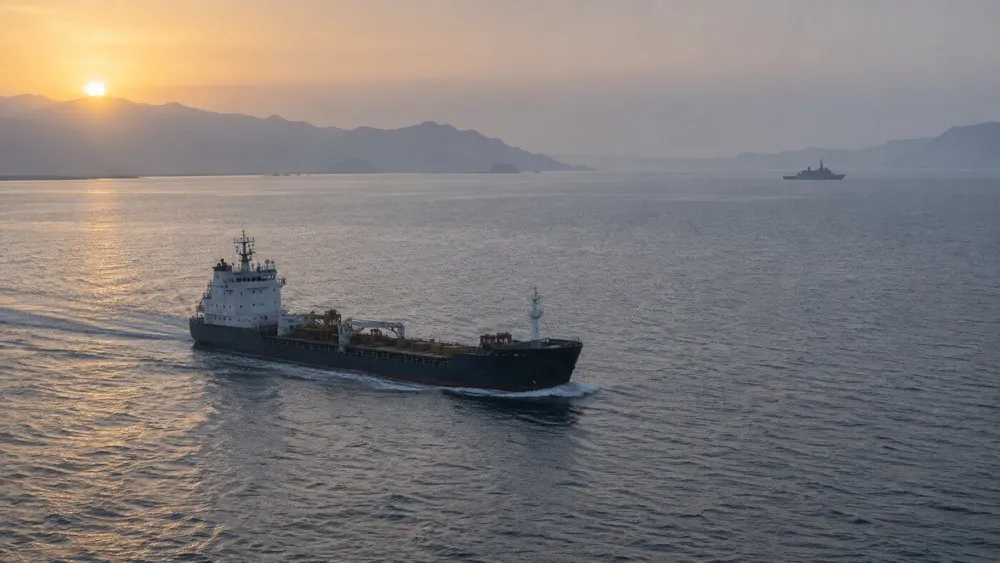
Eight U.S. Marines were wounded when an Iranian anti-ship cruise missile struck a nonmilitary vessel in the Strait of Hormuz on Sept. 14, according to separate reports from NBC News and The Post, bringing a previously unexplained addition to the Pentagon’s casualty ledger into focus.
The two organizations cited U.S. officials who were not authorized to speak publicly. They said the Marines suffered injuries including smoke inhalation and possible head trauma. The injuries were characterized as minor. Neither outlet identified the vessel. Officials described it only as a maritime or nonmilitary ship and said it was not a U.S. Navy vessel.
The Pentagon did not announce the strike when it occurred. The Washington Post reported that Defense Department spokespeople did not respond to its request for comment, while U.S. Central Command declined to comment and the Marine Corps referred questions to CENTCOM. That silence leaves major operational questions unanswered, including the vessel’s owner, flag, mission and precise location when it was hit.
What the casualty record shows
The attack emerged after the Pentagon’s casualty database added September injuries without explaining the underlying incidents. Task reporting and Military Times said the September update listed nine Marines and 29 sailors as wounded in action. NBC connected eight of those Marine injuries to the Sept. 14 missile strike; the public database itself does not identify the vessel or describe how any of the 38 service members were hurt.
The distinction matters because the database confirms that new casualties were entered, but it does not independently establish every detail supplied by unnamed officials. The vessel’s identity and the Marines’ exact assignment remain unconfirmed in the public record. What is corroborated is the core sequence: eight Marines were aboard a non-Navy vessel attacked by Iran, they were injured, and their wounds appeared later in the Pentagon’s accounting.
A widening maritime exposure
The incident materially changes the public picture of risk in the Strait. Earlier this month, CENTCOM said Iranian forces twice tried to hit a U.S. Navy warship with ballistic missiles before American forces destroyed five Iranian crude carriers on Sept. 8. Reuters reported the same exchange from CENTCOM’s statement. Those attempted attacks caused no American injuries, according to the command.
The Sept. 14 strike shows that U.S. personnel also faced danger aboard a vessel outside the Navy’s publicly identified fleet. It does not, on the available evidence, establish that Marines are routinely placed on commercial ships or that the vessel was escorting civilian traffic. Those possibilities should not be inferred from the limited facts officials have supplied.
The delayed disclosure also extends questions raised by earlier reporting about fragmented casualty categories and lagging public updates. Administrative delay can reflect medical evaluation and classification rather than concealment, but this case involved not only late injury entries but an enemy strike the government still has not described publicly.
What happens next
Congress can seek a classified or public accounting of why Marines were aboard the vessel, what defensive measures were available and whether the mission has changed. The Pentagon also faces a narrower transparency test: explaining the remaining September casualties and reconciling its database with operational statements in a way that does not expose sensitive tactics.
Until officials provide that record, the most consequential verified fact is limited but clear: an Iranian missile hit a nonmilitary vessel carrying U.S. Marines in the Strait of Hormuz, eight were wounded, and the public learned the circumstances roughly two weeks later through news organizations rather than a Defense Department announcement.