U.S. and Iranian officials spoke separately with mediators Monday in a renewed effort to end seven months of war and restore regular passage through the Strait of Hormuz, one of the world’s most important energy corridors. Reuters reported that the discussions center on an amended version of a seven-day Iranian proposal linking a ceasefire and economic relief to reopening the strait and resuming talks over Iran’s nuclear program.
The contacts do not constitute a ceasefire, a direct U.S.-Iran negotiation or an accepted framework. President Donald Trump said over the weekend that he had rejected Iran’s proposal, while Iranian Foreign Minister Abbas Araqchi said mediators had not formally conveyed a final U.S. answer. Both governments nevertheless confirmed Monday that they had communicated with intermediaries, making the diplomacy a material shift from public rejection toward testing whether the package can be narrowed.
The stakes extend well beyond the two countries. The conflict has restricted oil and liquefied natural gas movements, lifted energy costs and increased risks to commercial shipping. An AP account said the mediation involves several regional actors and that the unresolved questions include sanctions relief, nuclear inspections and the terms for reopening maritime traffic.
A proposal joins several disputes
Iran’s plan, as described by officials and people briefed on it, would seek an end to hostilities in Iran and Lebanon, the release of frozen Iranian assets, relief from oil sanctions and the lifting of the U.S. blockade on Iranian ports. Iran would then reopen the Strait of Hormuz and return to nuclear negotiations. That sequencing is central: Tehran wants economic and military concessions before normal traffic resumes, while Washington is seeking verifiable nuclear steps and more dependable maritime access.
The arrangement therefore combines three negotiations that could each fail independently. A ceasefire must hold across multiple theaters; sanctions and frozen assets require specific legal and financial action; and nuclear diplomacy requires a monitoring mechanism credible to governments that no longer accept assurances alone. Earlier mediated ceasefires in April and June collapsed, so the latest contacts demonstrate diplomatic activity, not durable progress.
The parties also appear to differ over what happens first. Iran has presented the strait as leverage for obtaining relief, while the United States treats free navigation and limits on Iran’s nuclear activity as conditions for broader relief. Mediators can reduce the gap by staging commitments in short, reciprocal steps, but that approach depends on verification and rapid communication when either side alleges a breach.
Hormuz gives the talks global weight
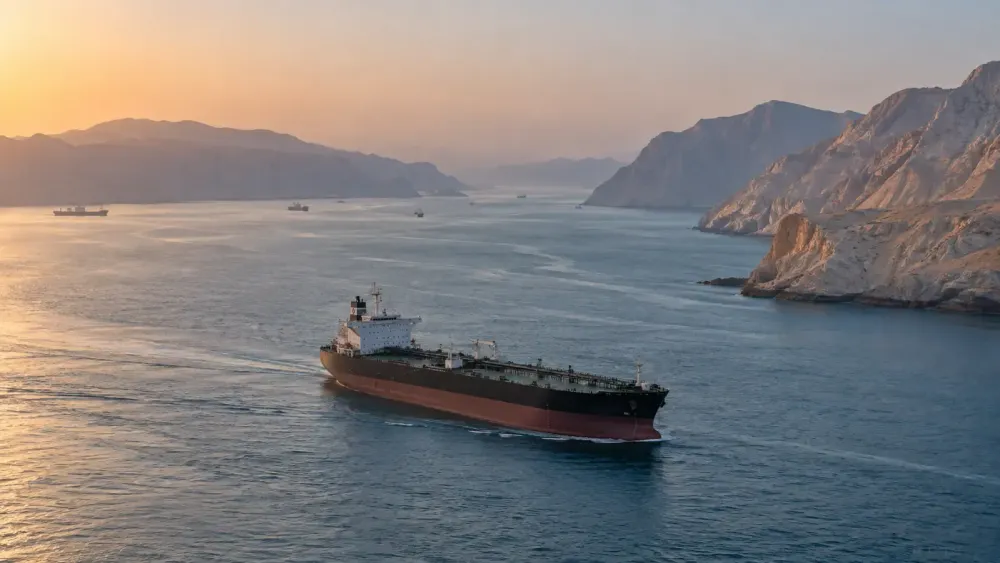
The strait’s economic importance explains why even preliminary contacts moved markets. Before the war, roughly one-fifth of global crude oil and LNG supplies passed through Hormuz. Updated EIA figures show total oil flows through the strait falling from 21.6 million barrels a day in the fourth quarter of 2025 to 4.9 million in the second quarter of 2026. LNG flows fell from 10.5 billion cubic feet a day to 0.8 billion over the same periods.
Those figures measure a severe disruption, but they do not mean traffic has stopped completely. Vessel-tracking market data show several Qatar-linked LNG carriers transiting or reappearing outside the strait in September after visible movements largely disappeared in August. Some ships may have traveled with tracking transponders switched off, which means observed traffic is incomplete and should not be treated as a precise total.
Brent crude settled at $105.28 a barrel Monday after rising more sharply earlier in the session, while West Texas Intermediate closed at $92.60. The price reaction captured competing signals: continued supply danger after Trump rejected the initial proposal, balanced against the possibility that mediation might produce a narrower agreement. A reopening would reduce a major risk premium, but prices would still depend on the pace of traffic, insurance costs, damaged infrastructure and confidence that any truce will last.
Nuclear verification is the hardest test
The nuclear component cannot be separated from the war’s damage and the collapse of monitoring access. In a September joint statement, France, Germany, the United Kingdom and the United States said the International Atomic Energy Agency had received no information during the reporting period about the status of Iran’s declared nuclear facilities and material. They said inspectors had lacked access to declared facilities since June and that the agency could not verify the absence of diversion.
That statement reflects the four governments’ position, but its underlying problem is concrete: a negotiated promise to resume talks is not the same as restored inspections. Any agreement would need to define where inspectors may go, how quickly access begins, what records Iran must provide and how nuclear material at damaged sites will be accounted for. Iran, for its part, has argued that military attacks and safety concerns affect access and that sanctions relief must accompany a wider settlement.
This makes verification both a technical and political issue. Inspectors can document material and facilities only if security conditions permit access and governments accept the process. Mediators may be able to connect limited sanctions relief to discrete inspection milestones, but neither side has publicly accepted such a sequence.
Diplomacy has reopened, not succeeded
Monday’s separate contacts matter because they preserve a channel when the military and economic costs are still rising. They also reveal how far the parties remain from an agreement. There is no announced common text, no confirmed timetable for direct talks and no evidence that disputes over sequencing, Lebanon, sanctions, frozen assets or enriched uranium have been resolved.
The next meaningful indicators will be operational rather than rhetorical: whether mediators transmit a revised written proposal, whether shipping flows expand without new attacks, whether the United States specifies reversible economic steps and whether Iran permits the IAEA to restore meaningful access. Until those events occur, the talks should be understood as a potentially consequential opening, not a settlement.