
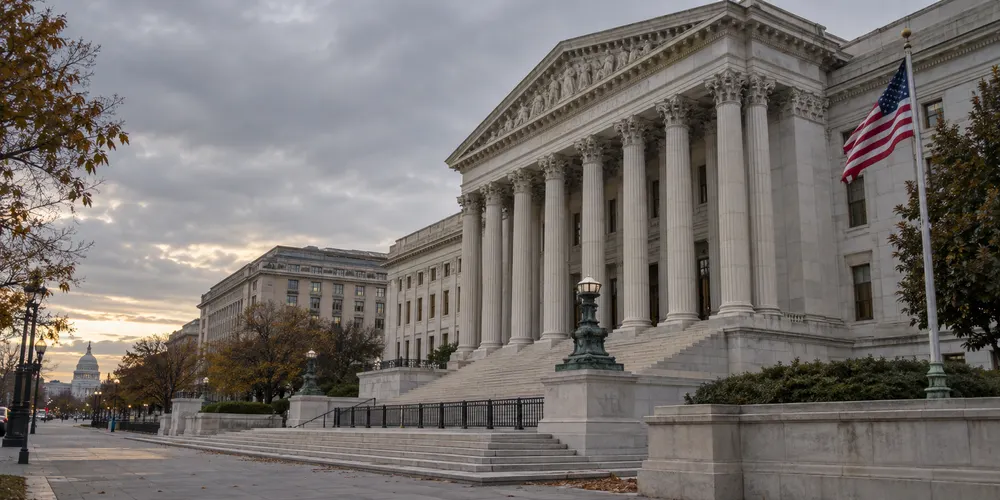
A federal judge on September 28 struck down election-related conditions that would have allowed the Federal Emergency Management Agency to withhold 20% of certain counterterrorism grants from states and local governments. The 24-page ruling leaves the broader Homeland Security Grant Program in place while removing requirements on ballots, audits and citizenship checks that the court said Congress had not authorized FEMA to impose.
U.S. District Judge Amir H. Ali in Washington granted partial summary judgment to counties and cities in Texas, Tennessee and Ohio. His decision vacated the conditions in FEMA’s fiscal 2026 funding notice and an August guidance memo. It did not award damages or resolve whether the proposed election practices are sound policy. The ruling arrived before FEMA expected to issue the year’s awards by September 30, according to the court record.
The dispute matters beyond the plaintiffs: the grant programs direct roughly $1 billion to $2 billion annually toward state and local preparation for terrorism. The contested holdback alone could have affected more than $200 million in 2026 funding, the opinion said. It also tests how far an agency can use a program created for one purpose to press for changes in another area of government.
What FEMA required
FEMA’s June funding notice linked full grants to five election-administration steps. Recipients would have had to submit plans to move away from voting systems that use barcodes or QR codes for counting, show a post-election manual audit covering 5% of ballots, reconcile voters and ballots, and use federal citizenship-verification systems for voter rolls and election workers. The agency proposed holding back one-fifth of grant money until recipients proved compliance, according to the opinion.
The Department of Homeland Security presented the measures as a way to protect elections from foreign interference and cyberattacks. As Reuters reported, Homeland Security Secretary Markwayne Mullin defended the conditions on those grounds when they were announced. In court, federal lawyers argued that FEMA has discretion to address evolving threats to election infrastructure. That argument did not persuade the judge that these particular administrative mandates were tied to the statutory counterterrorism mission.
Why the judge rejected the conditions
Congress created the Homeland Security Grant Program to help states and high-risk urban areas prevent, prepare for, protect against and respond to terrorism. A CRS summary summary identifies the State Homeland Security Grant Program and Urban Area Security Initiative as funding streams for those purposes. Ali concluded that the law permits FEMA to prioritize and fund eligible projects proposed by recipients, but does not authorize it to make local governments pay for unrelated changes before they can receive full counterterrorism grants.
The distinction was concrete for the plaintiffs. The court cited a Dallas County estimate of $7.25 million for printing equipment needed to meet the ballot requirement, along with declarations describing staffing and equipment costs in other jurisdictions. FEMA’s 20% holdback would have applied while recipients made those changes. The judge found no statutory language granting the agency power to use that funding leverage for routine election administration.
Ali also drew a line between protecting election infrastructure and regulating election procedures. The statute can support grants for physical security or cyber defenses at election facilities, he wrote. The notice separately required recipients to spend at least 3% of certain awards on eligible physical or cyber election-security investments. That provision was not challenged and survives. The court found that requirements governing voter eligibility checks, ballot form and manual audits had not been shown to address terrorist acts in the same way.
What remains in place
The remedy was targeted. The court vacated the five election-administration conditions, the accompanying 20% holdback and FEMA’s implementing memo, while expressly preserving the rest of the funding notice. It declined to issue a permanent injunction because setting aside the conditions was enough to address the plaintiffs’ injury. The judge dismissed other claims without prejudice after resolving the statutory question, so the decision should not be described as a final constitutional ruling on federal control of elections.
In a statement, Harris County Attorney Abbie Kamin said the ruling protected public-safety funding and local election authority. The county was among the local governments challenging the policy. The statement reflects a litigant’s view of the stakes; the court’s narrower holding rested on the authority Congress gave FEMA under the grant statute.
The Associated Press reported that Homeland Security and FEMA had not immediately responded to requests for comment. The Justice Department had not immediately said whether it would appeal, according to Reuters. An appeal or a revised funding notice could change the practical path of the dispute, but neither was established when the decision was issued.
The immediate test
The timing gives the ruling operational weight. FEMA told the court it expected to make fiscal 2026 awards by September 30; as of the decision, it had not issued them. Removing the disputed conditions before awards are made means jurisdictions can evaluate the counterterrorism grants without first committing to the five election changes. States still administer their own election rules, and the decision does not prohibit them from adopting any of those practices independently.
For local officials, the next evidence will be in the actual award documents and any federal appeal. The opinion settles the legality of this version of FEMA’s conditions at the district-court level. It does not determine whether particular voting systems, audits or citizenship checks improve election security, nor whether Congress could enact separate requirements through legislation. That distinction is central to the case: the judge evaluated the agency’s authority to attach conditions to these grants, rather than the merits of election policy itself.