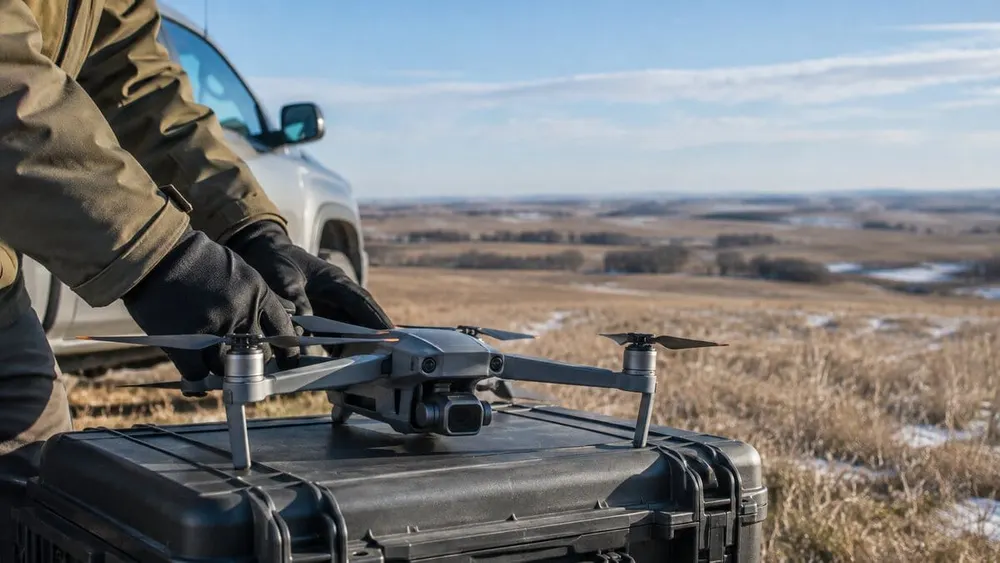
North Dakota is preparing to buy replacement drones and sensors for state agencies after completing technical and cost evaluations in a $9 million fleet-modernization program.
The state announced Sept. 15 that vendor selections, aircraft platforms and pricing are being finalized. Participating agencies have reviewed recommended aircraft and sensor packages based on their field missions, and the program is now assigning equipment before purchase orders are issued.
The Drone Replacement Program is intended to move state government and North Dakota University System users away from aircraft that do not meet newer federal security and procurement standards. It was authorized by Senate Bill 2018, the Commerce Department budget law signed in May 2025, and is administered by the Northern Plains UAS Test Site for the Department of Commerce.
The program’s detailed guidance says the Legislature appropriated $9 million for compliant aircraft, essential equipment and initial operator training. Eligible platforms must belong to a state agency or university entity, have been purchased before Jan. 1, 2025, and fail standards tied to the National Defense Authorization Act or American Security Drone Act. Participation is voluntary, and local governments are not eligible in this phase.
The program is mission-based rather than a one-for-one swap. Agencies may receive fewer aircraft if new systems can do more, while essential sensors, batteries and charging equipment can be included. Ongoing subscriptions, maintenance, upgrades and later replacements will remain the receiving agency’s responsibility.
That distinction matters because North Dakota agencies use small uncrewed aircraft for varied work, from infrastructure inspection and environmental monitoring to emergency response and university research. The state has not yet identified the winning vendors, final models, unit totals or agency-by-agency allocations. Those details are expected after selections and pricing are complete.
Program rules also require participating agencies to relinquish eligible legacy systems. Older aircraft may be decommissioned, sold where lawful or disposed of under state and federal rules, with sale proceeds returning to the state. Agencies that keep noncompliant drones may continue using them for activities not supported by federal funds, but the guidance warns that parts, software updates and repair options could become more limited.
The modernization effort is also designed to connect agencies with Vantis, North Dakota’s statewide network for flights beyond an operator’s direct line of sight. The Northern Plains UAS Test Site says training may include Vantis onboarding, allowing agencies to consider longer-distance missions under applicable federal approvals rather than merely replacing familiar hardware.
For taxpayers and participating departments, the next meaningful checkpoint is the procurement award. Final notices should show which vendors were selected, what capabilities the state bought and whether the package stays within the legislative appropriation. Until those awards are released, the state’s announcement marks the end of evaluation—not the delivery of aircraft.