
With the Nov. 3 midterm election about six weeks away, California Gov. Gavin Newsom signed a package of election laws that expands protections for ballots and digital records, creates a broader state test for voter suppression and adds language-access duties for local election offices. The measures take effect on different timetables, but the most immediate provision applies to this fall’s election.
The package is both an election-administration overhaul and a political response to growing conflict between Democratic-led states and President Donald Trump’s administration over mail voting, voter data and federal authority. Newsom presented the laws as protection against interference, while the legal effect is narrower: the statutes regulate California agencies and political subdivisions, create state causes of action and strengthen custody rules, without eliminating valid federal powers or resolving every dispute over them.
Ballot custody rules tighten immediately
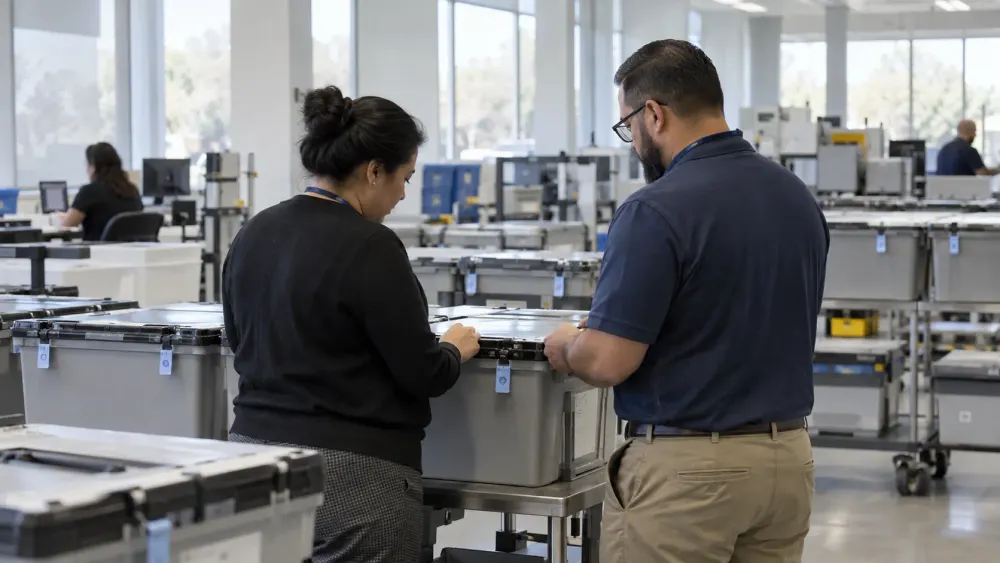
Senate Bill 1418, the measure with the clearest near-term effect, took force immediately under an urgency clause. Its enrolled bill text broadens protected election materials beyond paper ballots to include voting technology, source code and electronic data. It also specifies that hard drives, solid-state drives, flash drives, memory cards and similar media containing election data must be stored in sealed containers.
For federal contests, California officials must preserve the listed electronic data for 22 months; for state and local elections outside that category, the period is six months. Taking protected material from an election official’s custody can now expose a person to civil penalties of as much as $50,000 per act and criminal punishment that may include imprisonment. The law includes an exception for access authorized elsewhere in state law and says it must be construed consistently with the U.S. and California constitutions.
A seizure became the legislative catalyst
The immediate change follows Riverside County Sheriff Chad Bianco’s seizure of more than 650,000 ballots from a 2025 redistricting election. The Chronicle reported that SB 1418 was drafted after that episode and builds on a law signed in May that restricted law-enforcement access to ballots, voter rolls and voting systems without a court order or an agreement with local election officials.
The new law is designed to close a practical gap exposed by that case: election records increasingly reside on equipment and removable media, while older custody language focused more heavily on ballot packages and paper records. Its urgency provision explicitly says immediate operation is necessary for the Nov. 3 gubernatorial election. That makes the statute a live operational rule rather than a framework deferred to a later election cycle.
State voting-rights test grows broader
Newsom also signed Senate Bill 1164, a substantial revision of California’s 2001 Voting Rights Act. The enrolled voting overhaul bars a state agency or political subdivision from adopting a policy that causes, or is likely to cause, voter suppression. A violation can be established through a material disparity in participation or access for a protected racial, color or language-minority group, or through a broader showing that equal political participation has been impaired.
The law gives the attorney general and affected voters standing to sue, while requiring notice to a local government before most cases proceed. Governments can defend a challenged practice only by clear and convincing evidence that it significantly advances a compelling, specific interest and that no reasonable, less-disparate alternative exists. The statute also establishes a state preclearance process for certain jurisdictions that admitted liability or were found to have violated voting-rights protections during the preceding decade.
Language access expands on a slower clock
Senate Bill 1360 extends translation requirements beyond the existing state threshold and directs officials to identify counties where at least 10,000 voting-age citizens, or 5% of that population, share a language and have limited English proficiency. The language bill covers official and sample ballots, registration forms, notices and instructions, and requires enough bilingual workers to assist voters. Some provisions begin in 2027, while the statewide identification schedule begins by Dec. 15, 2031.
That delayed timetable matters because the package does not instantly produce every promised service. Local election offices will need demographic determinations, translated materials, staffing and, potentially, state reimbursement for mandated costs. The Legislature cited more than 3 million eligible Californians who identify as having limited English proficiency, but the statute’s practical reach will depend on where thresholds are met and how quickly state and county officials build capacity.
California joins a national election standoff
The state action arrives as election officials across the country prepare for possible federal demands, misinformation and physical threats. A Reuters review based on interviews with more than 50 officials found jurisdictions hiring lawyers, running response drills and strengthening security. The White House has said its election initiatives are meant to enforce the law and protect confidence in voting, rejecting claims that they amount to improper interference.
The immediate legal backdrop also shifted this week when the Supreme Court declined to let the administration impose new mail-ballot restrictions before the midterms. That decision preserves existing state procedures for now, but it did not settle the underlying litigation. California’s laws therefore add state-level defenses in an environment where the boundary between federal enforcement and state election control remains contested.
Implementation and litigation come next
The package’s most measurable short-term outcome will be procedural: election officials must preserve a broader set of records and maintain tighter custody over digital media before November. Its larger voting-rights provisions will be tested more slowly through agency guidance, local compliance decisions and lawsuits. Courts will decide how the new state standards interact with federal law and constitutional limits when specific disputes arise.
What changed is not California’s basic system of locally administered elections, but the legal perimeter around it. Newsom and legislative Democrats have given officials more tools to resist unauthorized access and voters more avenues to challenge discriminatory practices. Whether those tools prevent disruption or instead generate a new round of litigation will become clearer as ballots are distributed, processed and preserved under the new rules.