A federal judge has barred Montana officials from enforcing the state’s election-deepfake law against one political committee and its leader, finding they are likely to succeed on a First Amendment challenge. The Sept. 16 preliminary-injunction order protects Accountability in State Government and former Republican legislator Dan Bartel while their lawsuit proceeds; it does not suspend the law for everyone.
The immediate effect is narrow but consequential during Montana’s general-election campaign. Attorney General Austin Knudsen, Lewis and Clark County Attorney Kevin Downs and Commissioner of Political Practices Chris Gallus may not investigate or prosecute the plaintiffs under the challenged provisions. Other campaigns, committees and sponsors remain subject to the statute unless a court extends relief in a later ruling.
U.S. District Judge Susan Watters concluded that the plaintiffs were likely to show unconstitutional viewpoint discrimination because the law targets synthetic media intended to harm a candidate or political party while not imposing the same restriction on similarly deceptive media that helps one. Reuters reported that the Montana attorney general’s office was disappointed and reviewing its next steps.
What the Montana law requires
Enacted in 2025 as Senate Bill 25, the law generally prohibits an election actor from paying for or sponsoring a deepfake of a candidate or political party within 60 days of voting unless the communication carries a prescribed disclosure. The Montana Code specifies that a printed disclosure must be bold and at least 12-point type; video disclosures must remain readable and occupy at least 4% of the picture height; and audio disclosures must run at least eight seconds.
The statute exempts satire or parody, certain bona fide news uses and qualifying distribution platforms. It also gives candidates and political parties a civil route to seek expedited injunctions, attorney fees and costs. Under the law’s civil-remedy section, a successful plaintiff may recover proven actual damages and as much as $10,000 in punitive damages.
Disputed mailers triggered the case
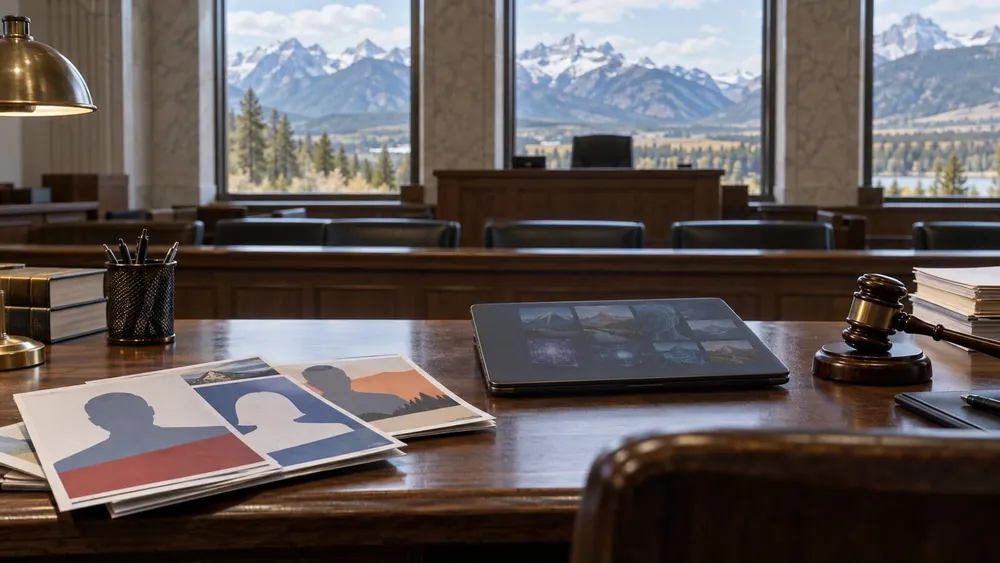
The litigation followed complaints about campaign mailers that combined authentic photographs with AI-generated imagery. One formal complaint filed with the commissioner alleged that the committee had created a deepfake of then-candidate Llew Jones. The commissioner later determined that the challenged mailers qualified for the law’s satire exception, but the committee argued that planned future communications still exposed it to investigation and prosecution.
A preliminary injunction is not a final judgment on the statute’s constitutionality. It reflects the court’s assessment that the plaintiffs showed likely success and other requirements for interim relief. The state can continue defending the law, seek appellate review or both. For Montana political advertisers, the practical dividing line is therefore the identity of the speaker: the named plaintiffs have protection for now, while others must still comply with the disclosure regime and its exceptions.