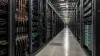

Tata Consultancy Services’ HyperVault subsidiary plans to invest as much as 700 billion rupees, or about $7.4 billion, with partners in a one-gigawatt artificial-intelligence data center campus in Hyderabad, a project whose planned capacity would approach half of India’s entire operational data center base in 2025. The company said Saturday that it had secured 264 acres for the campus in Telangana and would build it in phases for major AI developers, cloud providers and other large computing customers.
The announcement represents a large physical-infrastructure bet by India’s biggest technology-services company as AI investment shifts from software toward power-intensive computing. HyperVault says the site will support high-density graphics-processing-unit deployments for model training, inference and advanced computing, using liquid cooling and larger power blocks. Independent reporting confirms the investment ceiling and land acquisition, but TCS did not disclose a construction timetable, committed customers or financing by phase.
Those omissions matter because one gigawatt is an end-state plan, not installed capacity. HyperVault said each phase would depend on customer demand and changing technology requirements, and it described green energy and water-neutrality as design principles rather than verified outcomes. The plan leaves open how quickly the campus can obtain electricity, water, equipment and anchor tenants at the promised scale.
A Computing Campus Built Around Power Density
AI facilities concentrate far more computing in each rack than traditional data centers because thousands of specialized processors must communicate continuously while training models or serving inference requests. HyperVault chief executive Deepesh Kiran Nanda said the Hyderabad design anticipates higher density, liquid cooling, larger power blocks and faster deployment, requirements that increasingly determine whether a campus can host current accelerators without being constrained by heat or electrical distribution.
The one-gigawatt figure describes the campus’s intended computing scale, but TCS did not specify whether it refers strictly to information-technology load or a broader electrical connection. That distinction is material because cooling, power conversion and other site operations add demand beyond the processors themselves. The IEA expects renewables to supply about half of the growth in global data center electricity consumption through 2035, yet it also models a wide range of outcomes because efficiency improvements, grid bottlenecks and the pace of AI adoption could change demand substantially.
HyperVault is structured to spread the financing burden. TCS announced last November that investment firm TPG would provide as much as 88.2 billion rupees and could own between 27.5% and 49% of the subsidiary; TCS and TPG together initially committed up to 180 billion rupees through equity, with debt also planned. That financing was intended to support more than one gigawatt across India. The new 700-billion-rupee ceiling for Hyderabad is much larger, indicating that additional partners, borrowing and phased capital deployment will be essential if the campus reaches its announced size.
India’s AI Infrastructure Race Accelerates
India had about 2.2 gigawatts of operational data center capacity in 2025, according to Wood Mackenzie, which projects 12 gigawatts by 2030. The research group expects capacity dedicated to AI to rise from 275 megawatts to 6.55 gigawatts over the same period. On that baseline, a completed one-gigawatt HyperVault campus would equal roughly 45% of the country’s 2025 total and more than three times its 2025 AI-specific capacity, although the broader market will expand while HyperVault is built.
The contest is already drawing other domestic technology groups and infrastructure operators. Yotta Data Services is seeking as much as $1.5 billion in an initial public offering to fund GPUs, debt repayment and sovereign-cloud expansion. Reuters reported that Yotta says overseas customers now account for 75% to 80% of its business, showing how India is competing for both domestic workloads and globally mobile computing demand.
Public policy is reinforcing that demand. The government-backed IndiaAI program says it is assembling access to more than 18,000 GPUs through public-private partnerships, an effort aimed at reducing the cost barrier for startups, researchers and public institutions. Private campuses such as HyperVault serve a different customer mix and financing model, but both initiatives address the same bottleneck: AI capability increasingly depends on access to chips, electricity, cooling and network capacity, not software talent alone.
Hyderabad Offers Advantages and Resource Constraints
Hyderabad combines an established technology workforce with a state government that has actively promoted data centers. Telangana’s published policy calls for dual-grid networks, renewable-energy access and support for captive generation and backup infrastructure. Those provisions help explain TCS chief executive K. Krithivasan’s emphasis on the city’s scale, talent and ecosystem, but policy support cannot by itself deliver the new substations, transmission connections and round-the-clock generation that a one-gigawatt campus would require.
Power is likely to be the decisive constraint. Wood Mackenzie projects Indian data center electricity use rising from 10 terawatt-hours in 2025 to 191 terawatt-hours by 2040, or about 7% of national demand. It identifies firm, cost-competitive electricity at the local grid node as more important than land or capital in determining project schedules. HyperVault has promised to use green energy, but its release did not identify a renewable power-purchase agreement, storage capacity, backup-fuel plan or grid connection, making those items critical tests of execution rather than minor technical details.
Water carries a parallel challenge because dense AI systems reject large amounts of heat. A February assessment by the Council on Energy, Environment and Water estimated that Indian data centers used about 150 billion liters in 2024 and said both water use and electricity consumption could more than double by 2030. HyperVault’s water-neutral design pledge is potentially significant, but TCS has not yet explained whether neutrality will come from closed-loop cooling, recycled wastewater, replenishment projects, offsets or some combination.
The Investment Case Is Large but Conditional
For TCS, the campus extends a deliberate move beyond labor-intensive technology services into owned infrastructure. The company reported $30 billion in revenue for the year ended March 2026, while annualized AI-related revenue reached $2.6 billion in the latest quarter. Its results show AI revenue growing 13.6% sequentially even as overall quarterly revenue was flat in constant currency. HyperVault gives TCS a way to sell customers computing capacity alongside cloud engineering, systems integration and AI implementation.
The strategy could deepen customer relationships because the same provider would design AI systems, host their computing and operate surrounding services. It also changes TCS’s risk profile. Data centers demand large capital commitments before utilization is proven, and accelerator hardware can become outdated faster than buildings or cooling plants. Returns will depend on tenancy, financing costs, equipment procurement and the ability to keep expensive capacity occupied.
TCS’s language appropriately leaves room for those uncertainties. The 700-billion-rupee figure is an upper limit shared with partners, not a committed first-phase expenditure, and the company linked construction to demand. Likewise, the prediction of several thousand direct and indirect jobs is a company estimate without a published methodology. Construction can generate substantial temporary employment, but operating highly automated data centers typically requires a smaller permanent workforce, so the eventual economic effect will depend heavily on local power, cooling, networking and engineering supply chains.
Permits, Power Contracts and Customers Come Next
The first meaningful milestones will be less dramatic than the announced investment total. HyperVault will need site approvals, power interconnection agreements, credible round-the-clock energy procurement, a detailed cooling and water plan, financing for the initial phase and customers willing to reserve capacity. Disclosure of the first phase’s megawatts and commissioning date would allow investors and policymakers to distinguish near-term construction from the one-gigawatt aspiration.
Competition will also test whether Hyderabad can become a global AI hub rather than mainly a domestic data-storage market. India offers technical talent, expanding digital demand and public support, but leading accelerators, networking systems and advanced memory remain concentrated among a small number of foreign suppliers. Localizing the buildings does not eliminate exposure to global chip supply, export controls or currency costs, even though it gives customers more options to keep data and computing within India.
What TCS has established so far is consequential: HyperVault controls a large site and has announced a phased investment plan whose full scale would materially alter India’s AI infrastructure map. What remains unproven is equally important. The project becomes operating technology only as megawatts are connected, cooling systems perform, customers sign contracts and the company demonstrates that its green-energy and water-neutral commitments can withstand the physical demands of high-density AI computing.