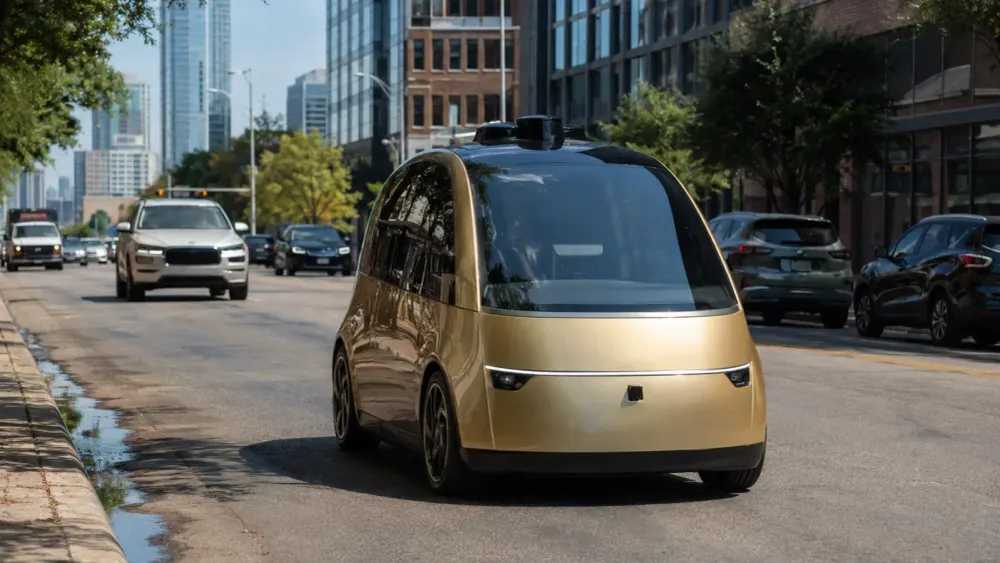
Tesla put 45 Cybercabs into its 420-vehicle autonomous fleet in Texas on Thursday, beginning passenger rides in limited parts of Austin with a two-seat vehicle that has no steering wheel or pedals. The launch moved the company’s purpose-built robotaxi from factory output to public streets, but it also prompted the National Highway Traffic Safety Administration to say it was evaluating the rollout and remained in contact with Tesla, according to Reuters.
The milestone is narrower than a nationwide commercial debut. Texas has authorized Tesla to operate highly automated vehicles, while federal rules still govern whether a vehicle without conventional controls may be sold at scale. Tesla also has not disclosed enough operating data to establish how often the Cybercab needs remote help, how reliably it completes trips, or how its safety performance compares with human drivers and rival fleets.
That distinction matters because the Cybercab is both a vehicle and a regulatory test. Tesla is betting that inexpensive cameras, a neural-network driving system and high-volume manufacturing can make autonomous rides cheaper and more widely available. Competitors have generally used additional sensors and slower, city-by-city deployment. Thursday’s launch therefore begins a real-world comparison between two technical and commercial strategies rather than settling it.
A Vehicle Without a Human Fallback
The Cybercab removes the physical controls that allow a safety driver or passenger to intervene. Its cabin is designed for two riders, and its exterior omits conventional mirrors. That architecture can reduce parts and simplify a ride-hailing vehicle, but it also makes the automated driving system, remote-support process and operating boundaries the only practical fallback when the vehicle encounters an unusual road condition.
Tesla’s system relies primarily on cameras and machine-learning software. The company describes its broader autonomy program as using vision, planning and purpose-built inference hardware on its AI page. Waymo and Amazon’s Zoox combine cameras with radar and lidar, sensors that directly measure distance and can provide redundancy when glare, darkness, weather or an obstructed lens complicates visual interpretation. More sensors do not guarantee safer driving, but the difference changes how each system perceives and validates its surroundings.
The public launch also does not mean that the vehicle can travel anywhere. Autonomous services operate inside defined areas and conditions, sometimes called an operational design domain. Tesla began a limited Austin robotaxi service with modified Model Y vehicles in June 2025 and later expanded to other markets. Its latest quarterly update said Cybercab production had begun in Texas, while Chief Executive Elon Musk had warned that initial output would be slow.
Federal Rules Still Fit Uneasily
Federal motor-vehicle standards were largely written around vehicles with drivers, steering wheels, pedals and mirrors. NHTSA updated its occupant-protection rules in 2022 so vehicles without manual controls must provide the same crash protection as conventional vehicles, but the agency said the change did not authorize lower safety performance. Manufacturers still self-certify compliance with applicable standards, and NHTSA retains authority to investigate defects and order recalls.
For vehicles that cannot comply with every standard, federal law provides a temporary exemption process. NHTSA says a manufacturer may seek permission for up to 2,500 vehicles per year if it demonstrates an equivalent overall level of safety or another statutory basis and shows that an exemption serves the public interest. The agency’s process specifically contemplates designs without steering wheels, brake pedals or traditional mirrors.
Testing and sale are different legal stages. Established manufacturers may operate development vehicles under testing authorities, while the commercial distribution of noncompliant vehicles generally requires an exemption. NHTSA did not announce an enforcement action Thursday, and its statement that it was evaluating the situation is not a finding that Cybercab violates a rule. The unresolved issue is which vehicles are being used under which authority as Tesla expands beyond a controlled fleet.
The agency has already granted a comparable temporary pathway to Zoox. In July, NHTSA authorized the company to deploy as many as 2,500 purpose-built vehicles annually for two years while collecting data, describing the decision as part of its AV framework. That precedent shows a route to commercial scale, but it also makes reporting duties, vehicle identification and the precise terms of an exemption central to regulatory oversight.
Texas Supplies the Operating Permit
Texas added a separate layer of oversight this year. Since May 28, companies operating commercial Level 4 or Level 5 automated vehicles have needed active authorization from the Texas Department of Motor Vehicles. The state’s program requires information about the operator, fleet and safety approach, and it allows officials to restrict, suspend or revoke authorization when an operation creates an unsafe condition.
That authorization explains how Cybercabs can carry riders in Austin even while questions about federal vehicle standards remain open. States generally oversee licensing, traffic rules and commercial operations; NHTSA oversees vehicle design and safety defects. The split can permit innovation, but it also means that a locally authorized service may still depend on federal determinations about the underlying vehicle and any exemptions needed for broader deployment.
Crash reporting is one bridge between the two systems. NHTSA’s Standing General Order requires identified manufacturers and operators to report certain crashes involving automated driving systems, giving the agency a common data stream across states. The agency explains on its safety page that public-road pilots remain limited and that it monitors incidents as the technology develops. Those reports are useful signals, though exposure-adjusted comparisons require reliable mileage and operating-context data as well.
Tesla Is Scaling From Behind
Texas registration records cited by Reuters list 420 Tesla autonomous vehicles, including the 45 Cybercabs, compared with 988 Waymo vehicles in the state. The count shows meaningful growth for Tesla but also the lead held by a rival that began fully driverless commercial rides earlier. Nationally, Waymo has expanded public service to 14 cities, while Zoox has widened testing and paid operations, according to a separate Reuters report.
Tesla’s advantage, if its approach works, is manufacturing leverage. It already builds electric vehicles at scale and intends the Cybercab to replace Model Y vehicles in its ride-hailing fleet over time. Its first-quarter filing said paid robotaxi miles had nearly doubled sequentially and described Cybercab as the fleet’s expected high-volume vehicle. Yet production capacity is not the same as validated autonomous performance, and a larger fleet magnifies rare software or operational failures.
Service quality is another constraint. In limited Reuters ride tests in Dallas, Tesla vehicles sometimes produced long waits or incomplete drop-offs. A few trips cannot establish a fleet-wide failure rate, but they illustrate the operational problems that determine whether a robotaxi is useful: matching vehicles to riders, selecting safe pickup points, navigating construction and handling destinations that are difficult to access. Remote assistance can resolve some exceptions, though Tesla has not published a detailed intervention rate.
Trust Will Determine the Pace
Public acceptance remains fragile. A February survey of 5,119 U.S. adults found that only 5 percent had ridden in a driverless vehicle and 71 percent would be not too comfortable or not at all comfortable doing so. The Pew survey also found just 7 percent were extremely or very comfortable. Those attitudes may change with experience, but they raise the cost of every conspicuous breakdown or poorly explained incident.
The strongest evidence will come from transparent operations rather than launch-day demonstrations. Useful measures include miles between crashes and remote interventions, the share of trips completed without assistance, performance across weather and construction conditions, passenger complaints and the speed of any software remedy. Comparisons should control for road type, geography and time of day; raw crash counts can mislead when fleets travel very different distances in different environments.
For now, Cybercab’s arrival is a consequential engineering and regulatory milestone, not proof that Tesla has solved autonomous transport. The next test is whether the company can move from 45 control-free vehicles to a dependable service while satisfying federal standards, Texas oversight and skeptical riders. NHTSA’s evaluation, any exemption filing, crash-reporting data and the pace of fleet expansion will show whether Tesla’s lower-sensor strategy can convert manufacturing scale into safe, repeatable mobility.