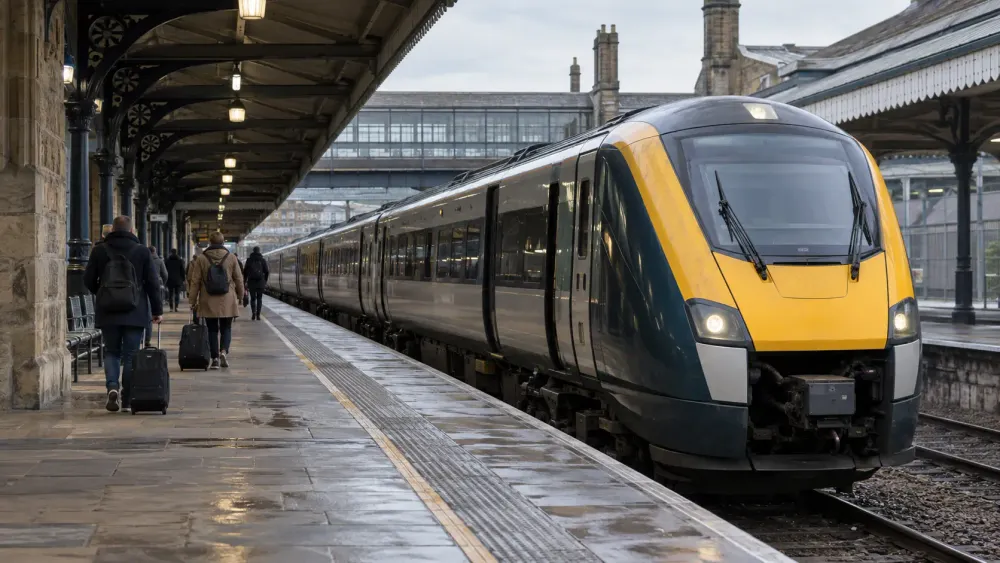
Chiltern Railways moved into public ownership on Sunday, shifting a busy corridor between London and central England from Arriva to a government-owned operator while leaving the passenger-facing service largely unchanged on day one.
The transfer makes Chiltern the sixth operator moved under public control through the current nationalization program. It covers trains from London Marylebone through Buckinghamshire and Oxfordshire to Birmingham and other West Midlands destinations. The government announcement said nearly 20 million passenger journeys are made on the network each year.
What Changed Sunday
The immediate change is corporate rather than operational. Chiltern's services are now run by a subsidiary of DfT Operator Limited, the state holding company for passenger rail businesses, instead of Arriva. Existing tickets remain valid, schedules continue, and passengers still use the Chiltern name. That continuity follows the transfer model the Department for Transport set out in a parliamentary statement: ownership changes when contracts end, while trains, staff and ticketing carry on through the handover.
No across-the-board fare change accompanied the transfer. Travelers will continue to buy tickets through the usual websites, apps, ticket offices and machines, and tickets purchased before Sunday remain valid for later journeys. Passenger compensation rights also continue to apply when delays meet the operator's published thresholds.
The legal basis is the 2024 law, which makes a public operator the default provider when national rail contracts expire. The measure moves passenger services away from franchises and into public-sector companies. The government has chosen transfers at contractual break points rather than buying operators out early.
More Trains Arrive in December
For travelers, the larger changes are scheduled for the December timetable. The government says Chiltern will add 25 weekday services, including half-hourly trains throughout the day between London and Birmingham on the Chiltern Main Line. It projects almost 10,000 additional seats each weekday, nearly 5,000 on Saturdays and more than 3,000 on Sundays.
Six additional Chiltern Explorer train sets are due to enter service in December, expanding that fleet to 13. The trains are meant to improve capacity, accessibility, air conditioning and Wi-Fi between London and the West Midlands. Separately, a £12 million refurbishment of the Class 168 fleet is supposed to add better connectivity, power outlets and USB charging at every seat, with the work completed by 2028.
Station improvements include toilets, cleaning, painting and information displays. Two hundred closed parking spaces are expected to reopen at Haddenham and Thame Parkway, while five of the busiest stations are slated for new signs. An independent rail review notes that much of the capacity plan predates the ownership transfer, an important distinction: the trains and timetable were prepared over years, not created by Sunday's handover.
A New Rule for Canceled Trains
A separate national policy that also began Sunday may be more noticeable during disruption. Passengers with a valid ticket for a canceled train can use another participating operator at no extra cost if the alternative departs within two hours before or after the original service and follows a direct or reasonable route. Travelers should show the original ticket onboard.
The rule now includes Chiltern, Avanti West Coast, CrossCountry and Great Western Railway, expanding cross-operator acceptance beyond companies already in public ownership. The change removes a frequent source of confusion in which travelers waited for a special agreement or bought another ticket and sought a refund. The reported rules do not yet include East Midlands Railway, which is dealing with separate operational problems.
Ownership Is Not Performance
The transfer does not itself prove that fares will fall, trains will become more punctual or overcrowding will ease. Those outcomes depend on operating discipline, fleet availability, infrastructure and labor relations. The government's promises therefore need to be judged against the December timetable and later performance data, not the ownership label alone.
There is also unresolved business on East West Rail. The government says public ownership creates a new opportunity to launch the long-delayed Oxford-to-Milton Keynes passenger service. But no start date accompanied the transfer. Current reporting says unions oppose plans for driver-only operation, and the RMT is considering strike action. That dispute could test the government's promise that integration will make the railway simpler and more accountable.
What Travelers Should Watch
Passengers do not need to exchange tickets or alter existing bookings because of the ownership change. The practical milestones are December's expanded timetable, the arrival of the remaining Explorer trains, visible station upgrades and consistent application of the new cross-operator rule when services are canceled.
Chiltern's transition is also part of a larger sequence. Great Western Railway is scheduled to enter public ownership in December, with the remaining contracted operators expected to follow by the end of 2027. The broader plan is to place publicly run train companies and Network Rail's infrastructure functions under Great British Railways. Whether that structure improves journeys will be measured in ordinary experiences: finding a seat, receiving reliable information, making a connection and arriving on time.