
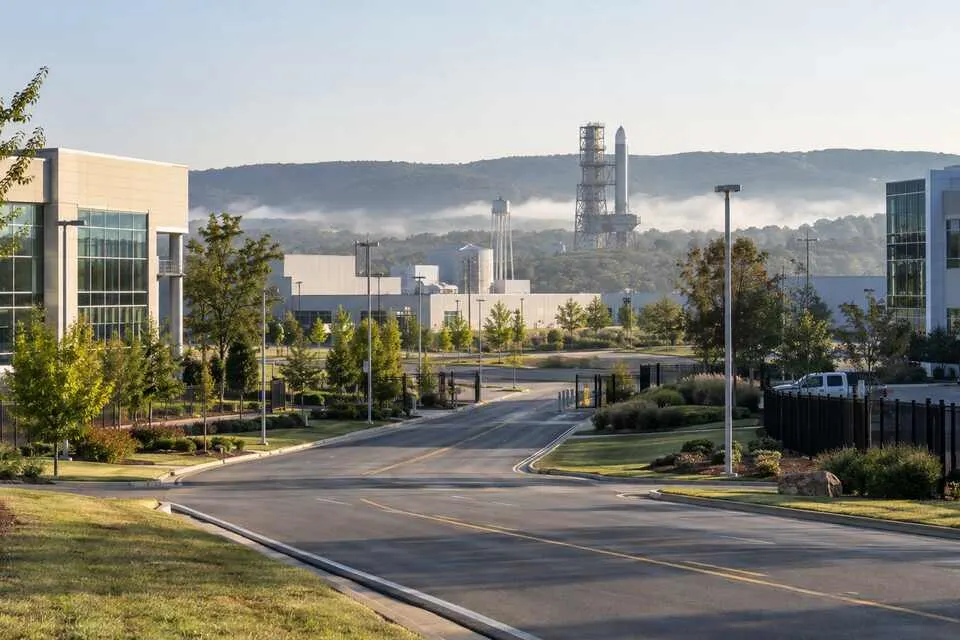
U.S. Space Command expects to have roughly 200 uniformed and civilian personnel working at Redstone Arsenal by the end of 2026, a near-term milestone in the headquarters relocation that is already moving federal jobs into north Alabama.
More than 140 command employees are now at Redstone, or about 10% of the workforce ultimately expected in Huntsville, according to a Sept. 14 update from the Alabama Department of Commerce. Gen. Stephen Whiting, the command’s leader, said staffing should reach 200 before year-end and about half of the organization should be in Huntsville during 2028.
The figures give residents, employers and local governments a more concrete timetable than the broad relocation announcement. They also show that the transfer is proceeding in stages rather than through a single move. For workers and contractors, the practical signal is that the Redstone presence is growing now, while most of the staffing shift still lies ahead.
Huntsville was first named the preferred headquarters site in January 2021 after virtual and in-person reviews of six finalists. The Air Force said its review weighed mission needs, infrastructure capacity, community support and federal costs. Redstone compared favorably across more of those factors than any competing site, the department said, and offered an interim facility while a permanent headquarters could be built.
The relocation carries statewide significance because it adds a major combatant command to an aerospace and defense economy that Alabama has spent decades building. The Commerce Department says companies in aerospace, defense and aviation have announced $4.3 billion in Alabama investment and more than 15,000 jobs since 2015. Those totals are broader than Space Command itself, but they show the industrial base into which the headquarters is arriving.
Redstone also sits beside a dense concentration of federal technical expertise. NASA says its Marshall Space Flight Center in Huntsville employs more than 6,000 people and has delivered propulsion systems, launch vehicles, engineering technologies and space-science programs for more than six decades. That presence, together with Army missile and aviation organizations on the arsenal, helps explain the region’s workforce appeal.
For Alabama officials, the most useful numbers to watch next are not only the year-end headcount but the pace toward the 2028 halfway mark and the timing of permanent facilities. The current 140-person footprint represents an operational start, not completion. Local housing, schools, transportation planners and businesses should therefore treat 2026 as an early phase of a multiyear transition.
The command’s mission adds weight to that transition. Space Command coordinates military operations intended to protect capabilities such as satellites that support communications, navigation and surveillance. The latest staffing update indicates that a growing share of that work is now being performed from Alabama, with another roughly 60 employees expected to arrive or begin work at Redstone before Dec. 31.