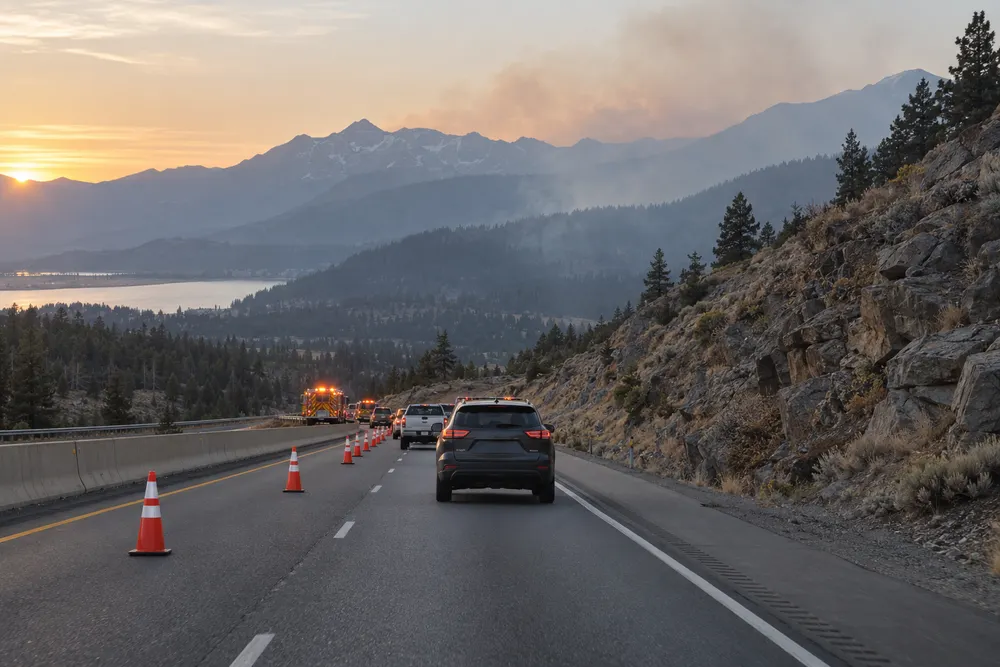
Westbound Interstate 80 travelers leaving Nevada should expect a one-lane restriction near Floriston as crews continue working the 622-acre Floriston Fire. The fire is no longer rapidly expanding, but the highway constraint remains a practical issue for Reno-area motorists and freight moving across the state line.
A CAL FIRE update posted September 20 said containment had reached 65%, the burned footprint was unchanged and crews were widening containment lines while extinguishing remaining hot spots. No injuries had been reported, and investigators had not announced a cause.
The agency said westbound I-80 remained restricted to one lane between Mystic and Floriston Way because fire resources were using the corridor. That is an improvement from the full closure imposed when the blaze began September 16, but it does not mean normal operations have resumed. Drivers should anticipate metering, slower traffic and sudden changes while crews remain beside the roadway.
The fire’s location makes the restriction consequential for Nevada. I-80 is the primary direct highway from Reno and Sparks across the Sierra, carrying commuters, tourists and commercial traffic. A westbound bottleneck at the border can produce delays well inside the Reno area even when there is no closure on the Nevada side.
Conditions improved over the weekend. CAL FIRE reported that all mandatory evacuation orders had been lifted and only one zone remained under an evacuation warning. Firefighters were still confronting steep, rocky terrain, and earlier updates warned that rockfall and rolling debris could affect the westbound lanes.
The initial disruption was substantial. The Chronicle reported that westbound traffic was stopped at the Boomtown-Verdi exit after the wind-driven fire grew quickly on September 16. Crews were also monitoring slope stability near the highway, an issue that can keep lanes restricted even after the fire itself stops spreading.
Travelers should not rely on the containment percentage alone. Containment measures how much of the fire perimeter has a control line; it does not certify that the route is fully open or that roadside work has ended. The operational question for drivers is the lane status at departure time.
Nevada’s official 511 portal provides live incidents, closures and travel times, and it allows users to create route notifications. Drivers continuing west should also check the corresponding highway information after crossing the border, because restrictions on the far side can back traffic into Nevada.
Oversize and permit-load operators need particular caution. CAL FIRE’s earlier reopening notice said permit loads were restricted when one westbound lane first reopened. Carriers should confirm current routing rather than treating the general reopening as clearance for every vehicle class.
The decision-useful takeaway is narrow: the emergency has eased, evacuations have largely ended and the fire footprint is holding, but westbound I-80 is not yet back to normal. Motorists should check live road data immediately before departure, allow extra time and avoid stopping near active fire equipment or unstable slopes.