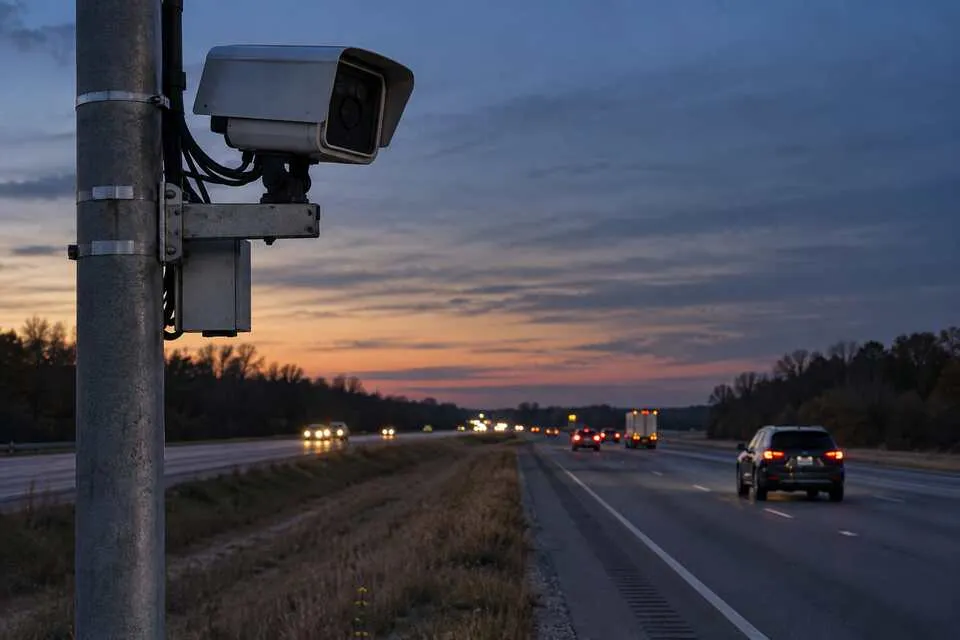
JEFFERSON CITY, Mo. — Missouri has imposed a 30-day limit on most data collected by automated license-plate readers used by state agencies and state-funded local law enforcement, while barring facial-recognition integration and the commercial use of captured information.
Gov. Mike Kehoe signed the executive order on Sept. 16. It took effect immediately and directs the Department of Public Safety to issue implementation guidance within 10 days. The order applies to state agencies and to local law-enforcement entities that receive state funding for the systems, which include fixed and mobile cameras that photograph plates and record vehicle locations.
The default rule requires plate and vehicle data to be deleted within 30 days. Longer retention is allowed only when the information is tied to a specific active criminal investigation, a life-safety emergency or a court order. Agencies must document the reason for keeping it, review that need periodically and delete the information when the qualifying purpose ends.
The order also declares that collected data belongs solely to the government agency using the system. Vendors must certify deletion when contracts end and may not sell, share or commercialize the information. According to the governor's announcement, the safeguards cover systems such as Flock cameras and are intended to preserve law-enforcement uses while setting privacy limits.
Searches must serve a criminal-justice purpose
Missouri agencies may use the readers only for criminal-justice or lifesaving purposes. The state's statutory definition includes detecting, apprehending, detaining and rehabilitating people suspected or convicted of crimes, as well as criminal identification and information exchange. The order specifically prohibits access for personal, political, civil-enforcement or commercial purposes.
Every search must be logged with the user's identity, the date and time, the plate queried and the stated purpose. Agencies must conduct recurring audits, investigate suspected misuse and preserve audit records. Facial-recognition software may not be connected to a license-plate reader system under the order.
For officers, improper access can trigger discipline, termination, loss of system access and possible criminal referral. Missouri's misuse statute makes certain private, personal or unofficial uses of official information a class A misdemeanor. The order also requires agencies to report substantiated officer misuse to the Department of Public Safety for possible licensing consequences.
A temporary framework while lawmakers consider legislation
The directive is not a permanent statute. It remains in force until it is amended, replaced, rescinded or superseded by legislation. Kehoe ordered the Department of Public Safety to develop a legislative proposal that would establish statewide standards, independent audits, grant consequences and a specific offense for intentional misuse.
For residents, the immediate practical change is a defined retention ceiling and a paper trail for searches at agencies covered by the order. Local agencies outside the state-funding condition are encouraged to adopt similar practices, but the order does not impose the same binding requirements on them.