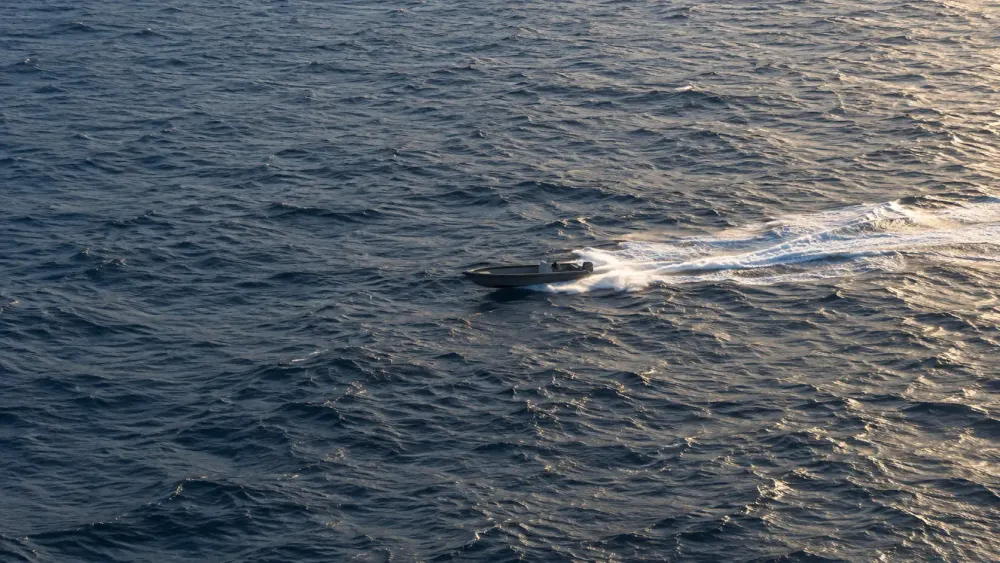
The U.S. military killed four people in a strike on a vessel in the Caribbean on Saturday, extending a campaign that has now killed at least 231 people across 69 attacks on boats the Trump administration says were trafficking drugs.
U.S. Southern Command said the vessel was traveling along a known trafficking route and that intelligence confirmed it was involved in illicit narcotics operations. The command released video of the attack but did not identify those killed, specify where in the Caribbean it occurred or disclose what cargo was aboard. The AP reported that the government has not publicly provided evidence that the latest vessel carried drugs.
The strike, reported on Sept. 19, deepens a consequential shift from law-enforcement interdiction toward lethal military action at sea. It also sharpens unresolved questions about legal authority, target verification and whether the campaign is reducing the flow of illicit drugs into the United States.
A campaign becomes a sustained military mission
Saturday’s attack came 10 days after another U.S. strike killed three people aboard an alleged drug boat. The military has conducted the operation for nearly a year, and Southern Command has organized it through Joint Task Force Southern Spear. According to Reuters, the administration describes the effort as an armed conflict with drug cartels it has designated as terrorist organizations.
That framing is central to the dispute over the operation. The administration says the strikes target organizations that threaten Americans through narcotics trafficking. Human-rights groups and some legal experts argue that suspected traffickers should be detained and prosecuted when feasible, and have characterized the killings as extrajudicial. The administration has not released a detailed public accounting of the intelligence used to identify each target or the rules applied before lethal force is authorized.
The mission departs from traditional interdiction
For decades, federal counterdrug operations at sea have divided responsibilities between military surveillance and law enforcement. A 2024 GAO report said the Defense Department is the lead federal agency for detecting and monitoring aerial and maritime drug traffic headed toward the United States. The Coast Guard is the lead agency for interdiction, a process that can preserve cargo, vessels and testimony for criminal cases.
That system has produced measurable seizures. In fiscal 2023, the Coast Guard reported removing more than 212,000 pounds of cocaine and more than 54,000 pounds of marijuana, according to the same report. Conventional interdictions can also identify crew members, establish the type and weight of contraband and reveal routes or organizational links.
A lethal strike is different. Destroying a vessel can eliminate evidence that would establish what it carried, who was aboard and where the shipment originated. It can also make independent assessment difficult when the government releases only a short video and a summary of its intelligence judgment. Those limits do not prove the military’s assessment wrong, but they prevent the public from testing it.
The drug routes are not all the same
The maritime theater is important, especially for cocaine. The Government Accountability Office found that most cocaine entering the United States travels by sea through the eastern Pacific or Caribbean before moving through Central America and Mexico. The U.S. Naval Institute’s account of the Sept. 9 strike likewise noted the campaign’s focus on vessels the administration links to trafficking networks.
But the geography of fentanyl trafficking is different. In a 2025 analysis, GAO said about 80% of seized fentanyl was found at the southwest border, most often in passenger vehicles at ports of entry. Precursor chemicals and manufacturing equipment also move through commercial cargo and mail before finished fentanyl reaches the United States.
That distinction matters when judging claims about public-health effects. Boat strikes in the Caribbean may disrupt some cocaine movements or other maritime shipments. Without disclosed cargo data, however, officials and outside analysts cannot reliably connect a specific strike to fentanyl supply or to changes in overdose deaths.
Evidence of effectiveness remains limited
The government has disclosed a count of strikes and deaths, but it has not published a comparable set of outcome measures showing how much contraband the campaign prevented from reaching the United States, how trafficking routes changed or whether replacement vessels quickly restored supply. Fatal overdoses have fallen from their 2023 peak, but that trend began before the current strike campaign and cannot by itself establish causation.
Broader oversight findings reinforce the need for defined measures. A 2025 GAO review of maritime security programs said federal agencies faced persistent operational challenges and that only four of 23 prior recommendations had been implemented by May 2025. GAO has separately found that agencies lacked complete performance goals and measures for parts of the federal fentanyl strategy.
Those findings do not settle whether any individual target was lawful or operationally valuable. They do show why a body count is not a sufficient measure of counterdrug success. Credible evaluation requires information about verified cargo, trafficking capacity removed, civilian harm, prosecutions or intelligence gains, and sustained effects on supply.
Expansion raises larger policy questions
The administration has signaled interest in expanding joint action with regional partners, including operations beyond international waters, while governments in the region have not always endorsed U.S. descriptions of those discussions. Any move toward land-based activity would increase the importance of consent, transparency and clearly defined mission limits.
For Congress and the public, the immediate questions are concrete: what legal authority governs the strikes, how targets are validated, what procedures are used when interception is possible, and what evidence demonstrates that lethal action is more effective than seizure and prosecution. Regular disclosure of casualty figures, recovered evidence and measurable drug-flow outcomes would permit more informed oversight without requiring officials to reveal sensitive intelligence methods.
The latest strike establishes two facts: four more people were killed, and the military campaign is continuing. Whether that campaign is dismantling trafficking networks, displacing routes or primarily replacing an established law-enforcement model remains unproven in the public record.