
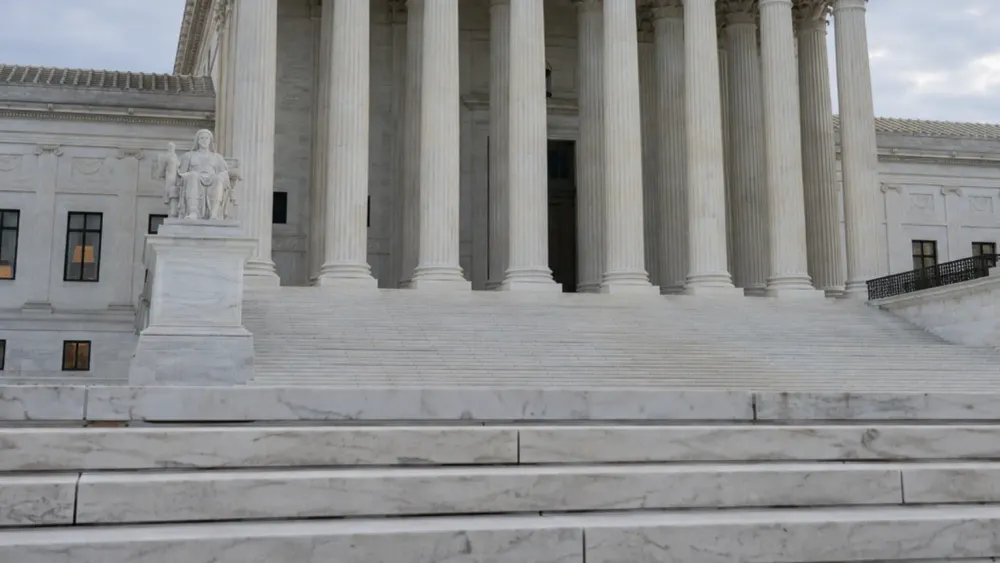
The Trump administration asked the Supreme Court on Monday to let the Federal Bureau of Prisons enforce a policy restricting gender-affirming medical care and social accommodations while a nationwide class-action challenge continues. The emergency request seeks to lift a district judge’s injunction after the U.S. Court of Appeals for the District of Columbia Circuit declined to do so on September 18.
The application does not ask the justices to decide the lawsuit’s ultimate merits. Instead, the administration wants permission to implement the February policy during the appeal, a procedural decision that could determine whether prisoners continue receiving previously prescribed hormone therapy for months. Independent AP reporting said the policy would also halt gender-affirming surgeries and social accommodations such as wigs, while preserving mental-health treatment.
What the prison policy would change
The Bureau of Prisons adopted Program Statement 5260.01 on February 19. The official policy document prioritizes psychotherapy and treatment of co-occurring conditions. It generally bars new hormone prescriptions for gender dysphoria, directs officials to taper existing hormone treatment toward discontinuation, prohibits gender-affirming surgery and ends social accommodations intended to align an inmate’s appearance with gender identity.
The policy allows limited clinical flexibility. It says tapering may need adjustment for prisoners who have taken hormones for an extended period or experience severe physical or psychological effects, although plans must remain consistent with eventual cessation. It also directs officials to provide treatment for surgical complications and continues psychiatric medication, individual therapy, group therapy and crisis services.
That approach followed President Donald Trump’s January 2025 executive order, which defines sex as male or female for federal policy and directs the attorney general and Bureau of Prisons to revise prison medical policies. The order says federal funds should not pay for treatment intended to make an inmate’s appearance conform to the opposite sex, subject to applicable law.
Why the lower court blocked enforcement
Three federal prisoners diagnosed with gender dysphoria brought Kingdom v. Trump on behalf of a class covering current and future Bureau of Prisons inmates with that diagnosis. Their case filing alleges violations of the Administrative Procedure Act, the Eighth Amendment, equal-protection principles and the Rehabilitation Act. The named plaintiffs were held in New Jersey, Florida and Minnesota when the action began.
U.S. District Judge Royce Lamberth, a Reagan appointee, issued an updated injunction in June. His memorandum opinion concluded that the plaintiffs were likely to show the new program statement was arbitrary and capricious under the Administrative Procedure Act. He ordered the bureau to continue medications and social accommodations under the practices in effect before the executive order.
Lamberth emphasized that the ruling was about agency decision-making, not a final constitutional judgment. He found that the bureau had not adequately considered its own experience providing gender-affirming care, and that parts of its explanation ran against evidence in the administrative record. Because that administrative-law conclusion was sufficient at the preliminary stage, he declined to decide the Eighth Amendment claims.
The administration’s argument for immediate enforcement
The Justice Department argues that prison officials reasonably reassessed medical evidence and security concerns, and that courts should defer to institutional judgments about treatment and prison administration. According to the government filing, the bureau chose to emphasize mental-health treatment while discontinuing interventions it considers disputed and unproven.
The district court viewed the record differently. It said the agency appeared to have reverse-engineered the policy to reach the executive order’s prescribed outcome and had not supplied a reasoned basis for broadly withdrawing care. The competing accounts place a familiar administrative-law question before the justices: whether the agency adequately explained a major change, not simply whether a president may set policy priorities.
What the Supreme Court’s response would mean
If the justices grant a stay, the February program statement could take effect while the government appeals, exposing class members to hormone tapering and loss of social accommodations before the litigation is resolved. If they deny the request, the injunction will remain in place and the bureau must continue the prior care framework for prisoners diagnosed with gender dysphoria.
Either outcome would be temporary. The lower courts still must decide the full case, including claims the district judge has not reached. The Supreme Court could also request a response from the prisoners’ lawyers or impose a short administrative stay while considering the application, steps that would not signal a final view of the policy’s legality.
A narrow request with nationwide effects
The dispute is legally narrow but operationally national because the injunction covers a certified class across the federal prison system. It also tests how much explanation an agency must provide when replacing an established medical policy in response to a presidential directive.
For now, the verifiable development is the emergency request itself: the administration has asked the Supreme Court to change which policy governs during the appeal. The justices’ immediate task is not to settle the broader political and medical debate, but to decide whether the bureau may implement its restrictions before the courts complete their review.