
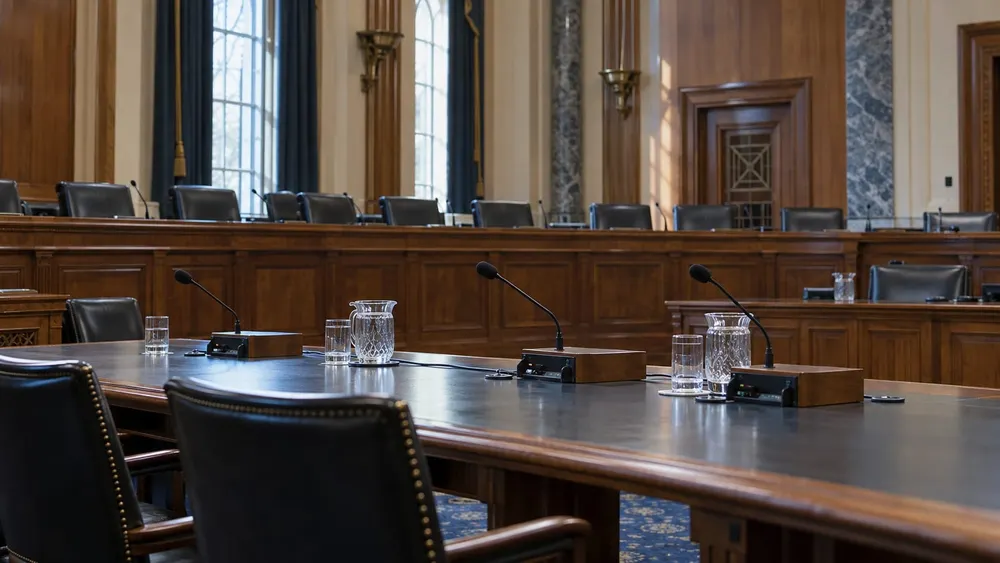
Democratic lawmakers are preparing investigations into Trump-family business ventures and corporate donors if their party wins either chamber of Congress in November, a plan that could put subpoena power behind inquiries that are now largely voluntary. The agenda described Monday remains contingent on the midterm results, and lawmakers say they have not settled on a definitive target list.
Potential subjects include businesses associated with Donald Trump Jr., Jared Kushner’s foreign-backed investment firm and companies that helped finance the privately funded White House ballroom, according to interviews compiled by Reuters. Democrats describe the prospective work as oversight of conflicts of interest and the use of public power. The White House and Trump-linked businesses reject that framing, calling the plans politically motivated and unsupported by evidence of wrongdoing.
The distinction between suspicion and proof is central. No election has transferred committee control, no new majority has issued subpoenas, and the reporting does not establish that any named person or company violated the law. What changed in the past 24 hours is the specificity with which lawmakers and congressional staff described how a Democratic majority could turn existing questions into a coordinated investigative program.
Majority Control Would Change the Available Tools
Committee chairs set agendas, schedule hearings and often control the issuance of subpoenas under chamber and committee rules. Congressional investigations must relate to a legitimate legislative purpose, but courts have long recognized broad authority to compel testimony and records. An official Senate history notes that the Supreme Court has upheld subpoenas and contempt proceedings when inquiries concern subjects on which Congress can legislate.
That power does not guarantee quick compliance. Recipients can negotiate scope, withhold material, claim privileges or challenge demands in court, while Congress can pursue civil enforcement, criminal contempt referrals or inherent contempt procedures. Disputes involving the executive branch can be especially protracted. Private companies, however, generally cannot invoke presidential executive privilege for their own commercial records, making contractors, donors and investment firms potentially more accessible sources of evidence.
A change in only one chamber would still matter. House and Senate committees operate independently, and either could conduct hearings or seek documents within its jurisdiction. Yet control of both chambers would enable a broader, more coordinated effort across judiciary, intelligence, oversight and investigations panels, with additional staff and complementary lines of inquiry.
The Emerging Agenda Centers on Money and Access
Representative Jamie Raskin of Maryland and Senator Richard Blumenthal of Connecticut told Reuters that Trump-linked cryptocurrency businesses and Donald Trump Jr.’s venture-capital firm, 1789 Capital, are among the areas drawing interest. Raskin also pointed to Kushner’s work as an informal U.S. envoy while managing Affinity Partners, whose investors include Middle Eastern governments. These are allegations of potential conflicts, not findings that diplomatic decisions were exchanged for financial benefit.
Democrats are also examining the White House ballroom, a 90,000-square-foot addition that the administration says is funded by private citizens and corporations. The White House publishes a donor list, but critics want more information about contribution amounts, contractor arrangements and whether donors received favorable government treatment. Representative Jim Himes of Connecticut, the top Democrat on the House Intelligence Committee, separately told the Journal that intelligence and defense contractors could face scrutiny if he becomes chairman.
The prospective program extends beyond one family or project. An AP review found House Democrats considering oversight of immigration enforcement, health agencies, foreign policy and the administration’s use of federal power. The sharper focus reported Monday is on commercial records that could show whether official actions and private gains intersected.
Targets Dispute the Premise
The White House said Democrats were offering obstruction and baseless attacks rather than an agenda for voters. Republican Senator Kevin Cramer of North Dakota warned that concentrating on Trump’s personal dealings could produce a political backlash. Those responses frame the proposed investigations as partisan retaliation, an argument likely to intensify if committees issue demands soon after an election fought partly over the president.
1789 Capital has already rejected a request from Raskin for information. In a response reported by Axios, the firm said it welcomed legitimate oversight but would not submit to what it called political gamesmanship, and it challenged factual assertions in the lawmaker’s inquiry. That dispute illustrates a likely pattern: committees will need to define a legislative purpose, specify the records they seek and separate documented financial connections from broader political accusations.
The issue is not entirely divided along party lines. Republican Senator John Curtis of Utah recently asked the Senate Judiciary Committee to investigate whether Donald Trump Jr. benefited financially from proximity to the presidency, while also calling for equivalent scrutiny of former President Joe Biden’s son Hunter. That bipartisan element does not validate any particular allegation, but it complicates the claim that all interest in presidential-family finances is solely a Democratic project.
The Election Will Decide Whether Planning Becomes Process
Until voters choose the next Congress, the plans are best understood as a statement of priorities rather than an investigative outcome. Democrats must first win a majority, organize committees and decide which subjects justify hearings, subpoenas or legislation. Companies could begin preserving records and preparing legal responses, but they have not been found liable merely because lawmakers may seek information.
The consequential development is the transition from general campaign promises of accountability to a more concrete map of targets, committees and evidence sources. If Democrats gain control, the first test will be whether they can articulate focused legislative purposes and obtain records without allowing the work to become an open-ended political spectacle. If Republicans retain both chambers, many of these inquiries will remain dependent on voluntary cooperation, minority-party requests or occasional bipartisan support.