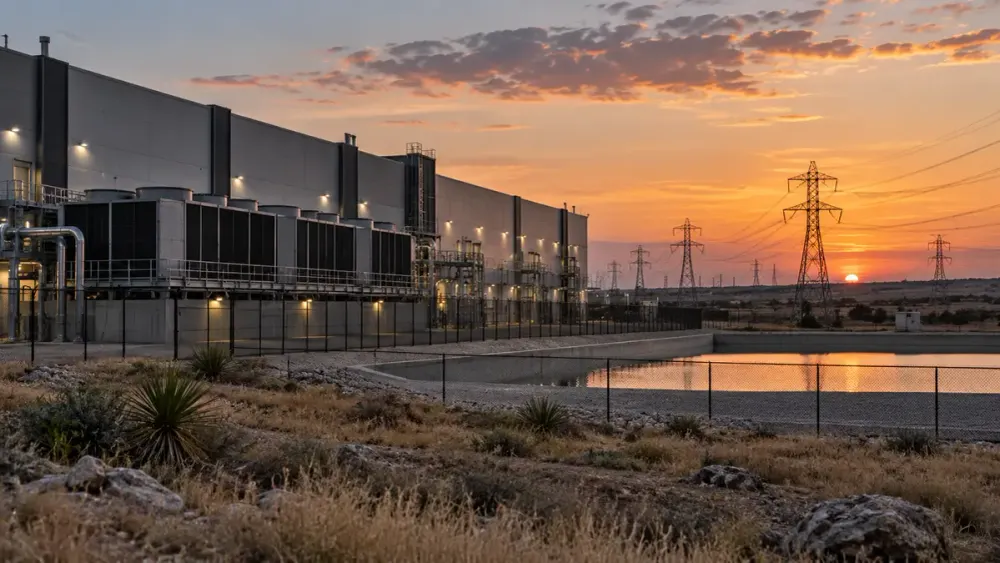
Texas has halted state permits for data centers until power-grid and water reviews are complete, broadening an earlier pause on electrical interconnections into a wider regulatory freeze. Gov. Greg Abbott ordered the Texas Commission on Environmental Quality not to issue permits sought by data-center projects and said no state agency should advance related approvals while requested information remains outstanding.
The directive does not establish a completion date or list which pending applications are affected. It ties future approvals to audits involving the Public Utility Commission of Texas, the Electric Reliability Council of Texas and the Texas Water Development Board. Those reviews are intended to measure projects’ electricity and water demands, public incentives, ownership, on-site generation and effects on surrounding communities.
The scale cited by the governor is unusually large. ERCOT was considering more than 474 gigawatts of requests to connect to the grid when Abbott issued an August audit directive. The governor’s office said that was more than five times the system’s record peak demand and that roughly 90 percent of the requested new load came from data centers. Not all projects in an interconnection queue are ultimately built, which is one reason regulators want firmer information before planning transmission and generation.
The permit halt reaches beyond the grid connection process. TCEQ regulates environmental matters including air emissions and certain water-related approvals, while the Water Development Board is gathering information about present and projected consumption. Abbott said facilities must demonstrate that they can pay for needed infrastructure, protect the grid and water supplies, and comply with the audits before permits resume.
The action follows new financial requirements for very large power users. Texas utility regulators approved a $50,000-per-megawatt security deposit and a $100,000 study fee for projects of at least 75 megawatts seeking grid access, the Express-News reported. Developers also must show control of a proposed site and provide operating data. The requirements are designed to discourage speculative applications that could distort long-range demand forecasts.
Texas has attracted data-center development because of its land, energy market and growing technology sector. But Reuters reported that the surge has intensified concerns about electric reliability, consumer costs, water use and the public expense of new infrastructure. The Data Center Coalition said it shares the state’s interest in informed decisions, while developers now face uncertainty about how long reviews will take and what standards will follow.
For communities and applicants, the immediate consequence is delay rather than rejection. Existing facilities are not automatically closed, and the order does not itself decide which projects will qualify after the audits. Its larger significance is procedural: Texas is requiring energy-intensive developments to document their resource and infrastructure plans before state agencies make further permitting commitments.