
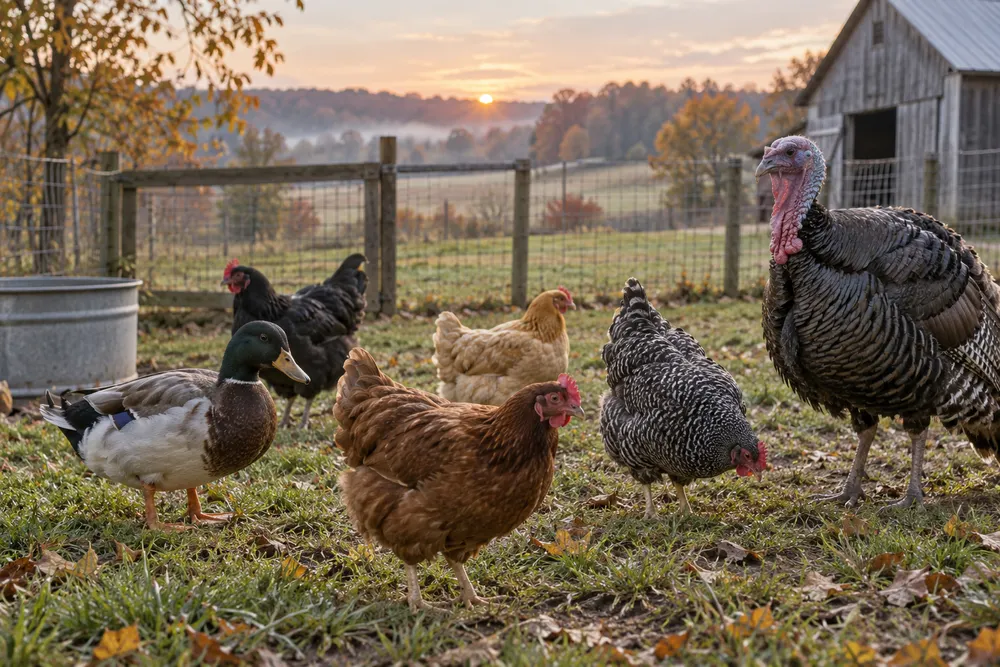
Iowa animal-health officials confirmed H5N1 highly pathogenic avian influenza in a multi-species backyard flock in Boone County, the state’s seventh detection of 2026. The state notice, issued Sept. 22 by the Iowa Department of Agriculture and Land Stewardship, said the finding was made with the U.S. Department of Agriculture’s Animal and Plant Health Inspection Service.
The affected flock contained 138 birds, according to Iowa Capital Dispatch. The outlet reported that Iowa’s previous detections were in March and that none of the state’s seven cases this year has involved a commercial poultry flock. That distinction limits the immediate scope of this finding, but it does not remove the need for surveillance around backyard birds, where different species may share feed, water and outdoor space.
The timing also puts the case near the start of fall migration. USDA tracking says flock detections tend to rise in fall and spring as wild birds move between seasonal ranges. Federal officials say their response pairs national monitoring with state animal-health work and emphasize reducing contact between domestic birds and wildlife, equipment or people that could carry the virus between premises.
Iowa’s agriculture department urged commercial producers and backyard owners to review biosecurity, watch their birds and contact a veterinarian immediately if illness is suspected. Warning signs listed by the department include unexplained deaths, lower egg production, lethargy, swelling around the head, respiratory difficulty, nasal discharge, diarrhea and loss of balance. Suspected poultry cases must also be reported to the department at 515-281-5305.
For people, the risk assessment remains substantially different from the threat to birds. The CDC summary says A(H5) viruses are widespread among wild birds and have caused poultry and dairy-cattle outbreaks, with sporadic infections among exposed workers, but the current risk to the general public remains low. The agency continues to monitor exposed people and routine flu surveillance for evidence of human infection.
The state also said eggs and poultry remain safe to eat when handled properly and cooked to an internal temperature of 165 degrees Fahrenheit. That guidance addresses food preparation; it is separate from the protective steps needed when handling sick or dead animals. Iowa wildlife officials ask residents who find five to 10 or more sick or dead wild birds in a small area to alert local Department of Natural Resources staff.
The Boone County detection therefore carries two practical messages. Flock owners face the immediate task of tightening separation from wild birds and reporting suspicious illness quickly. For other Iowans, officials are advising normal food-safety practices while keeping the broader public-health risk in perspective. The case also reinforces why backyard flock monitoring matters during migration season. Confirmed animal cases are added to USDA’s national dashboard after testing by the National Veterinary Services Laboratories in Ames.