
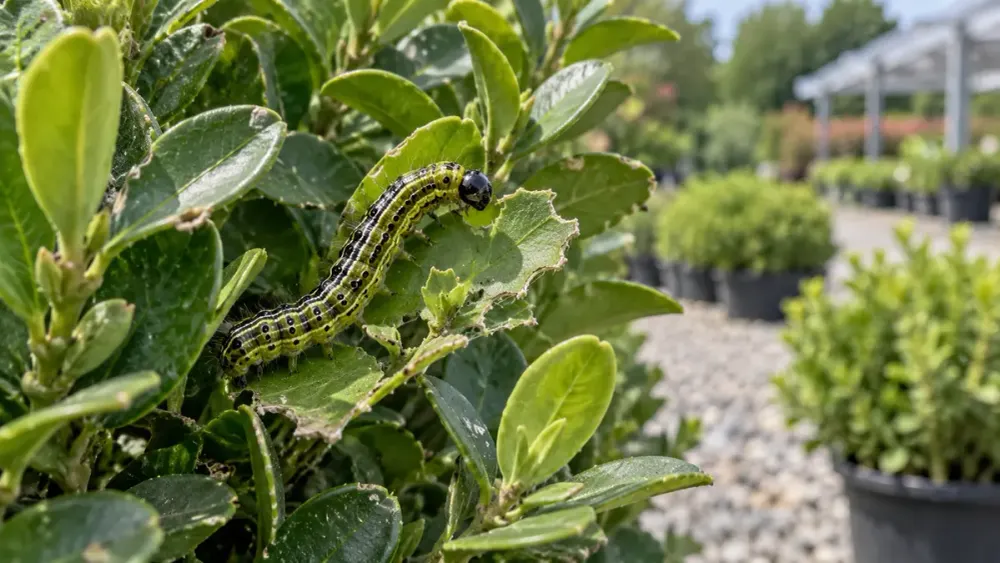
Michigan will add Genesee County to its box tree moth quarantine after federal traps detected a new population of the invasive pest near the boundary of the existing regulated area. The Sept. 22 state notice makes Genesee the 14th county covered, extending restrictions that are intended to keep infested boxwood plants and clippings from carrying the insect into new parts of the state.
The quarantine matters most to nurseries, landscapers and property owners moving boxwood. Live or dead Buxus material generally may not leave the regulated area unless a business operates under a written compliance agreement. Movement inside the area also requires licensed nurseries to follow state conditions, and boxwood yard waste transported from March through October must be enclosed and taken to a site without boxwood within 100 yards. Michigan's underlying quarantine order treats whole plants, cuttings, clippings and debris as regulated articles because each can carry a life stage of the moth.
Those controls apply to boxwood and the moth, not to unrelated nursery plants. Adding a whole county creates a clear boundary for enforcement; it does not mean every boxwood in Genesee is infested. Property owners may keep and care for shrubs in place. The regulatory trigger is moving plants or debris in ways that could transport the pest.
Officials said the Genesee detection came from U.S. Department of Agriculture trapping, not from a public complaint. Local coverage by Mid-Michigan NOW independently confirmed the finding and the state's direction that suspected infestations outside the quarantine be photographed and reported before plants are sprayed or discarded. That sequence is important because inspectors may need intact evidence to confirm the pest and give disposal instructions.
Box tree moth does not threaten Michigan forests or native trees, according to the state, but its caterpillars can strip ornamental boxwood and eventually kill shrubs. Michigan's identification guide tells residents to look for green-and-yellow caterpillars with black markings, loose webbing, skeletonized leaves and adult white moths edged in brown. The guide says the insect can move about five miles a year on its own, while infested nursery stock is the main pathway for longer-distance spread.
The broader invasion began outside Michigan. The Invasive Species Centre says the moth is native to Asia, appeared in North America near Toronto in 2018 and has since spread into several Canadian provinces and U.S. states. Michigan first established its interior quarantine in 2023 and later expanded it across much of southeastern Michigan. Adding Genesee reflects continued surveillance along that perimeter rather than evidence of a statewide infestation.
Residents inside the regulated counties can keep and treat boxwood, but movement rules now follow the expanded boundary. Anyone outside it who sees suspected damage should submit photographs through the state's reporting system and wait for instructions. For businesses, the immediate operational issue is verifying destinations and maintaining the records required for compliant shipments.