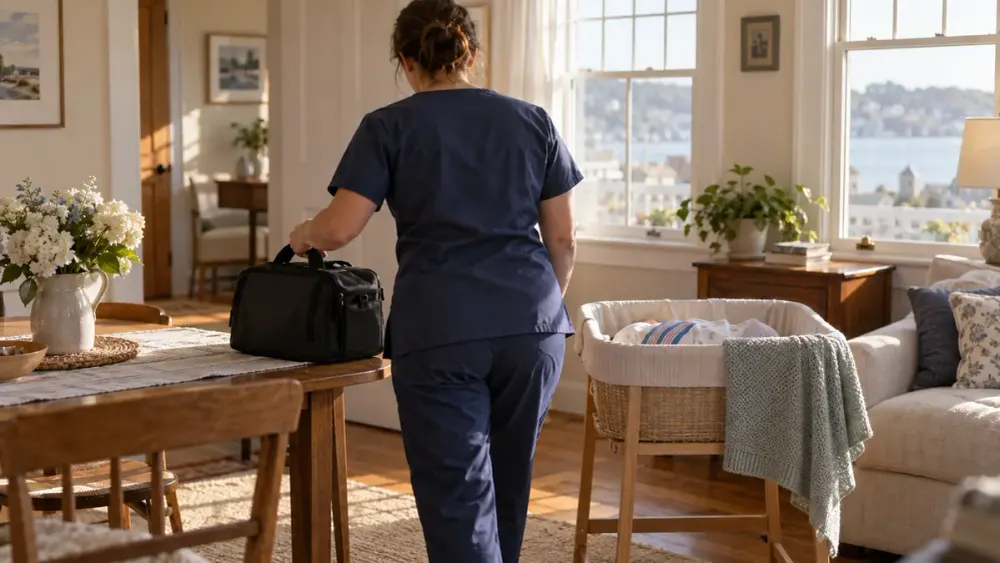
Massachusetts Gov. Maura Healey is asking lawmakers to put $2 million into voluntary nurse home visits for every family welcoming a newborn, a proposal that would expand a federally supported service from about 3,000 families a year to the roughly 68,000 births statewide. The state plan, announced Sept. 15, would make the visits available regardless of income or insurance status; participation would remain optional.
During a visit, a nurse could answer questions about feeding, sleep and infant care while checking the mother's recovery and screening for depression or other mental-health concerns. Healey also proposed $250,000 for the Massachusetts Child Psychiatry Access Program for Moms and directed the Department of Public Health to update regulations governing perinatal mental-health screening. The Associated Press reported that the request will need legislative approval, so the money and statewide reach are not yet guaranteed.
The practical significance is the timing of care. State review data cited by both the administration and AP found that mental illness, including substance-use disorder, accounted for 38% of pregnancy-related deaths in Massachusetts from 2019 through 2024. The review concluded that 85% of those deaths were preventable and that more than half occurred between seven days and one year after delivery. The CDC says pregnancy-related deaths can occur up to a year after pregnancy, more than 80% are preventable nationally, and consistent postpartum care can help identify serious complications.
The home-visit proposal is designed as an entry point, not a substitute for medical treatment. A nurse could identify a concern and connect a parent to follow-up care; Massachusetts' existing MCPAP for Moms gives obstetric and pediatric clinicians consultation tools for screening, assessment and treatment. UMass Chan describes the program's toolkit as covering perinatal mood, anxiety, substance-use and psychotic disorders, along with risk assessment and treatment monitoring.
The administration describes the appropriation as the first state investment in a home-visiting program now supported with federal money. That distinction matters: the $2 million would expand an existing service rather than create a new clinical system from scratch. Neither the state announcement nor the AP account specified a launch date, a per-visit payment or which providers would cover each region. Those implementation details would follow a legislative funding decision.
The package builds on Massachusetts' 2024 maternal-health law, which expanded access to doulas, midwives and birth centers and required insurance coverage for postpartum-depression screening. The new proposal shifts some attention from coverage rules to direct contact after birth, including families that might not otherwise seek help. Lawmakers will decide whether to fund the universal offer, while the Health Department's regulatory review can proceed through the executive branch. Until both pieces are completed, the announcement is a policy commitment rather than an operating statewide benefit.