
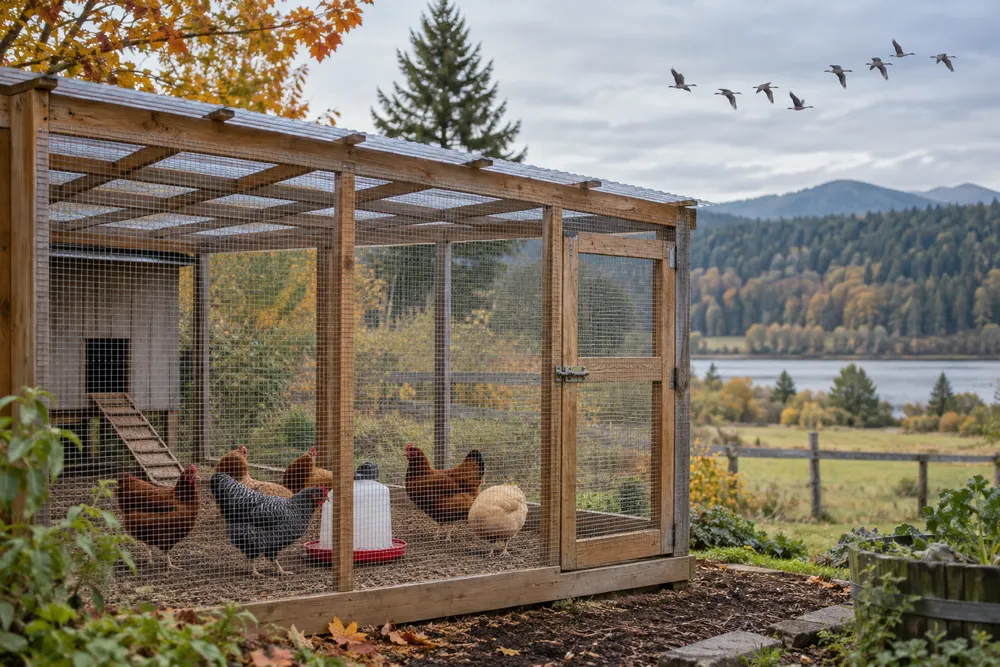
Oregon poultry owners are being urged to tighten biosecurity as fall bird migration increases the risk that highly pathogenic avian influenza will reach backyard and commercial flocks.
The Oregon Department of Agriculture said Friday that migrating wild birds—especially ducks and geese—can carry the virus without appearing sick and spread it through direct contact or contaminated surroundings. Cooler weather and heavier bird movement make the seasonal transition a particularly important time to review how domestic birds are housed, fed and monitored.
Highly pathogenic avian influenza, commonly called HPAI, is a serious viral disease in chickens, turkeys, pheasants, quail and domestic waterfowl. The state’s poultry guidance says the outbreak strain first detected in the United States in January 2022 remains active. Infection can move through fecal material and respiratory secretions, as well as equipment, egg flats, clothing, footwear and hands.
What flock owners should change now
ODA’s fall biosecurity checklist recommends keeping birds in fully enclosed coops or covered runs and blocking access to ponds, puddles and ditches shared with wildlife. Feed should be stored in sealed containers, spills removed promptly and feeders and waterers covered so they do not attract migratory birds.
Fall mud creates another route for contamination. Owners are advised to use dedicated boots and clothing around poultry, clean and disinfect tools and transport containers, and avoid sharing cages or feeders with other flocks. Anyone who hunts or handles wild birds should shower and change clothes before entering a poultry area. New birds—and birds returning from fairs, swaps or other gatherings—should be quarantined away from the main flock for at least 30 days.
Those steps apply to small backyard operations as well as commercial farms. They are preventive measures, not evidence that a particular flock is infected. The state’s warning focuses on reducing contact between domestic birds and the wildlife, people and equipment that can carry the virus.
Symptoms and reporting
Owners should check birds daily for sudden illness or death, lethargy, swelling around the head, neck or eyes, breathing trouble, diarrhea or an abrupt decline in egg production. Sick birds should be isolated, but people should avoid handling dead or visibly ill wild birds.
Suspected disease in domestic poultry should be reported to the Oregon state veterinarian at 503-986-4711. Sick or dead wild birds should be reported to the Oregon Department of Fish and Wildlife at 1-866-968-2600. The distinction matters because the agencies investigate different parts of the animal-health system, while early reporting helps officials assess whether testing or additional controls are needed.
For flock owners, the practical priority this weekend is straightforward: reduce wildlife access, separate new birds, keep footwear and equipment clean, and treat a sudden decline as a reportable animal-health event rather than a routine seasonal loss.