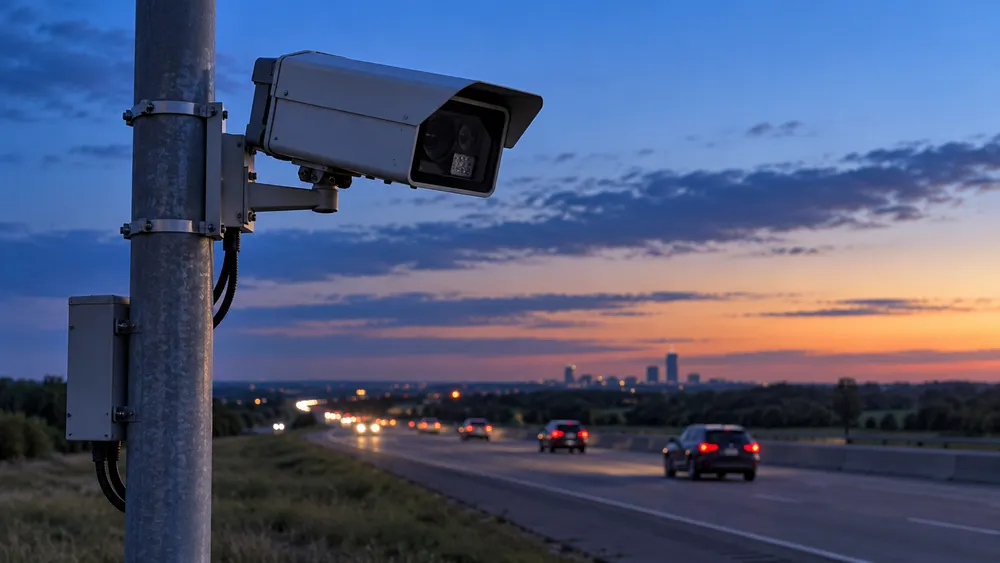
A federal judge in Oklahoma has ruled that a sheriff’s deputy conducted an unconstitutional search when he used an automated license-plate-reader network to retrieve roughly a month of a driver’s historical movements without a warrant. U.S. District Judge Sara E. Hill suppressed the Flock records and evidence obtained later from the vehicle, according to separate accounts by 404 Media and The Washington Post.
The Oct. 1 order arose in United States v. Kyle, a federal drug case in the Northern District of Oklahoma. The U.S. Attorney’s Office said Melisa Susan Kyle, 46, was charged with possession of more than 500 grams of methamphetamine with intent to distribute. A charge is an allegation, and Kyle is presumed innocent unless proven guilty.
According to 404 Media’s review of the order, Tulsa County sheriff’s deputy Freddie Alaniz saw a Mazda with a California plate on Interstate 44, began following it and queried the plate in Flock’s system. The search produced more than 50 vehicle sightings spanning about a month. The Post reported that the route history contributed to the deputy’s suspicion before the traffic stop and later vehicle search.
Hill concluded that the accumulated record crossed a constitutional line because it allowed law enforcement to reconstruct an extended history of movement that had been collected before Kyle became a suspect. The judge described the network as a form of indiscriminate mass surveillance while also acknowledging that license-plate readers can provide investigative benefits, according to The Post. Her remedy excluded both the Flock results and evidence derived from the subsequent search.
The ruling turns partly on scale and duration. Flock says its standard system stores data in the cloud and deletes it automatically after 30 days on a rolling basis. That window can give authorized users access to many separate sightings rather than a single observation. Hill treated the more-than-50-record history in this case as revealing enough of the vehicle’s movements to implicate a reasonable expectation of privacy.
The order does not establish a nationwide rule. It is a federal trial-court decision tied to the facts of one prosecution, and other courts have reached different conclusions about license-plate-reader evidence. Flock, which was not a party to the case, told The Post that the decision conflicts with what it considers the weight of legal authority and said it expects an appeal.
For Oklahoma agencies using shared plate-reader networks, the immediate lesson is narrower than a ban: historical database queries can raise different constitutional questions from a camera alert tied to a known stolen or wanted vehicle. The ruling puts the warrant process, query justification and length of the requested history at the center of how such searches may be evaluated in federal court.