A new federal proposal would bar agencies from using automatic license-plate readers and use federal grants to push states and cities toward the same prohibition, elevating a fast-growing fight over artificial intelligence, public safety and the right to move without persistent government tracking.
Sen. Bernie Sanders of Vermont, Sen. Jeff Merkley of Oregon and Rep. Alexandria Ocasio-Cortez of New York released the Ban Flock Act on Friday. The bill text and an independent account by The Washington Post show that the measure would prohibit federal agencies from operating automatic license-plate readers or accessing the information they collect. It would also make certain federal grants unavailable to state and local governments that use the systems or contract with companies that provide them.
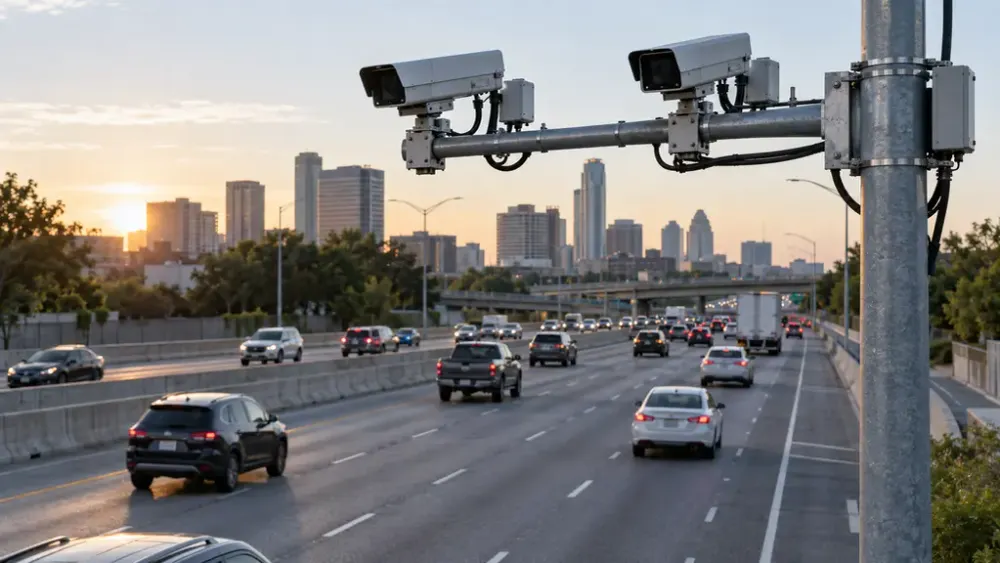
The bill is aimed at networks such as those operated by Flock Safety, whose roadside cameras photograph passing vehicles and convert plate numbers and other vehicle details into searchable records. The Post and a Reuters/Ipsos report each put Flock’s nationwide deployment at roughly 120,000 readers. Reuters reported that the devices operate in every state except Alaska, while Flock says customers—not the company—control access, sharing and retention.
A ban, not only guardrails
The sponsors’ approach is more aggressive than proposals centered on warrants, retention limits and audits. Their summary says the legislation would also let individuals sue the federal government over violations. The Post reported that state attorneys general would receive enforcement authority as well. Those provisions matter because they would shift the argument from how agencies should operate the technology to whether public agencies should use it at all.
Concern is not confined to one party. A separate House measure, the Flock-Off Act, was introduced Sept. 2 by Republican Rep. Thomas Massie of Kentucky with a bipartisan group of co-sponsors. The official congressional record says that bill would prohibit federal funds for covered camera systems and associated components. The Post reported Friday that other lawmakers are considering regulation rather than a broad ban, underscoring a developing divide over the remedy even as scrutiny crosses party lines.
That scrutiny followed documented misuse. The Post reported that at least 50 officers have been charged with or accused of unauthorized searches, including efforts to track spouses, former partners or other women. The Associated Press separately described misuse cases and reported that more than 50 jurisdictions had ended Flock contracts by September. The scale of the system turns an individual search into a broader policy question: a query may reach records generated far outside the officer’s own jurisdiction.
Flock has promised tighter controls
Flock has responded with safeguards rather than accepting the premise that the networks should disappear. In August, the company announced a recommended seven-day default retention period for new law-enforcement customers, required case codes for searches, expanded offense filtering and mandatory audit assistance designed to flag atypical use. AP reported that the company planned to make key controls mandatory for law-enforcement users by Jan. 1, while agencies would retain some flexibility over retention and data sharing.
Those changes strengthen accountability but do not settle the core disagreement. Flock’s position is that local agencies own and control the data and that automatic deletion, authentication and reviewable audit logs can prevent abuse. Ban supporters argue that safeguards administered by a vendor or local agency cannot eliminate the risk created by a searchable national trail of ordinary travel. The difference is structural: one side sees a useful investigative tool that needs enforceable rules; the other sees collection at this scale as the harm itself.
Public opinion is divided
The political debate does not break cleanly along familiar lines. In a Reuters/Ipsos poll of 1,000 U.S. adults conducted Aug. 28-31, majorities of Republicans and adults 55 and older supported Flock cameras in their communities, while only 21% of respondents ages 18 to 34 did. Reuters also reported state-level pushback in both Florida and Texas. The poll measured views of one company’s technology rather than every possible license-plate-reader policy, but it shows why lawmakers are pursuing different answers rather than converging on one national standard.
Supporters of license-plate readers point to their use in locating stolen vehicles, missing people and criminal suspects. AP documented those claimed benefits even while reporting the privacy backlash. Opponents counter that the same interoperability that makes the system useful can enable officials to reconstruct movements without a person ever becoming the subject of a warrant.
The Ban Flock Act is an opening proposal, not a change in current law. Its immediate significance is that a long-running local technology dispute has reached Congress in competing forms: one proposal would broadly cut off federal use and funding, while another would prohibit federal support for covered systems through a different framework. The next test is whether lawmakers choose prohibition, national guardrails or continued state-by-state rules—and whether any approach can preserve legitimate investigations without normalizing location tracking for everyone on the road.