
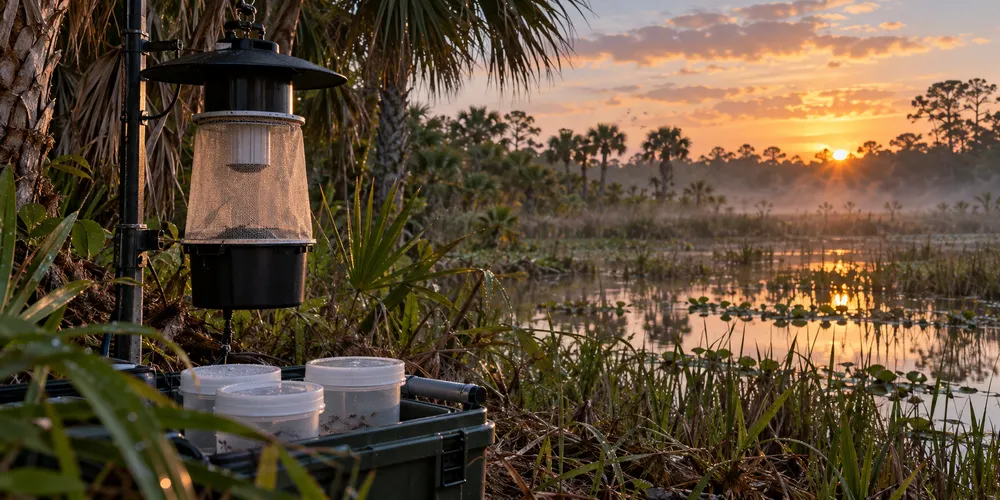
Florida has confirmed its first dengue-related death of 2026 as the state reports 152 locally acquired infections, marking one of its largest recent outbreaks of the mosquito-borne disease.
The death involved an 80-year-old Tampa woman, according to an AP report citing state health officials. The Florida Department of Health’s latest weekly report, covering Sept. 6–12, recorded 41 newly reported local infections in a single week. That brought the 2026 total to 152 cases across six counties, along with 16 mosquito pools that tested positive.
Hillsborough County is the center of the outbreak. The county had 134 locally acquired cases through Sept. 12, nearly nine out of every 10 cases statewide. Local government described the response as unprecedented and said outside crews from Manatee and Pasco counties were assisting with mosquito-control operations. The expanded response includes aerial and ground spraying, property inspections and treatment of standing-water sites where mosquitoes reproduce.
The pace of reporting has accelerated sharply. Florida’s prior weekly surveillance report counted 111 locally acquired cases through Sept. 5, meaning the additional 41 cases represented an increase of about 37 percent in one reporting period. State figures are preliminary, and case counts can change as investigations determine whether infections were acquired locally or during travel.
The local total is separate from 186 travel-associated dengue cases reported in Florida this year. Together, the figures show two connected risks: infected travelers can return from regions where dengue is common, and local mosquitoes can then transmit the virus within Florida communities. The state’s 152 local cases are the second-highest annual total after 2023, according to the AP.
Dengue is transmitted primarily by infected Aedes mosquitoes, not through ordinary person-to-person contact. The CDC says symptoms usually begin within two weeks of a bite and commonly include fever, headache, nausea, rash and muscle or joint pain. Most people recover in about a week, but severe dengue can cause bleeding, shock and death. People with warning signs such as severe abdominal pain, persistent vomiting or bleeding should seek urgent medical care.
Nationally, most dengue cases in the continental United States are still associated with travel. However, the CDC notes that local transmission can occur where the mosquitoes that carry the virus are established, and Florida is among the states that have recorded limited local spread. The agency’s current-year database was updated Sept. 23 but warns that federal figures may lag state surveillance.
Florida maintains a central surveillance archive for weekly arbovirus reports and directs residents to county health departments for disease questions and local mosquito-control districts for spraying or breeding-site concerns.
The immediate public-health task is to reduce the number of mosquitoes capable of carrying the virus while detecting infections early. Residents can help by emptying standing water, covering skin, using an EPA-registered repellent and keeping window screens intact. Those steps are particularly important around Tampa Bay while officials monitor whether the recent surge is slowing or continuing into the fall.