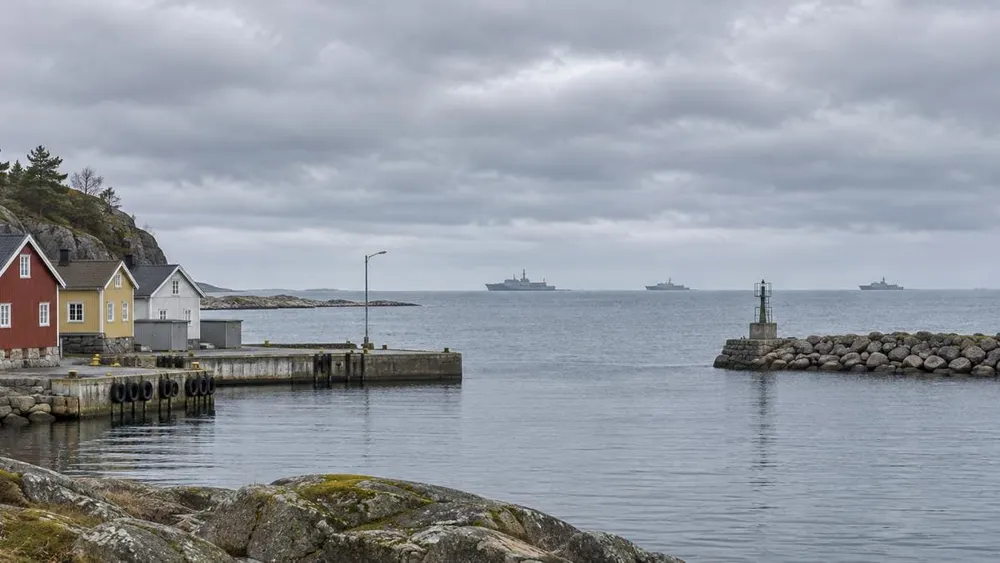
Britain and Norway said Friday that a new agreement among ten northern European navies would strengthen their ability to work together in the North Atlantic, Baltic and High North. The two governments highlighted the agreement in a joint statement after their Atlantic Future Forum in Oslo. The agreement is designed to make joint training and planning more routine and allow the fleets to operate under NATO command if the alliance needs to mobilize more broadly.
The statement followed two days of meetings on Nov. 11 and 12 with representatives from 30 countries, the co-hosts said. The ten navies had signed the framework on Nov. 10 at a separate conference aboard HMS Prince of Wales. Friday’s statement linked that agreement to a broader discussion of security in the North Atlantic. It reaffirmed NATO’s role as the foundation for collective defense.
Ten countries will coordinate through an existing coalition
The agreement applies to the navies of the Joint Expeditionary Force, a British-led coalition. Its ten members are Denmark, Estonia, Finland, Iceland, Latvia, Lithuania, the Netherlands, Norway, Sweden and the United Kingdom. All ten are also NATO members. The coalition organizes training and can work within larger partnerships when a response calls for participation outside its own membership.
The Norwegian military said the framework was intended to help the navies plan, train and operate together more regularly. The partners intend to use common standards and compatible equipment, so that systems from one country can work with those of another. Defence Industry Europe reported that the agreement also calls for planning before a crisis, giving fleets a starting point if they later need to work together.
Common standards are the practical test
The Royal Navy described the initiative as an effort to build compatibility into future equipment rather than solve it only after ships have been assigned to a mission. Two countries can agree to act together and still face differences in how they share information or use equipment. Common standards can reduce those differences. Joint training can show where coordination works and where procedures need more work.
The plans concern cooperation across several maritime regions with different demands. The co-hosts emphasized maritime security and the importance of international law at sea. The public materials describe the institutions and goals that would govern cooperation. Later exercises and procurement decisions will offer a clearer picture of what individual navies can contribute and how quickly they can combine those resources.
The smaller group is meant to complement NATO
British officials see value in a group that can coordinate among a smaller number of governments, particularly for incidents below the threshold of war, the Financial Times reported. The ten-country format could give participants a way to agree on early action without waiting for all NATO members to take a position. The Royal Navy says the framework is also intended to let participating forces transition into NATO command if the wider alliance needs to act. That transition is one of the reasons compatibility matters: cooperation among the ten should produce procedures and equipment that also work when other allies are involved.
That relationship is a point of debate. The Financial Times reported concerns that the smaller coalition could duplicate NATO responsibilities or strain the same pool of forces. The co-hosts emphasized that the alliance remains the starting point for collective security. Those positions leave a practical question about whether the smaller arrangement adds useful coordination or creates parallel work for people and equipment already committed elsewhere.
Friday’s co-host statement placed the naval framework in a meeting that included government, defense and industry representatives. That broader audience matters because compatibility can depend on procurement decisions made before crews train together. Governments decide what to buy, suppliers determine what they can build, and naval operators assess whether the equipment meets common requirements. The forum provided an opportunity to discuss those issues across institutions. The agreements among the naval chiefs set a more specific direction for work within the ten-country group.
Exercises will show what the framework changes
The framework sets out a direction for the participating navies. The public statement does not provide a record of forces assembled under the new arrangements or a schedule for aligning each country’s equipment. Exercises will give the navies a chance to measure whether crews can use common procedures and whether planners can integrate contributions from several countries without repeating work already done under NATO.
For Britain and Norway, Friday’s statement puts the naval framework among the concrete agreements discussed at the Oslo forum. Its value will be easier to judge when the countries identify shared training milestones and describe which equipment standards they can apply across their fleets. The signing creates a basis for that work. The next evidence will come from changes the navies can show in training, procurement and planning.