
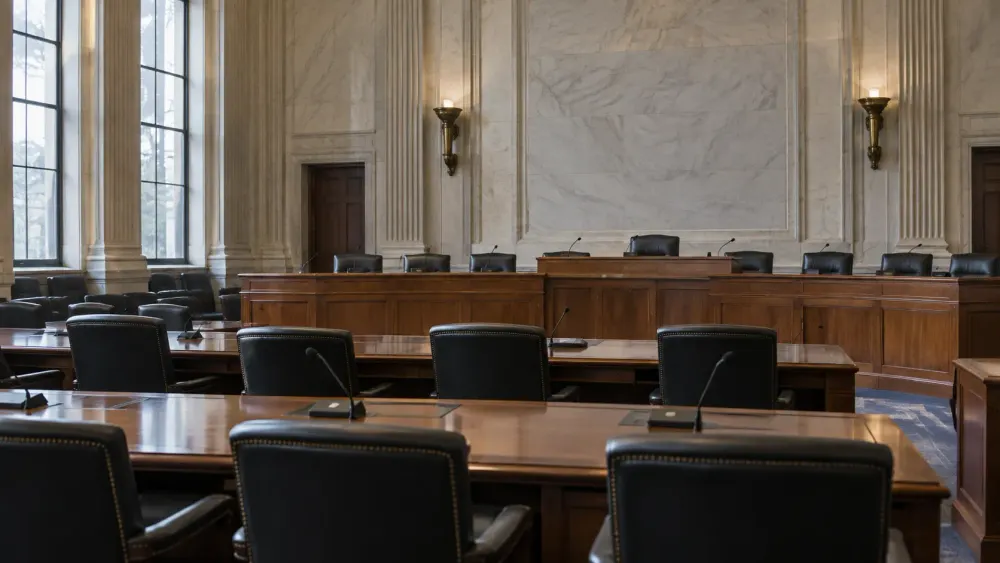
The Senate fell 11 votes short of the 60 needed to advance a major cryptocurrency market-structure bill on Tuesday, leaving federal agencies—not Congress—with the near-term task of deciding how many digital assets and trading platforms fit within existing law.
Senators voted 49–50 against cloture on the motion to proceed to H.R. 3633, the Digital Asset Market Clarity Act, according to the Senate record. The failed procedural vote does not permanently kill the legislation: Sen. Thom Tillis, R-N.C., voted no and immediately moved to reconsider, preserving a path for another attempt. But it showed that supporters do not yet have the bipartisan coalition required to put a comprehensive digital-asset framework on the Senate floor.
The vote exposed a narrow path
Four Republicans—Susan Collins of Maine, Josh Hawley of Missouri, Jerry Moran of Kansas and Tillis—joined Democrats in voting against cloture. Democratic Sen. Chris Coons of Delaware did not vote. Tillis’s procedural maneuver means negotiations can continue without supporters starting the process from the beginning, but any revived measure would still need 60 votes unless Senate rules or the legislative vehicle changed.
The outcome was a setback for an industry that has spent years pressing Congress to replace regulation through enforcement and agency interpretation with a statute tailored to digital assets. Reuters described the measure as a landmark effort to establish a national framework for the sector. The vote also underscored a basic legislative problem: members who agree that clearer rules are needed remain divided over investor protection, financial stability, ethics and the balance of authority among regulators.
What the bill sought to settle
The Clarity Act was designed to draw clearer boundaries between the Securities and Exchange Commission and the Commodity Futures Trading Commission. Its central aim was to establish when a digital asset would be regulated as a security and when it would fall under a commodities framework, while creating registration and disclosure requirements for intermediaries.
Senate Banking Committee Republicans said the legislation would provide “clear rules of the road,” protect consumers and strengthen tools against illicit finance when the panel advanced it 15–9 in May. A separate committee release said the text was intended to divide responsibilities between the SEC and CFTC while preserving enforcement authority and providing a route for firms to operate within a federal system.
Congress has already enacted a narrower framework for payment stablecoins. The GENIUS Act, signed in July 2025, established federal rules for issuers of dollar-linked tokens, according to the Senate Banking Committee’s summary. The Clarity Act addressed the broader and harder question of how tokens, exchanges, brokers and other market participants should be supervised.
Supporters warn uncertainty will persist
Senate Banking Committee Chairman Tim Scott, R-S.C., said after the vote that nearly all Senate Republicans had supported moving forward. In an official statement, he urged the SEC and CFTC to continue setting rules until Congress acts, while arguing that a durable statutory framework remains necessary.
That distinction matters. Agency rules can clarify custody, registration and trading obligations, but they must rest on statutes written before most modern digital assets existed. They can also be revised by a future administration or challenged in court. Legislation could provide greater permanence, though only if lawmakers agree on definitions, safeguards and the allocation of power.
Opponents say the safeguards fall short
Democratic opposition did not amount to a rejection of crypto regulation itself. Sen. Elizabeth Warren, D-Mass., the Banking Committee’s ranking member, said Congress should regulate the sector but argued that this version would weaken securities protections and create unacceptable gaps. In floor remarks, she also raised concerns about ethics enforcement, bank exposure to crypto risks, anti-money-laundering rules and limits on state and tribal authority.
Those objections are policy judgments rather than settled findings, and supporters dispute them. But they identify the issues most likely to determine whether the bill can attract enough Democratic votes: how conflicts involving elected officials would be policed, whether state protections would be displaced, and how much latitude financial institutions would receive to hold or facilitate digital assets.
Regulators retain the initiative
For now, the SEC and CFTC remain responsible for applying current law while Congress negotiates. That preserves flexibility but also leaves companies, investors and courts to work through overlapping definitions and jurisdictional disputes. It also places more weight on agency leadership and rulemaking, precisely the outcome the bill’s supporters sought to avoid.
The motion to reconsider keeps the Clarity Act alive, but Tuesday’s tally established the practical test for any next version. Sponsors must hold nearly all Republican votes and win a meaningful group of Democrats. That likely requires negotiated changes on ethics, investor safeguards, banking risk and state authority—not simply another floor vote on the same text.
Until then, the vote leaves the policy contest where it began: between lawmakers seeking a durable national statute and regulators working within older securities and commodities laws. The next round of negotiations will show whether that shared interest in clarity is strong enough to overcome disagreement about what the rules should protect and whom they should constrain.