
The House voted 262-159 on Wednesday to send President Donald Trump a sweeping Russia sanctions bill that could reach well beyond Moscow, including tariffs of as much as 100% on goods from major buyers of Russian oil and gas. The vote, in which 58 Democrats joined nearly all Republicans, followed an 86-11 Senate vote last month and puts the legislation on the president’s desk.
The Lindsey O. Graham Sanctioning Russia and Iran Act combines mandatory reviews of Russia-linked officials, banks, defense suppliers and vessels with unusually broad trade authority. Its stated aim is to raise the cost of sustaining Russia’s war in Ukraine and deter foreign governments and firms from helping Moscow evade existing restrictions. Its practical effect, however, would depend heavily on how the administration identifies targets, sets tariff rates and uses a national-interest waiver.
The measure is the most consequential Russia policy legislation Congress has advanced this session. It gives the White House a stronger framework for economic pressure, but asks importers, consumers and U.S. allies to absorb uncertainty while the administration decides how aggressively to deploy it.
How the bill expands sanctions
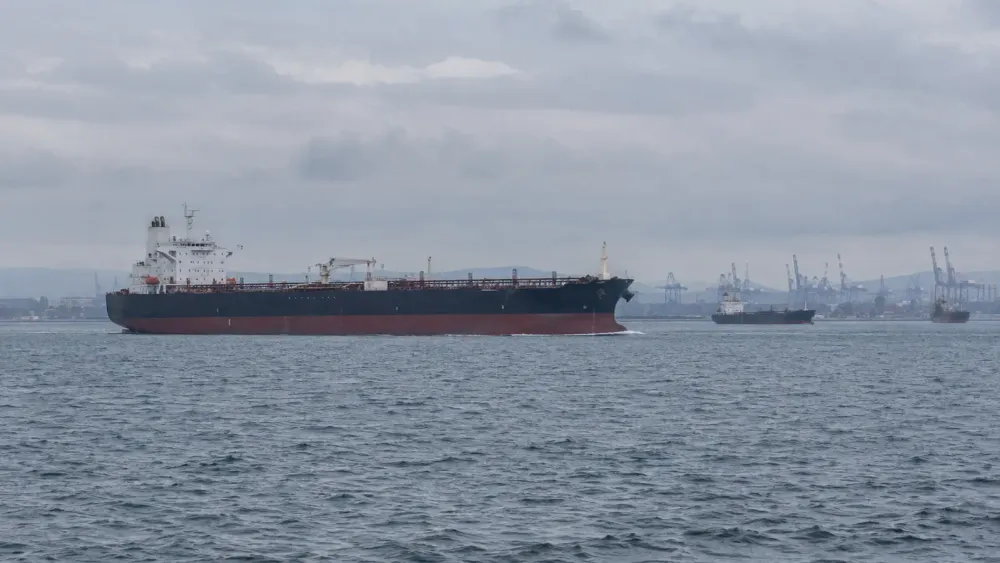
The bill requires the administration to examine a wide range of Russian and foreign actors within 30 days and repeat parts of that review every 180 days. The text covers senior Russian officials and their families, oligarchs, financial institutions, defense-sector suppliers and vessels used to move sanctioned commodities through the so-called shadow fleet. It also reaches foreign people or companies that materially assist sanctionable activity.
That structure would sit on top of the existing system administered by the Treasury Department’s Office of Foreign Assets Control. The current framework draws authority from executive orders and several statutes, with prohibitions, licenses and exceptions that vary by transaction. The bill would require additional determinations and give the administration new tariff tools alongside conventional asset-blocking sanctions.
A bipartisan group of Senate Foreign Relations Committee members said the legislation is intended to close enforcement gaps by targeting the institutions and intermediaries that help Russia sell energy and acquire military inputs. In announcing their agreement, the senators emphasized banks, shadow-fleet operators and foreign facilitators rather than a general embargo on all trade with countries that maintain ties to Russia.
Tariffs reach beyond Russia
The bill authorizes duties of up to 500% on goods imported directly from Russia. More significantly for the global economy, it directs the administration to impose tariffs of more than zero and up to 100% on all goods from countries that rank among the five largest buyers of Russian oil or gas, or among the five jurisdictions most involved in sanctions evasion. The duties would be added to tariffs already in force.
The language includes limits. A country may avoid treatment based on gas purchases if its share is relatively small and it is taking significant steps to reduce Russian imports. The administration also must report to Congress before imposing the countrywide duties and explain its selection and rate. Even so, the measure could affect trade with large economies whose exports to the United States extend far beyond energy.
That makes implementation an economic-policy question as much as a foreign-policy one. A March survey by the Federal Reserve Banks found that more than four in 10 small employer firms considered tariff costs a challenge, with higher shares in retail and manufacturing. Among firms facing higher prices for foreign inputs, 76% passed at least some of the increase to customers and 60% absorbed some themselves. Those findings are not a forecast for this bill, but they show the channels through which broad duties can reach U.S. households and businesses.
Bipartisan votes mask a policy dispute
Supporters argue that the threat of secondary tariffs can force governments to choose between access to the U.S. market and continued dependence on discounted Russian energy. Senate Foreign Relations Committee leaders have also tied the bill to mounting civilian harm in Ukraine and to continuing Russian energy revenue, presenting congressional action as leverage for negotiations rather than a substitute for diplomacy.
Opponents and some trade-policy specialists see a different risk: Congress is handing the executive branch another expansive tariff instrument while leaving central choices to presidential discretion. Independent reporting on the House vote highlighted concern that the bill enlarges the president’s power over both sanctions and trade. The legislation permits the president to waive a sanction, restriction or duty after certifying that doing so serves the national interest and explaining the basis to Congress.
Those provisions explain why the lopsided votes do not amount to agreement on execution. Some lawmakers view discretion as necessary to preserve alliances and negotiate reductions in Russian purchases. Others worry it could produce uneven enforcement, exempt favored partners or expose countries to steep tariffs without a predictable standard. The bill gives Congress notice and review mechanisms, but the administration would make the initial targeting decisions.
Implementation will determine the impact
If Trump signs the bill, the first test will come quickly. Agencies would have to develop designation lists, rank energy buyers and sanctions-evasion jurisdictions, and establish tariff rates. The Office of the U.S. Trade Representative and Treasury would also need to coordinate rules that distinguish direct purchases from indirect transactions, while allies and businesses seek clarity on exemptions and waivers.
The legislation generally expires after five years, while extending the Iran Sanctions Act through 2031. That sunset gives Congress a future opportunity to reassess the policy, but the nearer-term consequences could arrive through supply contracts, shipping routes and customs costs long before lawmakers revisit it.
For now, passage changes the debate from whether Congress will act to how the president will use the authority. The measure could become a significant source of leverage against Russia and its commercial partners. It could also widen the economic footprint of the war by turning access to the U.S. market into the enforcement mechanism. The signature decision, the first 30-day designations and any national-interest waivers will show which objective takes priority.