
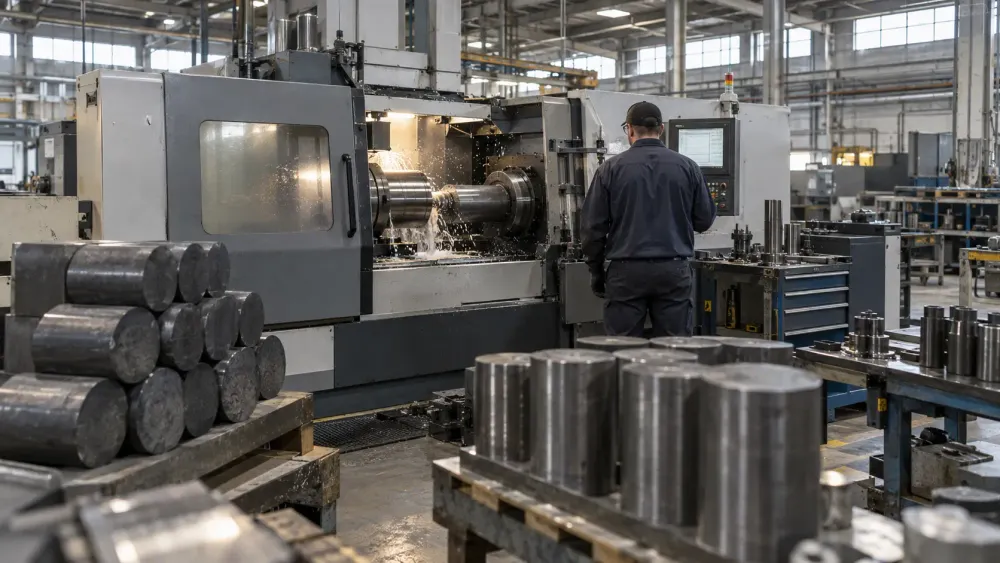
The Defense Logistics Agency awarded Elmet Technologies an indefinite-delivery contract worth up to $2 billion to rebuild U.S. tungsten reserves, including a guaranteed $150 million commitment, while the Pentagon separately committed $450 million to expand the company’s mining, processing and manufacturing network. The twin agreements, disclosed Monday, turn a long-recognized vulnerability in the military supply chain into one of Washington’s largest direct industrial interventions for a single strategic metal. They also show the limits of the headline figure: most of the contract depends on future orders, and stockpile deliveries will not begin until new supply exists.
The award covers tungsten ores, concentrates and sodium tungstate supplied to DLA Strategic Materials, according to the company’s announcement. The contract has a five-year base ordering period through Aug. 30, 2031, plus an option extending it through Aug. 30, 2033. Reuters independently reported the terms and the separate federal investment.
Tungsten matters because its density, hardness and heat resistance make it difficult to substitute in high-stress military components. The Defense Logistics Agency lists uses including jet-engine superalloys, armor-penetrating projectiles, aircraft counterweights and small-arms ammunition. Elmet says it supplies programs including Patriot, Javelin, Aegis, Trident II and THAAD, as well as Virginia- and Columbia-class submarines. Those program claims come from the contractor, but the metal’s defense role is confirmed by the government’s own materials guide.
A contract designed to create supply before buying it
The unusual sequencing is central to the plan. Elmet said it will not deliver material into the National Defense Stockpile until added supplies become available from new mines, offtake agreements and processing expansions. That provision is intended to prevent federal purchasing from diverting scarce material away from existing American manufacturers. In practice, the government is trying to enlarge the pool before filling its reserve, rather than bidding against companies already using tungsten.
The $450 million investment is the capacity-building side of that strategy. An initial $200 million is due at closing, with later drawdowns tied to the agreement. In exchange, the government will receive redeemable preferred equity, warrants representing as much as 19.9% of Elmet’s common stock after the transaction, the right to appoint one independent director and a nonvoting board observer. That structure gives taxpayers a potential ownership interest while placing the government unusually close to the governance of a defense supplier.
Elmet plans to direct more than $165 million to factories in Lewiston, Maine; Coldwater, Michigan; and Euclid, Ohio. It also expects to allocate about $150 million to the Springer Tungsten Complex near Imlay, Nevada, where a majority-owned venture with Blue Moon Metals and Australia’s EQ Resources would restart a mine, mill and ammonium paratungstate conversion facility. A second company release projects mine and mill production in late 2027 and conversion operations in the second half of 2028. Those dates are plans, not completed capacity.
China’s dominance turned concentration into a military risk
The United States currently has no operating tungsten mine, the DLA says, even though domestic factories consume the metal. The U.S. Geological Survey estimates that China accounts for about 80% of world mine production. Its latest commodity summary also says roughly 60% of U.S. tungsten consumption goes into cemented-carbide parts used for cutting and wear resistance, illustrating that defense buyers compete with manufacturing, construction, mining and energy users.
That concentration became more consequential after Beijing imposed export controls in February 2025 on specified tungsten products and related technologies. The rules require licenses rather than banning every shipment, but licensing creates a lever over availability and timing. The IEA record dates the controls to a joint announcement by China’s commerce ministry and customs administration. China later limited the number of authorized exporters, further tightening a market in which substitution and rapid mine development are difficult.
Prices and military consumption magnified the pressure. A March Reuters analysis found that benchmark ammonium paratungstate had risen from less than $400 per metric-ton unit to more than $2,200 in about a year, while Chinese exports had fallen sharply after the controls. Tungsten used in a carbide cutting tool can often be recycled; metal expended in a munition is generally lost. That difference makes sustained combat a depletion problem as well as a procurement problem.
The stockpile is insurance, not ordinary inventory
DLA Strategic Materials manages the National Defense Stockpile to preserve access to materials needed for national defense and essential civilian industry during emergencies. The agency describes itself as the federal lead for analyzing, procuring and managing materials critical to security. Its public mandate spans acquisition, storage and disposal, which means the Elmet framework is not a weapons purchase but an effort to hold upstream inputs before they become scarce.
The stockpile’s logic dates to the shortages that shaped industrial production during World War II and the early Cold War. Under the Strategic and Critical Materials Stock Piling Act, the government can acquire and retain designated materials while trying to avoid unnecessary disruption of commercial markets. DLA has described the reserve as an insurance policy against foreign dependence or a single point of failure. Its depots already list tungsten ores and concentrates among stored commodities, but inventories and military requirements change as technology and conflict consume material.
Recycling can supplement mined supply, though it cannot close every gap. DLA’s recycling program recovers materials including tungsten from obsolete federal equipment and transfers qualifying output to the stockpile. That approach is useful for superalloys and manufacturing scrap. It is less effective for dispersed material, contaminated waste or tungsten destroyed when a weapon detonates, so the Pentagon still needs new ore, chemical conversion and finished-product capacity.
An allied network reduces one risk but creates others
The proposed network extends beyond Nevada. Elmet says it plans investments or supply arrangements tied to the Mt. Carbine mine in Australia and the Barruecopardo mine in Spain, then intends to coordinate sourcing through a new refining and trading division. Geographic diversification reduces exposure to any one country, but it also creates a chain of mines, ocean transport, chemical conversion and U.S. manufacturing that must work on schedule.
The federal government has increasingly used equity, loans and long-term purchase commitments to make such projects financeable. A mine or refinery cannot be switched on like a warehouse; it requires permits, engineering, specialized equipment, skilled workers and customers willing to sign contracts before production begins. President Donald Trump’s March 2025 executive order directed agencies to accelerate financing and permitting for domestic mineral projects. The Elmet transaction adds a direct ownership mechanism and a guaranteed buyer to that policy.
Yet allied sourcing is not the same as domestic self-sufficiency. Australian and Spanish material could lower dependence on China while remaining vulnerable to shipping disruption, currency shifts and local operating problems. The Nevada timetable also leaves at least a year before projected mine output and roughly two years before planned conversion capacity. Until then, existing inventories, recycling and imported material must bridge the gap.
The $2 billion ceiling is not $2 billion spent
The contract’s maximum value is the most visible number, but only $150 million is described as guaranteed funding. An indefinite-delivery contract allows DLA to place orders over time without obligating the full ceiling at award. Actual spending will depend on demand, supplier performance, available material and future federal decisions. Likewise, the $450 million investment will arrive in stages, and several company allocations remain forward-looking.
Federal ownership also raises execution and oversight questions. Warrants can give the government upside if Elmet’s value rises, but equity does not ensure that a mine starts on time or a conversion plant reaches planned output. Board representation may improve visibility into performance, while simultaneously blurring the conventional line between regulator, customer and shareholder. Clear milestones, pricing terms and disclosure will determine whether the arrangement protects taxpayers as well as supply.
The immediate change is therefore institutional rather than physical: Washington has created a multiyear purchasing framework, committed capital and linked stockpile replenishment to new production. The evidence does not yet show additional tons in federal depots or higher domestic output. The next meaningful tests will be the investment’s closing, disclosed DLA orders, construction progress in Nevada and measurable increases at Elmet’s U.S. plants. If those milestones arrive, the Pentagon will have converted a supply-chain diagnosis into operating capacity; until then, the agreements remain a heavily financed plan to do so.