Italy and Spain extended reciprocal border checks for another 15 days on Tuesday, keeping document inspections in place for travelers moving between the two countries into early October.
Italy’s new period runs from Sept. 16 through Oct. 1 and covers all internal air and sea borders with Spain, according to the European Commission’s official border tracker. Spain’s Interior Ministry said its parallel controls on arrivals from Italy would continue until Oct. 8, Reuters reported. The measures do not close either country to visitors, but they suspend the expectation of routine border-free movement on direct flights and ferry routes.
Checks remain at airports and seaports
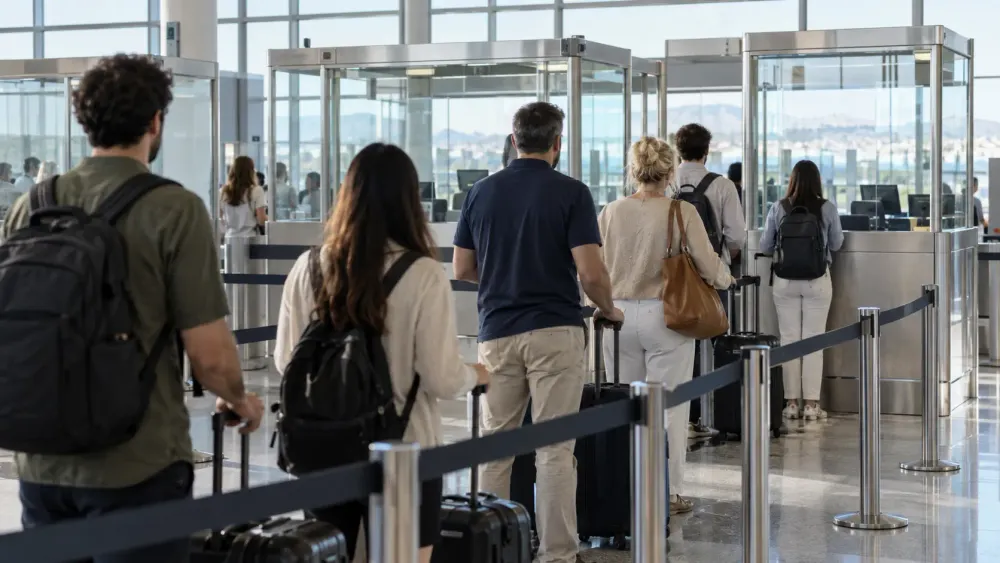
The two countries do not share a land border, so the practical effect falls on passengers arriving by air or sea. Italy has used random police checks at airports and ports for travelers from Spain, while Spain has applied reciprocal controls to arrivals from Italy. The checks can add an identity-verification step after a journey that would ordinarily be treated as movement within one border-free travel zone.
Italy first imposed the controls on Aug. 1 after more than 72,000 migrants entered Ceuta, Spain’s North African territory, from Morocco in late July, according to the Associated Press. Spain responded with its own checks on Aug. 8. Most of those who entered Ceuta subsequently returned to Morocco, but more than 5,000 remained as the humanitarian and political dispute continued.
What travelers should expect
The extensions mean passengers on direct Italy-Spain itineraries should allow for an additional inspection and keep valid travel documents readily available. The controls are not the same as a new visa requirement, and they do not change the underlying right of eligible travelers to move within the Schengen area. Their immediate consequence is operational: some passengers may face queues or questioning that normally would not occur after an internal Schengen journey.
The scale of disruption will depend on how intensively police conduct the checks at individual airports and ferry terminals. No government has announced broad flight or sailing cancellations tied to the measures. The European Commission says Schengen normally guarantees free movement to more than 450 million EU citizens, as well as non-EU residents and visitors who are legally present, making even selective internal checks a notable departure from the usual travel system.
For connecting itineraries, the added inspection can also narrow the margin between arrival and an onward flight, train or ferry. The measures therefore matter even when they do not cancel a service: an unpredictable checkpoint can turn an otherwise routine transfer into a missed connection.
Schengen allows narrow exceptions
Border-free travel is a central feature of the 29-country Schengen area, but it is not absolute. The Schengen Borders Code permits a member state to restore controls temporarily when it identifies a serious threat to public policy or internal security. The Commission says such measures must be exceptional, proportionate, limited in scope and duration, and used only as a last resort.
The current Italy-Spain measures fall within that exception rather than representing a withdrawal from Schengen. Updated rules adopted by the Council of the European Union require governments to assess whether their objective can be achieved through less restrictive means. The Council’s code summary also describes alternatives such as police checks and cross-border cooperation, designed to preserve free movement while responding to security concerns.
Governments disagree over the risk
Italy told European authorities that continued threats to public order, internal security and migration management justified controls at all air and sea connections with Spain. Its Interior Ministry also cited the possibility of terrorist infiltration. Spain said the circumstances behind its retaliatory controls remained in place because Italy had extended its own measure.
The public record does not establish that travelers linked to the Ceuta surge have carried out a terrorist attack in Italy or Spain. Italian Interior Minister Matteo Piantedosi said authorities had checked more than 180,000 people, denied entry to 42 and arrested eight during the broader control period, according to El País. The newspaper reported that the minister did not link those cases to terrorism or specify that the people involved had come through Ceuta. That leaves the necessity and proportionality of the extensions contested even though the legal power to impose them is clear.
The next decision comes in October
Travelers now face different stated end dates: Oct. 1 for Italy’s latest notified period and Oct. 8 for Spain’s extension. Either government could modify or renew its measure if it concludes that conditions have changed. The Commission monitors the notifications and can assess whether a restriction remains necessary and proportionate, but the initial decision belongs to the member state.
The near-term test is whether the additional checks produce evidence of a continuing security threat or mainly prolong a political dispute over migration. For passengers, the practical guidance is simpler: Italy-Spain flights and ferries continue to operate, but the border-free assumptions normally attached to an internal Schengen trip cannot be taken for granted until both governments end the controls.