President Donald Trump signed a broad Russia sanctions bill into law Friday, turning a long-debated congressional proposal into a new set of penalties on Russian officials, banks, energy projects and sanctions-evasion networks. The White House confirmed the enactment of H.R. 5334 on Sept. 18, describing it as an expansion of statutory sanctions, tariffs and prohibitions on Russia that also extends existing sanctions on Iran.
The immediate significance is not that a 100% tariff took effect overnight. It is that Congress has given the president explicit authority—and, in several circumstances, a 30-day timetable—to impose tariffs on major buyers of Russian energy and countries that help Moscow evade sanctions. The law therefore combines mandatory pressure on Russia with substantial presidential discretion over how aggressively to confront its trading partners.
A Sanctions Package Becomes Law
The legislation passed the Senate 86-11 in August and cleared the House 262-159 on Wednesday. The official House vote shows 12 members did not vote. Its bipartisan margins reflected wide support for raising the cost of Russia's war against Ukraine, but the House vote also exposed concern about the scope of the tariff authority delegated to the president.
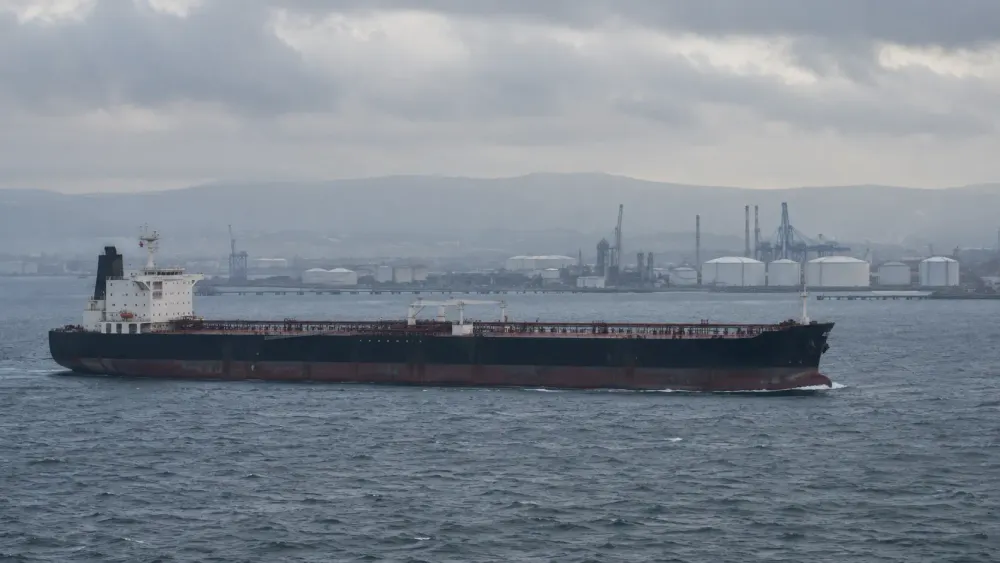
The measure is formally named the Lindsey O. Graham Sanctioning Russia and Iran Act of 2026, honoring the late South Carolina Republican who developed it with Sen. Richard Blumenthal, D-Conn. According to the Associated Press, the law targets Russian officials and financial institutions as well as the shadow fleet of tankers used to move Russian energy around existing restrictions.
The enacted measure also covers elements of Russia's defense and energy sectors. The bill text posted by the House Rules Committee contains the Senate amendments the House accepted without further changes. That is important because the sanctions package moved through Congress by replacing the substance of an existing House tax bill; the final statutory language is the Senate amendment, not the bill's original title or purpose.
The 100% Tariff Authority
The most consequential provision reaches beyond Russia. It requires the administration to identify the five largest importers of Russian crude oil or natural gas and the five leading countries facilitating evasion of Russian energy sanctions. It also reaches countries that knowingly make new Russian oil or gas purchases beginning 30 days after enactment. Tariffs may be set as high as 100% on goods those countries export to the United States.
The law does not name the target countries or dictate a uniform method for compiling the lists. Reuters reported that China and India are among the largest buyers of Russian oil, while analysts also identified possible exposure for Brazil, Japan and European countries. The ultimate list will depend on the administration's data choices, definitions and findings.
There is a narrower exception for countries whose purchases represent less than 15% of Russia's natural-gas exports and that are taking significant steps to reduce those imports. The president can also waive sanctions or tariffs on national-security grounds after notifying Congress. Those provisions create room for diplomacy, but they also mean the headline ceiling does not predict the rate any country will actually face.
Implementation Could Move Quickly
The new law sets a 30-day window for tariff action in covered circumstances, putting the first major decisions close to the November midterm elections. A 100% duty is a ceiling rather than an automatic rate, and the administration could use lower rates, exclusions or waivers. That flexibility may help avoid abrupt disruptions in energy markets, though it can also make enforcement less predictable for allies, importers and U.S. businesses.
Energy specialists told S&P Global that aggressive enforcement could reduce Russian sales but also put upward pressure on crude prices. Russia remains a major oil exporter, so the policy challenge is to cut Moscow's revenue without removing so much supply that higher prices offset the pressure or raise fuel costs for consumers elsewhere.
The tariff mechanism is also legally distinct from duties Trump previously imposed using older emergency statutes. Congress has now expressly provided a Russia-related tariff authority. That may make a challenge based on lack of statutory authorization more difficult, although disputes could still arise over how the administration identifies countries, calculates import volumes or uses waivers.
Sanctions Reach Finance and Shipping
Tariffs are only one part of the package. The law authorizes or requires sanctions against Russian political and military officials, major financial institutions, state-linked energy interests and foreign actors supporting Russia's defense industrial base. It also targets vessels connected to sanctions evasion involving crude oil, liquefied natural gas, petroleum products, coal and other energy trade.
Those provisions are designed to address the shadow fleet: older tankers, opaque ownership structures and intermediary networks that have helped keep Russian exports moving despite price caps and financial restrictions. Their practical force will depend on how quickly the Treasury and State departments identify covered entities, how broadly U.S. allies coordinate enforcement and whether shippers, insurers and ports treat the designations as credible.
Iran Authority Is Extended
The package also extends the Iran Sanctions Act of 1996 for five years, through 2031. That statute supports penalties involving specified investments and transactions tied to Iran's energy and weapons sectors. Its inclusion helped secure White House support for the broader legislation after months of negotiation.
The signing is therefore a major policy change, but not the end of the process. The administration must now issue determinations, designations and tariff decisions that reveal whether the law becomes a forceful new constraint on Russian revenue or a flexible negotiating tool. The next month—especially the publication of target lists and any waivers—will show how Congress's broad mandate is translated into economic pressure.