
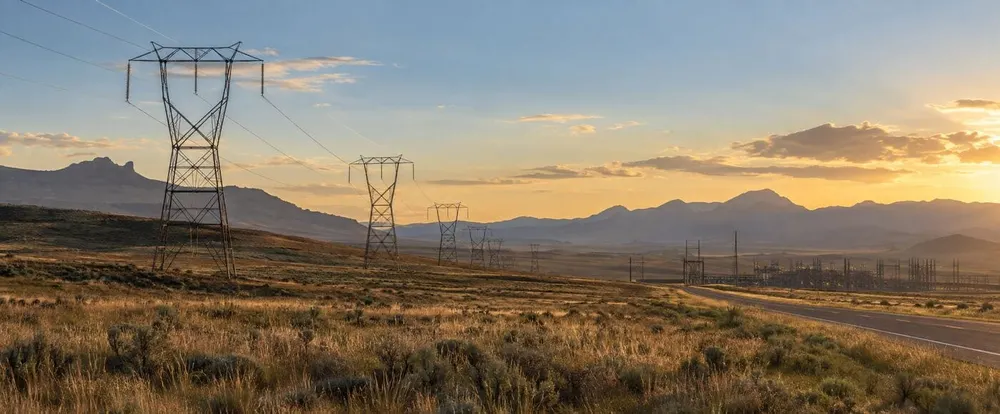
Wyoming has selected Energy Strategies to conduct a statewide electricity-transmission study intended to show where the grid could face constraints as power demand and economic development grow.
The Wyoming Energy Authority’s selection moves into implementation a study lawmakers ordered in Senate File 102, which Governor Mark Gordon signed in March. Wyoming Public Media reported that the Utah-based consulting firm will examine the state’s existing network under low-, moderate- and high-growth scenarios, identify delivery bottlenecks and assess infrastructure gaps.
The assignment is deliberately broader than a list of proposed power lines. The legislation directs phase one to model deliverability and congestion, consider advanced transmission technologies and electricity storage, and look at needs through 2046. Phase two addresses how Wyoming utilities interact with regional transmission organizations, independent system operators and real-time or extended day-ahead electricity markets.
The Energy Authority also plans an advisory working group that includes transmission developers, utilities, state agencies, energy developers and large-load customers. That structure matters because transmission decisions affect both generators trying to reach buyers and customers who depend on reliable service, while the study itself does not authorize construction or settle who would pay for any future project.
Cost is limited at this stage. The Legislature’s fiscal note estimated $200,000 in contracted services and said the Energy Authority would absorb the expense. The agency’s selection announcement calls for final reports on both phases by March 1, 2027, an accelerated timetable compared with the outside reporting dates written into the law.
The study arrives as electricity demand forecasts are becoming less predictable. During legislative debate, supporters pointed to proposed data centers and other large industrial loads as reasons to test more than one growth case. A high-demand scenario does not assume every announced project will be built; it is a planning tool for identifying what could fail or become congested if demand rises faster than expected.
Energy Strategies describes itself as an independent consulting firm serving utilities, power producers, transmission developers, government agencies and large energy users. Its published capabilities include markets and transmission analysis, energy policy and regulatory services. Wyoming Public Media reported that the firm has completed assessments in Colorado, Montana and Utah.
For Wyoming residents and businesses, the next meaningful checkpoints are the working group’s membership, the assumptions used for each growth scenario and the final identification of constraints. Those choices will shape whether the report becomes a neutral planning baseline or simply reflects the priorities of the participants with the most data and resources.
The immediate development is not a new line or rate increase. It is the start of a statewide evidence-gathering process that could guide later decisions about grid reliability, economic recruitment, regional market participation and which upgrades merit closer study.