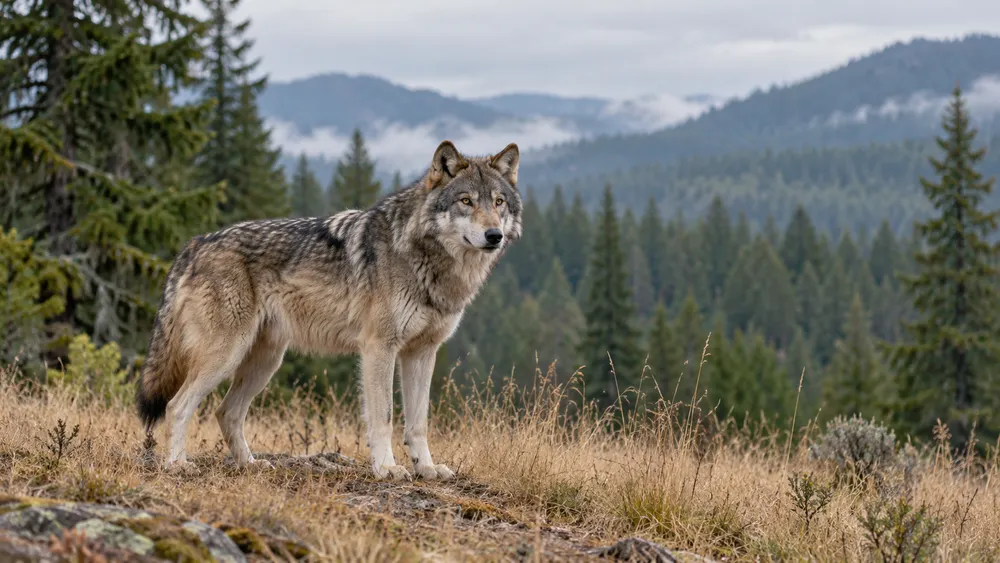
Washington opened public comments Monday, Oct. 19, on proposed changes to who may kill a wolf attacking domestic animals and the conditions attached to that authority. The Department of Fish and Wildlife’s rulemaking timetable runs through Nov. 23. The proposal concerns a limited response to attacks, not a general wolf-hunting season.
Under the filed amendments, an owner’s documented representative would replace the existing reference to an agent. The representative would need a signed, dated authorization from the owner to manage or supervise the domestic animals, issued before taking action and available to wildlife officials on request. Owners, immediate family members and documented employees would remain identified in the rule.
The proposal would also deny this authority to people who negligently attract wolves by leaving sick, injured or dead domestic animals in grazing areas. In its explanation, the department links that provision to nonlethal conflict prevention, including carcass sanitation and removing vulnerable animals from grazing areas. These requirements are proposed, not newly effective obligations.
The existing limits
The current rule already allows specified people to kill one wolf without a director-issued permit when it attacks their domestic animals. That exception applies only where wolves are not federally listed as endangered or threatened. It does not override other state or federal law.
Current requirements also include reporting a killing to the department within 24 hours, surrendering the carcass and granting or helping obtain access to the property for investigation. Keeping those provisions distinct from the proposed authorization changes matters: the rulemaking is not an unrestricted permission to kill wolves whenever they are near livestock.
The existing definition of attack includes imminent or actual physical contact, including pursuit, biting or wounding. Mere proximity, presence or observation by wildlife does not qualify. The filing proposes a grammatical revision to that definition; the department says substantive changes would require additional proposed language and another opportunity for comment.
Recovery and livestock context
The agency’s April report put Washington’s minimum year-end 2025 count at 270 wolves, 49 packs and 23 breeding pairs, up from 230 wolves a year earlier. It documented 17 livestock-depredation events involving 19 cattle. These are historical survey findings, not a count of attacks during the current comment period.
Independent reporting by Methow Valley News also described the population increase and the absence of documented packs or breeding pairs in the Southern Cascades and Northwest Coast recovery region. Statewide growth therefore does not mean recovery is evenly distributed.
The Fish and Wildlife Commission plans a hybrid hearing during its Nov. 19–21 meeting in Spokane, according to the agency schedule. The filed notice identifies intended adoption on or after Dec. 11; no final rule is being announced by this comment opening. The agency accepts comments online, by email and by phone; its rulemaking page provides submission instructions.