Russia released 74-year-old retired American teacher Stephen Hubbard on Wednesday as U.S. special envoy Steve Witkoff opened a new round of talks with President Vladimir Putin in St. Petersburg, giving Washington’s renewed Ukraine diplomacy one concrete result while leaving the war’s central disputes unresolved.
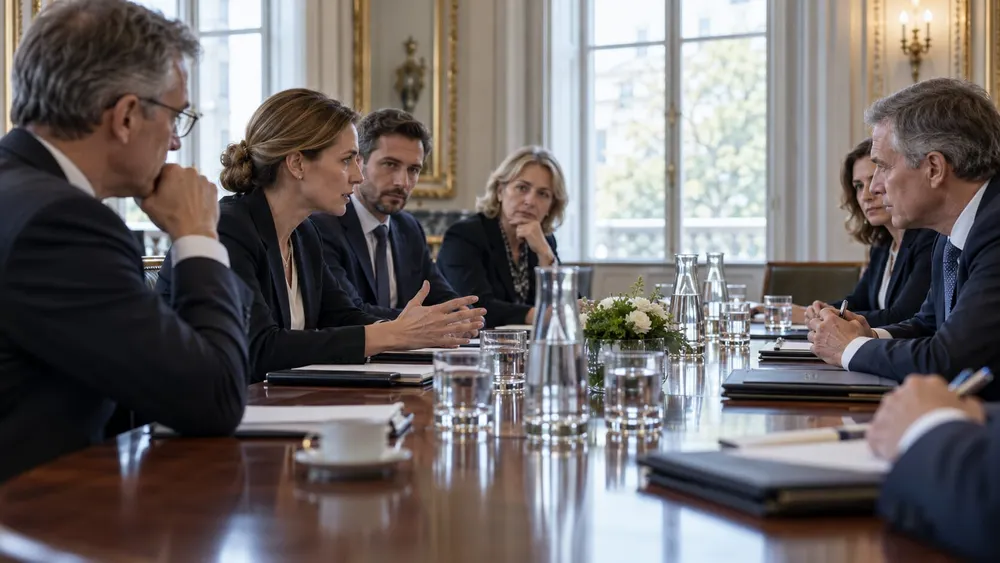
Witkoff urged Putin to consider restarting three-way negotiations among the United States, Russia and Ukraine and delivered proposals developed after consultations with Ukrainian and European officials in Oslo. The meeting lasted about three hours, according to the Associated Press, but neither side announced an agreement on a ceasefire, territory or security guarantees.
A diplomatic relay from Oslo
The St. Petersburg session was the second stage of a deliberately sequenced effort. On Tuesday, Witkoff met Ukrainian President Volodymyr Zelenskyy, Finnish President Alexander Stubb and Norwegian Prime Minister Jonas Gahr Støre in Oslo. Jared Kushner joined by video, while national security advisers from Britain, Germany, Italy, the European Union and NATO participated in a working dinner.
The Norwegian government said the group addressed Ukraine’s security, territorial questions and a postwar prosperity plan. Støre described the work as constructive but ongoing, and said Witkoff would carry ideas from the meeting to Russia. The format mattered: it gave Kyiv and European governments an opportunity to shape the material presented to Putin before Washington sought a Russian response.
Ukraine’s account was similarly guarded. The Ukrainian presidency said the Oslo talks covered air defense, intelligence, energy security and a possible partial ceasefire. Zelenskyy said Ukraine had supported a proposed halt to attacks on energy infrastructure but accused Russia of continuing its strikes. Those issues remain central because even a narrow ceasefire would require monitoring, reciprocal compliance and an agreed consequence for violations.
What Witkoff asked Putin to consider
At the start of Wednesday’s meeting, Witkoff said he hoped to discuss resuming U.S.-mediated trilateral talks and identifying a next step even if no settlement emerged immediately. Reuters reported that he brought documents containing ideas for a potential agreement and described the Oslo consultations as having produced momentum toward a coordinated approach.
Putin signaled willingness to hear the proposals but also widened the agenda, raising economic cooperation with the United States, possible assistance regarding Iran and the prospect of meeting President Donald Trump in China. Those subjects may create channels for bargaining, but they can also complicate the Ukraine track by linking it to sanctions relief, trade and other geopolitical priorities.
The parties also begin far apart. Kyiv insists that any durable settlement protect its sovereignty and include reliable security guarantees. Moscow continues to press territorial and political demands that Ukraine rejects. The absence of a joint statement after the meeting means the public record supports only a renewed process—not a convergence on terms.
Hubbard’s release is a real but limited outcome
Hubbard had been in Russian custody since April 2022 after being detained in the eastern Ukrainian city of Izium. Russian prosecutors accused him of joining a Ukrainian territorial defense unit and manning a checkpoint. He was convicted in a closed trial and sentenced in 2024 to six years and 10 months. Hubbard, his lawyer and his family disputed the allegation that he had served in a combat unit.
In a separate account, Reuters said Hubbard had been taken to St. Petersburg’s airport and that Washington had designated him as wrongfully detained. President Trump said the United States gave up no prisoner in exchange. Witkoff thanked Putin at the televised opening of their meeting, making the release both a humanitarian outcome and an unmistakable diplomatic gesture.
The release should not be treated as evidence that the broader negotiation is near success. Humanitarian cases can sometimes be resolved through leader-to-leader intervention even when governments remain divided on war aims. Other Americans remain detained in Russia, and advocacy groups have pressed Washington to continue seeking their return.
Momentum will be measured by the next step
The immediate test is whether the St. Petersburg meeting produces a scheduled trilateral session, a technical working group or a verifiable agreement on attacks against energy infrastructure. Without one of those steps, “momentum” will remain a description of diplomatic activity rather than a change in the war.
That distinction is especially important as fighting continues. AP reported fresh Russian strikes on Ukrainian cities and large-scale Ukrainian drone attacks on Russian territory even as the envoys met. Diplomacy and military pressure are therefore proceeding at the same time, increasing the risk that a new attack, intelligence dispute or disagreement over sequencing could halt the process.
For now, the most defensible conclusion is narrow. Washington has reconnected consultations with Kyiv and Europe to direct engagement with Moscow; Russia released one wrongfully detained American; and the participants publicly left the door open to further talks. Whether that door leads to negotiations over an enforceable ceasefire will depend on what the parties put on the calendar—and what they are prepared to verify—after St. Petersburg.