Iran has offered to reopen the Strait of Hormuz within seven days if the United States eases military pressure and lifts its blockade on Iranian ports, creating the clearest diplomatic opening in weeks around a waterway central to global energy trade. The proposal is conditional, has not been accepted by Washington and was described publicly by an unnamed senior Iranian official, so it is better understood as an opening bid than a settlement.
The Iranian official told Reuters on Tuesday that Tehran wants a formal U.S. declaration favoring diplomacy and an agreed timetable for talks. The official said Iran could discuss an end to hostilities through mediators in New York, where the United Nations General Assembly has brought senior officials from both countries to the same city. Iran’s delegation, the official added, has authority to revive negotiations, although President Masoud Pezeshkian is not scheduled to meet President Donald Trump.
Markets reacted as though even a limited path toward de-escalation could matter. The Wall Street Journal reported that Brent crude futures fell 2.6% to $97.76 a barrel and West Texas Intermediate dropped 3.1% to $92.78 after the offer emerged. Both contracts had risen earlier in European trading. That reversal does not establish that an agreement is likely; it shows how much risk traders have attached to shipping through the strait.
A narrow opening around a high-risk chokepoint
The terms described by Tehran reveal the central difficulty. Iran is tying maritime access to a reduction in U.S. military pressure and relief from the blockade on its own ports. Washington, by contrast, has presented the blockade as a source of leverage. An August White House statement said U.S. forces had cleared mines from international shipping lanes, escorted commercial traffic and prevented Iranian oil exports. Those claims were framed in explicitly political language, but they make clear that the administration views control of the waterway as an instrument of its Iran policy, not merely a navigation mission.
That gap means the word “reopen” may carry different meanings for the two sides. Iran can offer to stop obstructing traffic or attacking ships, while the United States can claim that protected traffic already moves through the strait. A durable arrangement would therefore need to define which vessels may pass, what happens to the U.S. blockade, how mines and other hazards are handled, and what mechanism would verify compliance. None of those terms has been made public.
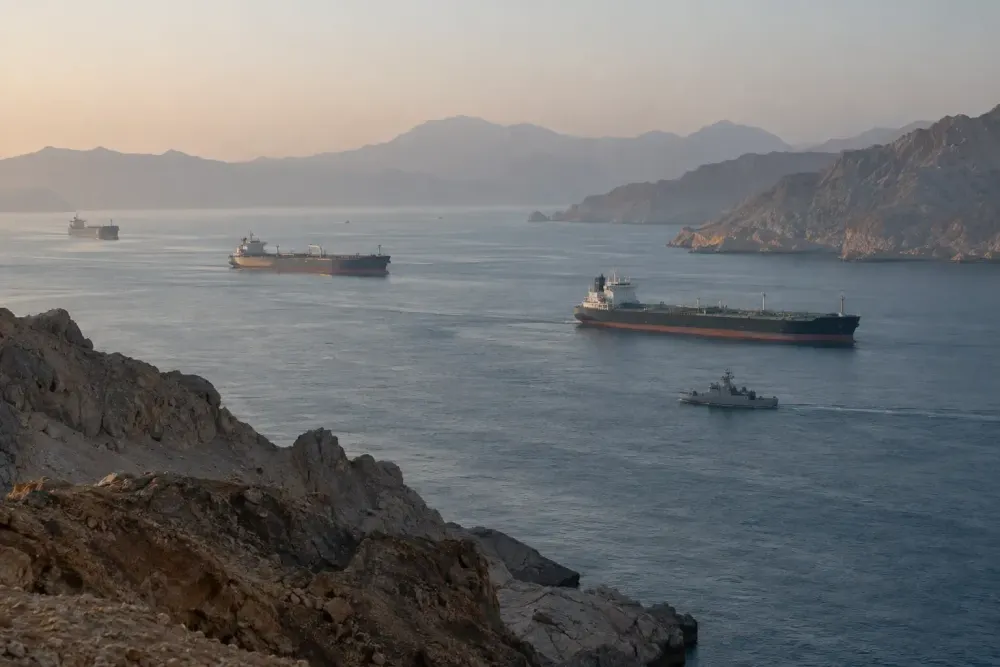
Actual shipping remains far below normal levels. Reuters reported Monday that 17 commodity vessels crossed during the weekend, down from 37 the previous weekend and far below the prewar pace of roughly 125 large commercial ships a day. The International Maritime Organization’s current regional dashboard says instability continues to affect more than 20,000 seafarers, port workers and offshore personnel. Its incident list, updated September 21, includes two crew members injured aboard the LR Stephanie that day.
The human cost is one reason a reopening arrangement would have consequences beyond oil prices. The IMO said last week that it had verified 80 attacks on merchant vessels since the current conflict began in late February, with at least 22 seafarers killed. Its emergency evacuation framework has moved thousands of people but is currently paused. Even if political leaders announce a deal, shipowners and crews will need evidence that routes are consistently safe before traffic can recover toward normal levels.
Why the economic stakes extend beyond energy
The strait carries about a quarter of global seaborne oil trade, according to a United Nations Conference on Trade and Development assessment. Disruption affects freight rates, insurance, delivery schedules and the cost of fuel, chemicals and fertilizers. Those pressures travel through supply chains and are especially difficult for lower-income importers that have less capacity to absorb sudden price increases or finance longer routes.
Tuesday’s price move therefore offers only a preliminary signal. Traders reduced part of the immediate risk premium, but the reported proposal does not yet include a public U.S. response, a signed framework or a verified schedule for restoring unrestricted passage. It also arrives after repeated reversals in negotiations and continued threats of military action. The possibility of talks can move markets quickly; rebuilding confidence among carriers, insurers and governments usually takes longer.
The most meaningful next indicators will be concrete rather than rhetorical: whether Washington acknowledges the proposal, whether mediators begin formal discussions, whether shipping incidents decline, and whether daily transit counts rise for more than a brief period. Until then, Iran’s offer is consequential because it identifies a possible trade—reduced U.S. pressure for restored navigation—but its conditions also expose why the standoff has persisted.
For now, the development is neither a reopening nor a ceasefire. It is a conditional diplomatic test presented at a moment when the economic and human costs of disruption are becoming harder for all sides to ignore.