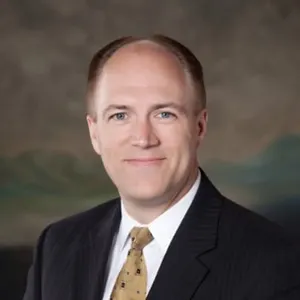
OpenAI's board has abruptly removed Sam Altman as chief executive, saying a review concluded that he was "not consistently candid" in communications with directors and that the board no longer had confidence in his ability to lead the company. The November 17 announcement named chief technology officer Mira Murati interim CEO and said a search for a permanent successor would begin immediately.
The decision is an extraordinary leadership rupture at the company that ignited the current generative-AI boom with ChatGPT and, only 11 days earlier, staged its first developer conference under Altman's leadership. Within hours of the announcement, co-founder and president Greg Brockman resigned after the board removed him as chair, deepening uncertainty over the future of one of the technology industry's most influential companies.
The board offered a serious charge but few specifics
OpenAI said Altman's departure followed a "deliberative review process" that found he had not been consistently candid with the board, hindering its ability to carry out its responsibilities. The statement did not identify the communications at issue, describe a particular incident or allege financial misconduct. That lack of detail left employees, investors and the broader AI industry trying to understand how such a consequential break developed.
TechCrunch's initial report emphasized the unusual governance structure behind the decision. OpenAI's nonprofit board controls the company's for-profit operations and is charged with pursuing the mission of ensuring that artificial general intelligence benefits humanity. That means directors have authority that does not operate like the board of a conventional venture-backed startup focused primarily on shareholder returns.
The board at the time of the announcement consisted of chief scientist Ilya Sutskever and independent directors Adam D'Angelo, Tasha McCauley and Helen Toner. Altman was removed both from the CEO role and the board. Brockman was initially told he would remain president while stepping down as board chair, but that arrangement lasted only hours.
Brockman's resignation turns a CEO change into a broader rupture
Brockman announced that he was leaving the company following the board's action. TechCrunch reported that Brockman said he and Altman were informed separately, and that he chose to resign after learning the board's decision. He had co-founded OpenAI with Altman and others in 2015 and served as one of the central technical and organizational leaders of the company.
Forbes' contemporaneous account described a leadership team caught off guard by the change and noted that Altman had been publicly representing OpenAI as recently as the Asia-Pacific Economic Cooperation meetings in San Francisco. The timing magnified the shock because there had been no public sign that the board was preparing a change of leadership.
Murati now inherits responsibility for a company operating at unusual scale and under intense scrutiny. She has led OpenAI's research, product and safety functions and was a prominent figure in launches including GPT-4. The board described her as uniquely qualified to lead during the transition, but the speed of the change leaves major questions about whether the senior team and research organization will remain intact.
Microsoft's partnership is suddenly a central strategic question
OpenAI's relationship with Microsoft makes the governance crisis more than an internal personnel matter. Microsoft has committed billions of dollars to the company, supplies the Azure computing infrastructure used for much of its work and is incorporating OpenAI technology throughout its own software. The two companies have become operationally and commercially intertwined.
The Washington Post reported that the decision shocked the technology industry and highlighted the tension inherent in OpenAI's structure: a nonprofit mission ultimately controls a rapidly expanding commercial enterprise. Microsoft's public response Friday stressed that its long-term agreement with OpenAI remains in place and that it remains committed to Murati and the team.
That reassurance matters because OpenAI's products depend on costly computing capacity and because Microsoft's own AI strategy increasingly depends on access to OpenAI models. A prolonged leadership crisis could complicate product planning, fundraising, recruiting and the confidence of enterprise customers that are making long-term bets on the platform.
The firing arrives days after OpenAI's largest platform expansion
The contrast with last week's DevDay could hardly be sharper. Altman had stood onstage announcing GPT-4 Turbo, a 128,000-token context window, lower API prices and custom GPTs, presenting a roadmap that moved OpenAI from model provider toward a broader software platform. The company's public trajectory appeared to be one of accelerating commercialization.
The Guardian's report notes that the upheaval arrives after Altman spent much of 2023 serving as the company's chief public representative before lawmakers and world leaders. His role extended beyond product launches into debates over AI safety, regulation and the international governance of advanced systems.
That visibility makes the board's action particularly consequential. OpenAI's mission depends on maintaining credibility with both commercial partners and policymakers, while its valuation and ability to finance model development depend on retaining technical talent and investor confidence. The board has chosen to prioritize its governance judgment even at the cost of immediate instability.
The central question is now institutional, not technical
As of Saturday, the most important unknown is not what OpenAI's next model can do. It is whether the organization can stabilize after removing the executive most closely identified with its rise. The board has asserted that its responsibility to OpenAI's mission required new leadership; it has not yet supplied enough public detail for outsiders to assess the underlying dispute.
Employees and partners now have to determine whether the transition remains a contained governance event or develops into a broader exodus. Brockman's resignation already shows that the consequences extend beyond Altman alone. Reports of intense internal discussion and outside pressure underscore how much is at stake.
OpenAI spent the past year proving that generative AI could become a mass-market technology and a major enterprise platform. This weekend it is confronting a different test: whether an unusual nonprofit-controlled governance model can manage a sudden leadership break without undermining the technical organization, commercial alliances and public trust on which the company's extraordinary growth depends.