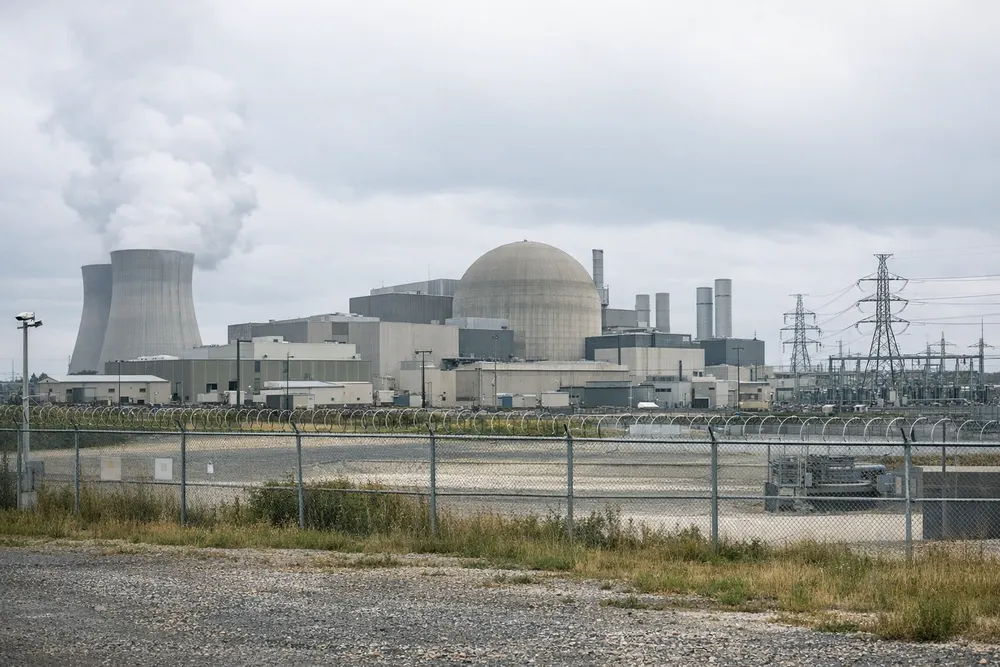
North Korea has completed another major expansion of its uranium-enrichment infrastructure at the Yongbyon nuclear complex, adding a two-story facility that the International Atomic Energy Agency says could accommodate as many as 28 centrifuge cascades. The finding turns a building that analysts had watched under construction for nearly two years into a more concrete measure of Pyongyang's effort to increase the amount of fissile material available for nuclear weapons.
The IAEA's assessment, reported Wednesday by Reuters, relies on commercial satellite imagery and photographs released by North Korean state media because international inspectors have not been present in the country since 2009. The agency also sees signs that operations have begun in an annex at the suspected Kangson enrichment complex near Pyongyang, meaning the new Yongbyon hall is not an isolated project but part of a wider expansion.
A building watched from space is now tied to enrichment
The new structure did not appear suddenly. Satellite analysts at the Center for Strategic and International Studies traced construction to December 2024 and, by April 2026, assessed that the roughly 120-by-48-meter building was essentially complete externally, with power, cooling, fuel storage and support infrastructure consistent with a uranium-enrichment role. That imagery analysis placed the facility about 1.8 kilometers north of Yongbyon's existing centrifuge halls and noted its similarities to the suspected Kangson plant.
North Korea then provided an unusual additional clue itself. During a June visit to what state media called a newly inaugurated nuclear-materials production factory, leader Kim Jong Un said weapons-grade nuclear-material production capacity had more than doubled during the preceding five-year party-planning period. Analysts compared photographs from the visit with the building seen at Yongbyon. A subsequent 38 North assessment said the interior was consistent with the Yongbyon structure and cited an expert estimate of about 4,600 centrifuges arranged in 28 cascades.
That estimate matters because gas centrifuges are the machines that progressively raise the share of uranium-235 in uranium feedstock. Low-enriched uranium can serve civilian reactor purposes; much higher enrichment can produce material usable in a weapon. The IAEA has not been able to sample material, inspect equipment or independently verify North Korea's declared purpose, so estimates of output carry substantial uncertainty. The agency's new assessment is therefore best understood as evidence of capacity and layout, not a direct measurement of how much highly enriched uranium the hall has already produced.
The fissile-material bottleneck is getting wider
North Korea has spent years developing two routes to bomb material: plutonium separated from irradiated reactor fuel and highly enriched uranium produced in centrifuges. Uranium enrichment is particularly difficult for outsiders to monitor because centrifuge plants can be housed in comparatively compact buildings and do not require the same visible reactor operations associated with plutonium production.
The scale of the new hall could materially increase that route. The July 38 North analysis said one expert estimated that the 28-cascade facility might be capable of producing roughly 100 to 200 kilograms of highly enriched uranium per year under certain operating assumptions. That should not be read as a verified production figure. Actual output depends on centrifuge design, feed material, enrichment level, operating efficiency and whether some capacity is instead used to make lower-enriched fuel.
Even with those uncertainties, the direction is clear. The Arms Control Association noted in a July assessment that North Korea's February party congress called for continued expansion of the nuclear arsenal and that Kim's June statements tied greater fissile-material production directly to that objective. The same analysis cited a Federation of American Scientists estimate of roughly 60 North Korean nuclear warheads as of March 2026, underscoring why additional material-production capacity is strategically significant even when the precise stockpile is unknowable from outside the country.
Verification remains the central limitation
The largest gap in the international picture is physical access. An IAEA safeguards report states that agency inspectors have not been present in North Korea since April 2009. Since then, the IAEA has maintained what it calls enhanced readiness to return while monitoring the program through satellite imagery, open-source information and other technical means.
That distance imposes limits on nearly every headline number. Analysts can measure buildings and power infrastructure, compare interior photographs, identify cooling systems and observe vehicle or construction activity. They cannot, without access, inventory centrifuges, take environmental samples, verify enrichment levels or establish whether a particular cascade is operating on a given day. That is why the agency's language distinguishes observations consistent with enrichment from verified safeguards conclusions.
North Korea rejects the IAEA's authority over its current nuclear activities and has long argued that its nuclear status is irreversible. The international legal position remains very different. United Nations Security Council Resolution 1718, adopted unanimously after North Korea's 2006 nuclear test, demands that the country abandon its nuclear weapons and existing nuclear programs in a complete, verifiable and irreversible manner. The text of the resolution remains the foundation of the U.N. sanctions regime even as enforcement has become increasingly difficult amid geopolitical divisions at the Security Council.
Why the timing matters
The enrichment finding arrives as North Korea is broadening the delivery systems that could carry nuclear weapons. Days earlier, Kim presided over the commissioning of a 5,000-ton-class destroyer that he said would form part of the country's nuclear response system, according to a separate Reuters report. At the same time, the United States, South Korea and Japan have continued joint military exercises intended to improve deterrence and interoperability.
Those military developments do not prove how the new enrichment hall will be used, but they sharpen the strategic consequence of a larger fissile-material base. A nuclear arsenal is constrained not only by missiles, aircraft or submarines but also by the quantity of plutonium and highly enriched uranium available for warheads. Expanding enrichment infrastructure loosens that constraint over time.
The immediate question is therefore not whether the new building changes the balance overnight. It is whether North Korea can now sustain a higher long-term rate of weapons-material production while remaining outside on-site international verification. The IAEA's new 28-cascade assessment suggests the physical answer is moving in that direction. Without renewed access, however, the world will continue to infer the pace from roofs, power lines, satellite images and the occasional photographs Pyongyang chooses to release.