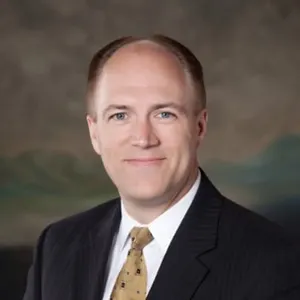
TikTok Chief Executive Shou Zi Chew faced nearly five hours of hostile, bipartisan questioning in Congress this week as lawmakers examined whether an app used by more than 150 million Americans can be insulated from its China-based parent company and from potential government influence over data, algorithms and content.
Chew’s Thursday appearance before the House Energy and Commerce Committee was TikTok’s most consequential public defense yet against calls for a U.S. ban or forced separation from ByteDance. The committee’s hearing ranged from national security and privacy to misinformation, addictive design and protections for minors, with skepticism coming from both parties.
A vast U.S. audience raises the stakes
In his prepared testimony, Chew said TikTok has more than 150 million monthly active users in the United States, up from 100 million in 2020, and that more than five million American businesses use the platform. Those figures frame the policy challenge: TikTok is no longer a niche entertainment service but a major communications platform woven into consumer behavior, advertising and the creator economy.
Chew told lawmakers that ByteDance is not an agent of China or any other country and argued that concerns about unauthorized foreign access can be addressed through a security architecture TikTok calls Project Texas. The company has spent roughly $1.5 billion on the effort and formed TikTok U.S. Data Security, a special-purpose subsidiary with nearly 1,500 employees, according to the testimony.
Chair Cathy McMorris Rodgers opened the hearing by declaring that TikTok should be banned, while ranking Democrat Frank Pallone said he remained concerned that Project Texas would not prevent influence by the Chinese government. A contemporaneous account from the States Newsroom network captured the unusual degree of bipartisan suspicion surrounding the company.
Project Texas is the core defense
TikTok’s proposed answer is a technical and governance barrier around protected U.S. user data. Chew said 100% of U.S. user traffic is already routed to Oracle and U.S.-controlled infrastructure and that Oracle has begun inspecting source code and will have access to algorithms and data models. TikTok says U.S. Data Security controls access to systems containing newly generated protected data.
The more difficult issue is historical information and the continued relationship between the U.S. operation and ByteDance engineering teams. Chew said TikTok began deleting historical protected U.S. data from non-Oracle servers this month and expects the process to be completed this year. As TechCrunch reported during the hearing, he said that after Project Texas is complete, protected U.S. data will be governed by U.S. law and controlled by a U.S.-led security team.
That answer did not end the questioning. Lawmakers pressed Chew on whether ByteDance personnel in China currently can access U.S. information, whether shared technology would remain connected across corporate entities and whether Chinese law could compel assistance from employees. Chew acknowledged that global engineering resources have historically been used but said the new structure is designed to firewall protected data from unauthorized access.
A Washington Post account of the hearing noted that TikTok proposes outside scrutiny of the U.S. subsidiary, including government-approved auditing, but lawmakers repeatedly questioned whether such controls are sufficient while ByteDance remains the owner.
Algorithms are as important as storage
Data location is only one part of the dispute. Lawmakers also focused on TikTok’s recommendation system, which determines what users see and can shape the spread of news, political messages, harmful content and commercial material. Project Texas is intended to place the U.S. recommendation system within Oracle-hosted infrastructure and subject source code to review, but congressional skepticism reflects a broader concern: control of the algorithm may matter as much as control of the underlying user database.
Chew argued that independent monitoring and code inspection can make the system verifiable. His prepared remarks said Oracle has already begun inspecting TikTok source code and that the company is building layers of accountability that are uncommon among consumer platforms. Coverage by Forbes highlighted the company’s promise to use engineering and governance, rather than assurances alone, to earn trust.
Lawmakers were also unwilling to separate national-security concerns from the platform’s impact on children. They questioned Chew about age verification, dangerous challenges, mental-health effects and the handling of content involving self-harm. The breadth of those questions suggested that even a successful national-security arrangement would not end pressure for broader social-media rules.
A ban remains politically possible
The hearing followed weeks of escalating federal concern and state-level restrictions on TikTok use on government devices. Chew sought to make the scale of a possible ban part of the debate, noting that the platform now reaches almost half of the U.S. population. TikTok announced the 150-million-user figure shortly before the hearing, underscoring both its reach and the practical consequences of removing the app from the American market.
The company’s argument is that a ban would silence users and damage businesses without addressing the broader data practices of social platforms. Lawmakers’ argument is that TikTok is different because ByteDance is headquartered in China and therefore operates within a legal and political system that could create national-security obligations unavailable to U.S. regulators.
Chew’s testimony did little to narrow that disagreement. A contemporaneous hearing report noted that lawmakers returned repeatedly to the surveillance of journalists by ByteDance employees and to the question of whether the company could guarantee against improper access. Chew said the employees involved in that episode were terminated and resisted characterizing it as evidence that TikTok itself operates as a spying tool.
The result is a technology-policy dispute with unusually high stakes. TikTok is asking Washington to judge a security architecture that is still being built, while Congress is considering whether ownership itself creates an unacceptable risk. The hearing showed that the burden of proof now sits heavily on TikTok. Project Texas may be technically ambitious, but lawmakers from both parties are signaling that architecture, audits and Oracle servers may not be enough unless they are convinced the company can establish genuine operational independence from ByteDance.