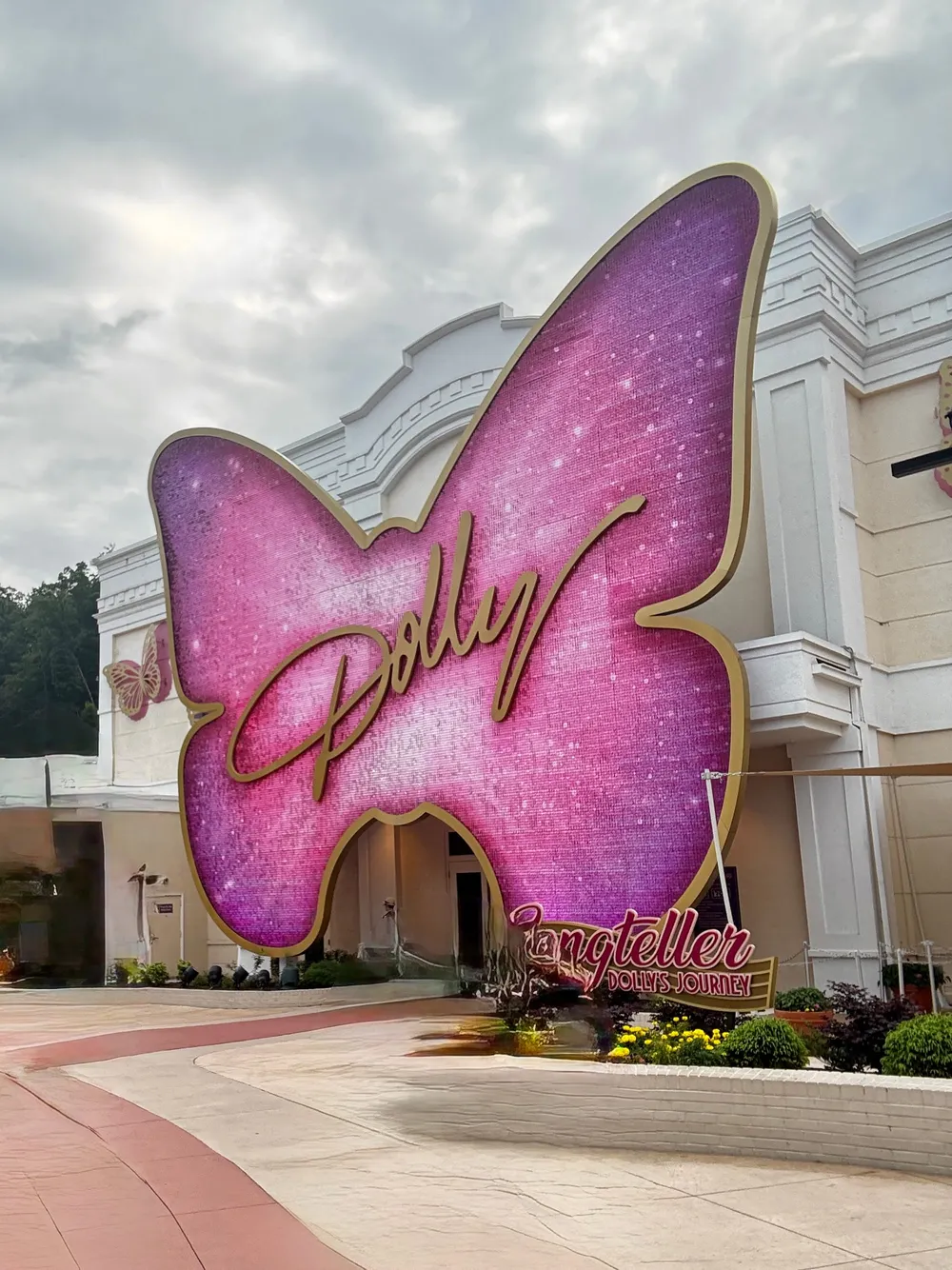
Dolly Parton, who rose from a poor family in the mountains of East Tennessee to become one of the most successful songwriters, entertainers and self-made businesswomen in American culture, died Tuesday in Nashville at age 80, her family announced. She leaves behind more than 100 million records sold, a catalog of roughly 3,000 songs, a tourism and entertainment enterprise rooted in the same county where she grew up, and a philanthropic institution that by the end of 2025 had placed more than 304 million books into the hands of children. Reuters reported her death Tuesday; the AP described a life whose reach ultimately extended far beyond country music.
Those accomplishments are remarkable individually. Taken together, they explain something more consequential about Parton: she did not simply become famous and later decide to attach charitable work and commercial licensing to that fame. She spent most of her adult life building institutions around ideas she had formed very early, ownership of one's work, economic opportunity close to home, education as a path out of constrained circumstances, and the belief that success carried an obligation to send something back down the mountain.
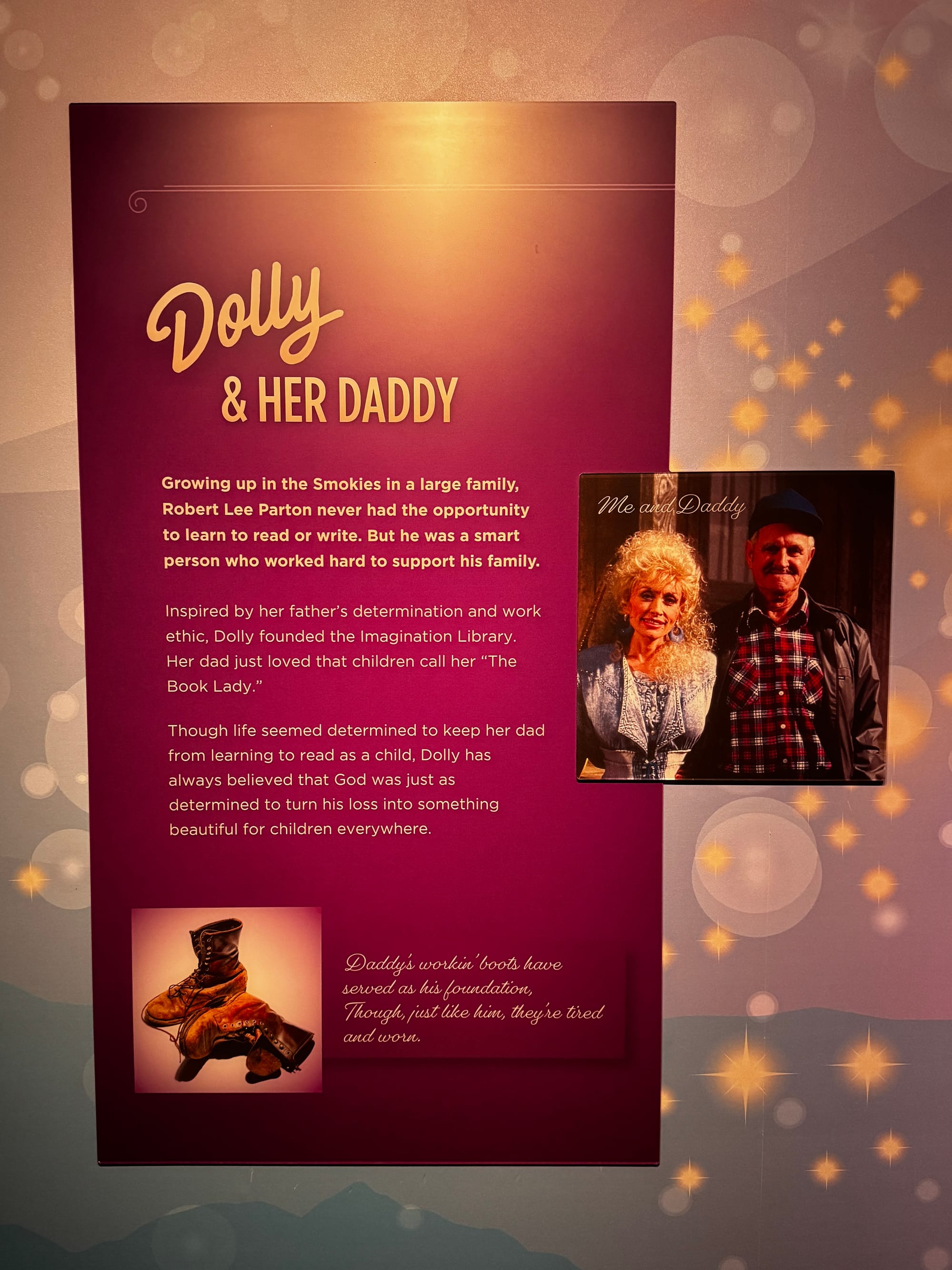
That final element may prove to be the most durable. Dolly Parton's Imagination Library began in one Tennessee county with an initial order of just over 1,700 children's books. Thirty years later, it had become an international early-literacy system mailing more than three million books a month. The program was not conceived by a foundation consultant or constructed around a celebrity branding strategy. Parton said repeatedly that it began with her father, Lee Parton, whom she considered extraordinarily intelligent but who never learned to read or write.
Her death closes an extraordinary entertainment career. It does not close most of what she built.
The distance from Locust Ridge to Nashville was greater than the map suggests
Parton was born Jan. 19, 1946, the fourth of 12 children in Locust Ridge, Tennessee, in a family the LOC biographydescribes as living in relative poverty in a one-room mountain cabin. Her father worked as a sharecropper and farmer; music, church and family storytelling filled some of the space money could not. Parton was performing publicly by childhood, became a regular on Knoxville's Cas Walker program at 10 and appeared at the Grand Ole Opry at 13. The day after finishing high school, she left for Nashville.
The familiar “rags to riches” description is accurate but incomplete because it can make the ascent sound inevitable in retrospect. Parton entered a recording business in which young performers frequently surrendered ownership, women were constrained by both industry power structures and expectations about what a country singer could be, and an Appalachian accent and flamboyant appearance could easily have been used to define the limits of her career. Parton instead turned nearly every one of those supposed limitations into intellectual property.
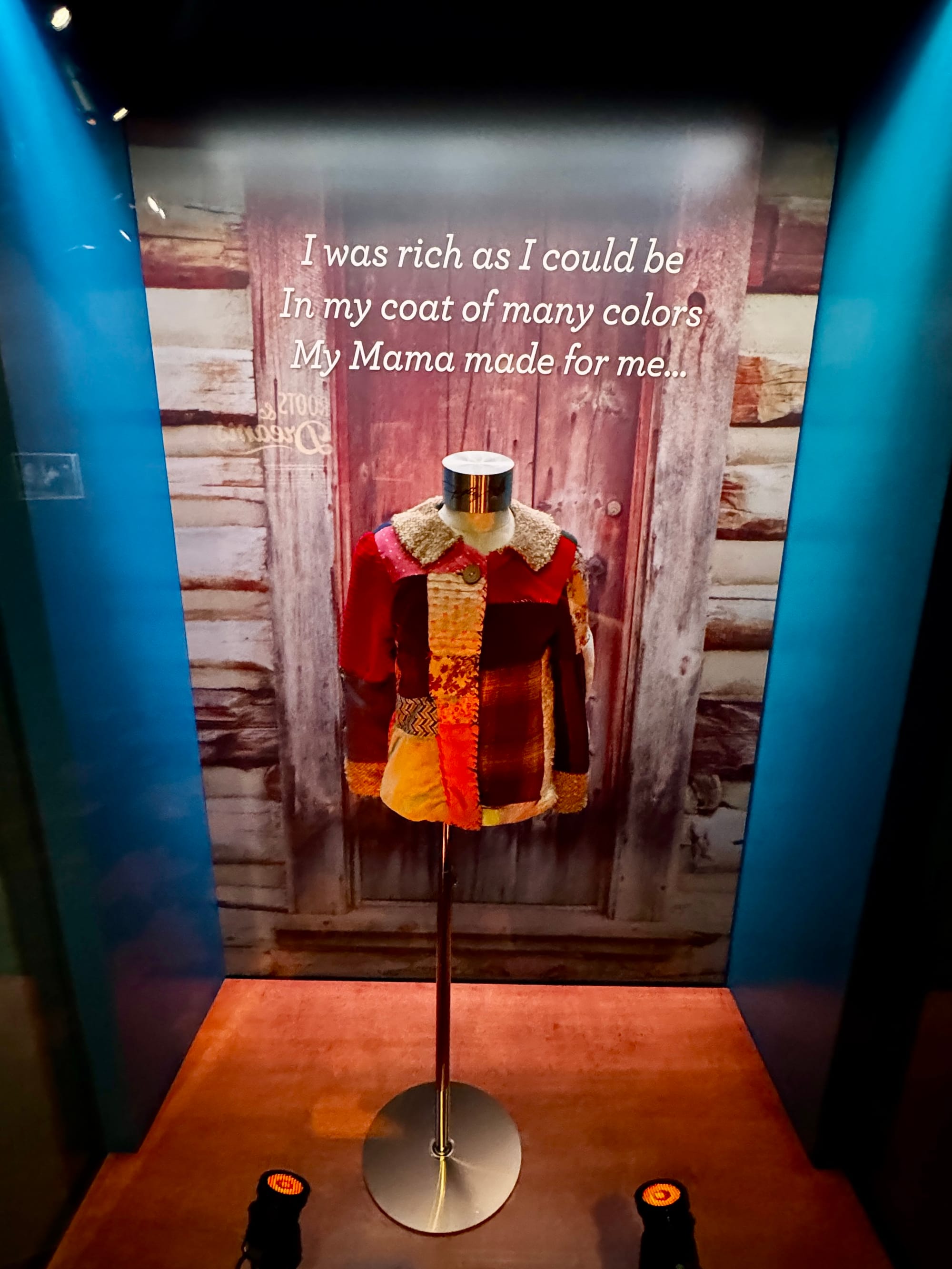
She wrote about the humiliations and affections of poverty rather than concealing them. “Coat of Many Colors” transformed a childhood experience of being mocked for homemade clothing into one of country music's enduring narratives. Her mountain identity became source material rather than something polished away for commercial acceptance. She also understood unusually early that the person who wrote the song possessed an asset that could survive long after the original recording disappeared from radio.
That combination, emotional openness in the art and unusual discipline behind the art, would define the rest of her career.
She understood ownership decades before artists made it a public cause
At 20, Parton and her uncle Bill Owens formed Owe-Par Publishing after leaving an earlier publishing arrangement. According to the company's Owe-Par history, Parton retained a controlling interest, allowing the pair to copyright their own compositions rather than routinely surrender the economic rights to others. It was a consequential business decision made before Parton had become a household name.
The most famous illustration came years later. Elvis Presley wanted to record “I Will Always Love You,” but his manager, Colonel Tom Parker, wanted half of the publishing rights. Parton refused. The deal disappeared. Decades later, Whitney Houston's recording for The Bodyguard became one of the most successful vocal recordings of its era, while Parton retained the underlying composition rights. The U.S. Copyright Office's copyright history uses the episode to illustrate precisely why ownership of a musical composition matters.
It is easy to read that decision now as obvious. It was not. Having Elvis Presley record a song could have seemed like a once-in-a-lifetime opportunity for an artist still building her crossover stature. Parton chose long-term control over immediate validation.
That pattern repeated across her career. She moved into film with 9 to 5 and Steel Magnolias, production, publishing, branded entertainment, books, merchandise and eventually an expanding portfolio of physical destinations. Forbesestimated in 2025 that Parton's personal fortune had reached roughly $450 million and that her song catalog alone was worth about $120 million, while identifying her stake in Dollywood as the largest component of her wealth. Those are estimates rather than audited valuations, but they capture the scale of the enterprise she built around retaining and extending her intellectual property.
Her commercial activity was still expanding at 80. In June, she opened the first Dolly's Tennessean Travel Stop south of Nashville and introduced a coffee brand called Cup of Ambition with Community Coffee. A Broadway autobiographical musical was preparing for previews this winter, and just six days before her death her organization announced 82 new sales certifications across 14 countries. The business updates make clear that Parton's late career was not simply management of a legacy catalog; it remained an active entrepreneurial operation.
Dollywood was business strategy with a geographic purpose
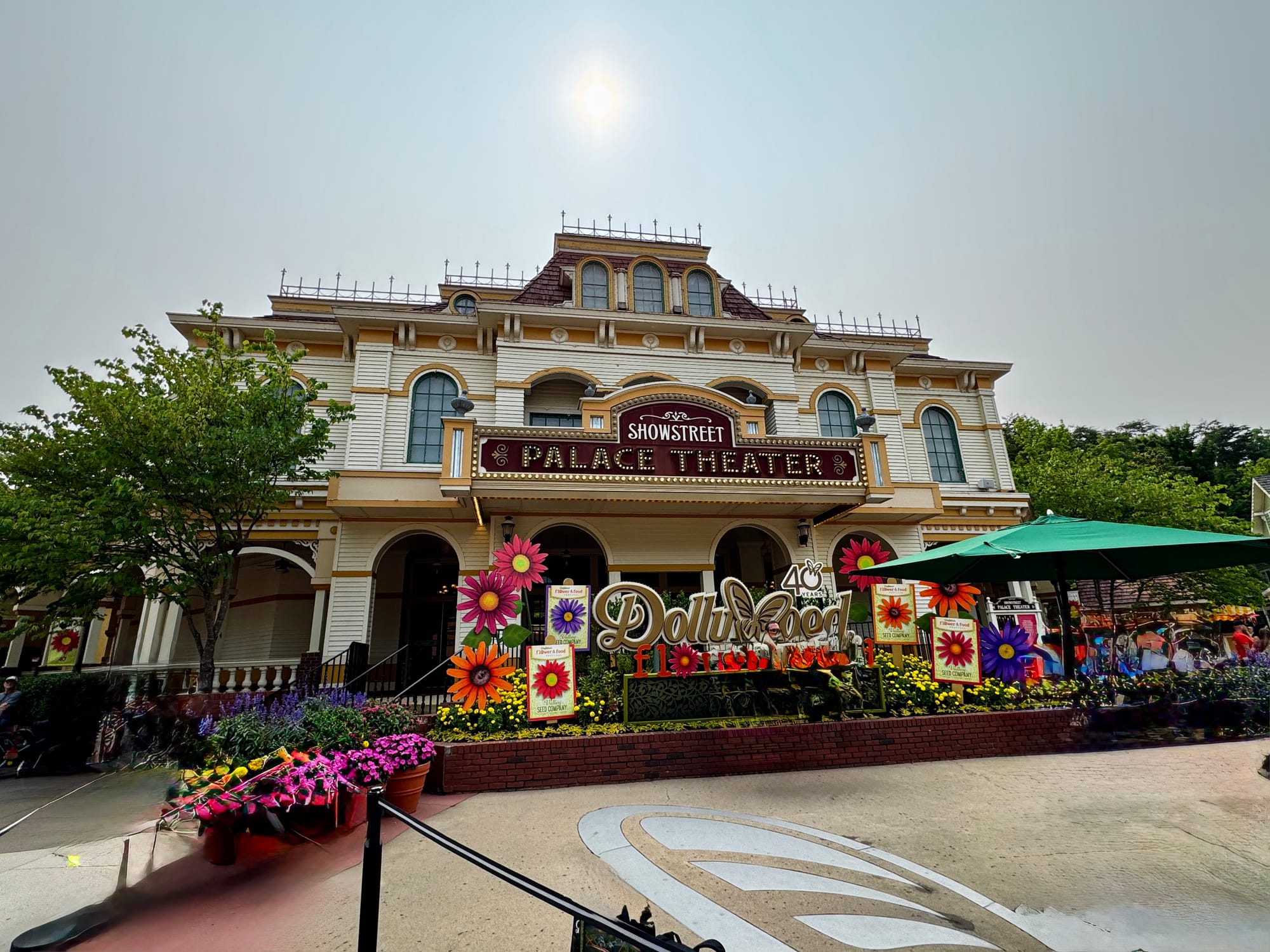
Parton's most consequential commercial decision may have been the one closest to home. In 1986, she joined the Herschend family as a partner in what had been Silver Dollar City, Tennessee, and attached her name, entertainment instincts and Appalachian identity to the property that became Dollywood. The park has since more than doubled in size to roughly 150 acres, and its operators describe it as Tennessee's most-visited attraction and one of the world's 50 most-attended theme parks. Dollywood history traces the partnership back four decades.
Celebrity-branded businesses often extract value from a name. Dollywood did something more complicated: it concentrated value geographically.
Parton could have invested almost anywhere after becoming wealthy. Instead, one of her largest businesses became a tourism engine in Sevier County, near the communities that shaped her childhood. Appalachian crafts, music and imagery were incorporated into the attraction rather than treated merely as biographical decoration. Resorts, entertainment venues and related businesses followed, supporting an ecosystem of employment and tourism around Pigeon Forge and the Great Smoky Mountains.
That does not make Dollywood a charity, nor should its commercial purpose be confused with philanthropy. It was a sophisticated business investment. But the location mattered. Parton's entrepreneurship repeatedly combined profit with place, creating wealth partly by making the region she left more economically valuable to visit.
That philosophy helps explain why her charitable work also began locally.
Before the Imagination Library, she tried paying teenagers to graduate
Parton created the Dollywood Foundation in 1988 with an initial focus on educational achievement in Sevier County. One of its earliest experiments was strikingly direct. In the early 1990s, the foundation's Buddy Program asked seventh- and eighth-grade students to pair with another student and promised each $500 if both ultimately graduated from high school. The foundation reports that the dropout rate for the two participating classes fell from 35% to 6%, although that historical before-and-after figure does not by itself establish that the incentive caused the entire decline. Foundation historydocuments the program and the foundation's subsequent education work.
The more important insight came next.
Parton concluded that intervention at adolescence was already late. Her father's inability to read and write had remained with her, not because she viewed him as unintelligent but because she believed the absence of education had limited what an intelligent man could do with his abilities. The Imagination Library was designed to reach children before school had the opportunity either to widen or narrow those possibilities.
The mechanics were intentionally simple. Beginning at birth and continuing until age five, an enrolled child receives an age-appropriate book every month at home, addressed to the child personally. Eligibility is not based on household income. A family with little money and a wealthy family in the same participating geography can both enroll, avoiding means testing and making books an ordinary part of childhood rather than a benefit identified with poverty.
That simplicity hides a sophisticated operating model. The Dollywood Foundation maintains the central infrastructure, coordinates book selection, purchases at scale and manages distribution, while local community partners help finance books and mailing. A specialist committee reviews titles, and Penguin Random House serves as the program's publishing partner. The result is a decentralized funding system attached to centralized logistics, allowing communities to join without having to invent their own children's publishing and fulfillment operation.
The book program became larger than the celebrity who created it
The first 1995 order contained slightly more than 1,700 books. By 2003, the program had distributed its first million. It reached 100 million in 2018 and 200 million in 2023. By the end of 2025, the program's own annual accounting recorded 304,539,509 books distributed since inception, including more than 40.3 million during 2025 alone, the equivalent of approximately one book every 0.78 seconds. Operations now span the United States, Canada, the United Kingdom, Australia and the Republic of Ireland.
The program's scale is easier to appreciate when separated from the imagery of a celebrity giving away books. This is an international distribution system operating every month, year after year, across thousands of communities. By 2026 it was mailing more than three million books monthly. In 2024, one in seven U.S. children younger than five was receiving an Imagination Library book, according to the program's historical data.
The evidence for its educational effect is encouraging, although it deserves the same qualification applied to any social intervention. A 2019 peer-reviewed literacy study found statistically significant differences in storybook reading and early-literacy measures between participating and nonparticipating children in one county, but the research was partly funded by a local Imagination Library partner and was not a randomized national trial. The foundation's own research synthesis similarly says the literature shows promise in improving home literacy environments, attitudes toward reading and early skills while acknowledging that much of the historical research was local.
More recently, an international study led by Claire Galea analyzed responses from more than 86,000 caregivers across five countries over 12 months and reported stronger shared-reading habits and early-literacy indicators among participating families. The work adds scale to the evidence base, although it should still be understood as observational research rather than proof that every measured difference was caused exclusively by the books. International researchsummarized the findings in 2026.
That evidentiary nuance does not diminish what the program unquestionably accomplished. Hundreds of millions of children's books exist in homes today that would not have been mailed there without the institution Parton created. Whatever the precise effect size on later reading scores, the intervention permanently changed access to books at extraordinary scale.
When her community burned, she turned philanthropy into cash assistance
Parton's giving was not confined to education. After the November 2016 wildfires devastated Sevier County, killing 14 people and destroying or damaging thousands of structures, the Dollywood Foundation established the My People Fund within 48 hours. Families whose primary residences were destroyed or rendered uninhabitable received $1,000 a month for six months; because donations exceeded expectations, the final payment was increased to $5,000 per family.
The fund ultimately directed $8.9 million in cash payments to victims and committed another $3 million to longer-term recovery efforts. Nearly 900 families received assistance in the first distribution alone. It was an unusually direct model of disaster relief, placing cash into affected households rather than prescribing how families had to spend it.
Her medical philanthropy followed the same instinct to fund practical institutions. In 2020, Parton gave $1 million to Vanderbilt University Medical Center for COVID-19 research. The gift did not, as it is sometimes simplified, personally “pay for the Moderna vaccine.” Vanderbilt says money from her fund supported important early research, including work used to demonstrate immune responses associated with Moderna's mRNA-1273 candidate during its development. A Vanderbilt report explains the connection.
She gave another $1 million to pediatric infectious-disease research at Vanderbilt in 2022 and had previously supported its pediatric cancer program. In January of this year, proceeds from a new recording issued for her 80th birthday were directed to pediatric cancer research, and in February East Tennessee Children's Hospital announced that it would become Dolly Parton Children's Hospital as part of a broader collaboration to strengthen pediatric care in the region.
What she built may be the clearest tribute
Celebrity philanthropy can be episodic. A check is written, a photograph is taken, and the public story ends.
Parton's strongest work generally followed the opposite model. She built mechanisms that could continue operating: a foundation, scholarships, a book-distribution network, a regional tourism enterprise, disaster-response infrastructure and partnerships with hospitals and research institutions. The emphasis was less on creating a theory of social change than on making something concrete happen repeatedly.
That practicality may be the thread connecting the businesswoman and the philanthropist. The young songwriter who understood that she needed to retain a copyright also understood that generosity required structure if it was going to outlive the moment. The woman who turned her own name into a tourism economy also used that name to persuade governments, nonprofits, publishers and local donors to participate in a children's literacy system.
Parton spent her life deliberately exaggerating her external appearance while refusing to exaggerate where she came from. The wigs, rhinestones and self-deprecating jokes were meticulously constructed. So were the businesses behind them. Underneath both was a woman who appears to have understood something unusually early: fame is temporary leverage, but ownership and institutions can last.
Her father did not live to see the Imagination Library reach hundreds of millions of books, but he saw enough of its early growth to know that children had begun calling his daughter “the Book Lady.” Parton later said his pride in that name meant as much to her as almost anything she had accomplished. The Press Club preserved that account.
Dolly Parton died Tuesday as one of the most recognizable entertainers in the world. Yet the more revealing measure of the life may be found far from a stage: in a child's mailbox, a scholarship recipient's tuition bill, a wildfire survivor's bank account, a medical research laboratory, or an East Tennessee family entering a children's hospital that now bears her name.
The songs made Dolly Parton famous. Her business judgment made that fame durable.
What she chose to do with both made her consequential.
Author’s Note: On a personal note, having returned to Dollywood many times over the years, I have long admired Dolly Parton not simply for what she accomplished, but for the uncommon generosity with which she chose to turn success into opportunity, dignity, and joy for others. The world is poorer for her passing, but immeasurably richer for the life she lived and the good she so deliberately left behind.
Thank you, #DollyParton. You are already missed.