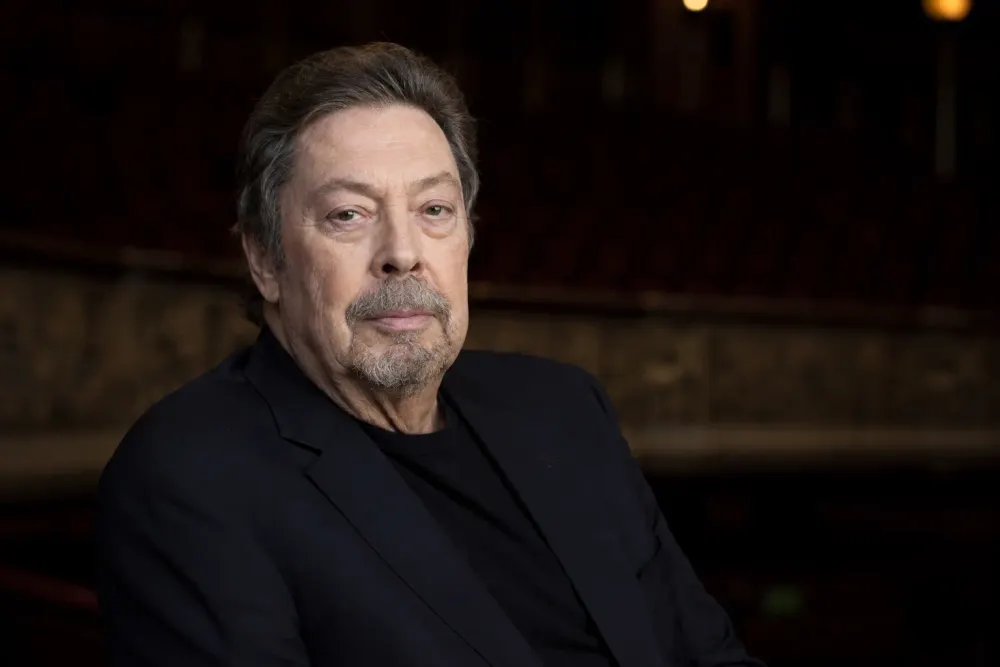
Tim Curry, the three-time Tony nominee whose work stretched across more than five decades of stage, film, television and voice acting, died Tuesday night at his Los Angeles home at age 80. His longtime manager and friend Marcia Hurwitz confirmed the death to the Associated Press; no cause was disclosed. Curry had lived with the effects of a 2012 stroke and used a wheelchair in later years, but he continued performing and appearing publicly, including a return to live-action film in 2024.
The death closes a career unusually resistant to a single medium even though one role, Dr. Frank-N-Furter in The Rocky Horror Picture Show, became inseparable from Curry's public identity. He originated the part in Richard O'Brien's 1973 London stage musical, carried it to Broadway and then made his film debut in the 1975 adaptation. The movie initially faltered, then became a durable midnight-screening phenomenon whose audience participation helped turn a commercial disappointment into an institution.
Curry's significance rests partly in that reversal. He created a performance that gave many viewers a flamboyant model of self-invention, yet he spent the rest of his career proving he could move between high theater, children's animation, broad comedy and horror without repeating it. Reuters reported that he died peacefully after a period of ill health, while colleagues remembered a performer whose precision and warmth remained visible beneath roles often built around menace.
A cult role built through audience participation
Curry's Frank-N-Furter arrived before the film industry had a ready commercial category for a glam-rock musical that mixed science fiction, horror parody and sexual liberation. The stage production opened at the Royal Court Theatre Upstairs in London in 1973, with Curry's baritone, clipped diction and deliberate physicality anchoring its tonal collisions. The 1975 film's first release was weak, but midnight screenings in New York beginning the following year encouraged audiences to dress as characters, answer the dialogue and act beneath the screen.
That participatory culture mattered as much as conventional box-office performance. A retrospective from the BFI described spectators turning the movie into a means of communicating with one another, creating an evolving ritual rather than passively consuming a fixed text. In 2005, the Library of Congress added The Rocky Horror Picture Show to the National Film Registry, recognition that its cultural afterlife had become part of American film history. Curry's performance remained the center of that afterlife, even as successive stage revivals introduced the character to new generations.
Broadway showed the range behind the persona
The flamboyance of Frank-N-Furter could have confined Curry to variations on a cult persona. Instead, his Broadway record shows repeated movement into materially different parts. The official IBDB archive lists Tony nominations for playing Mozart in Amadeus in 1981, fading movie idol Alan Swann in My Favorite Year in 1993 and King Arthur in Spamalot in 2005. He also appeared in Tom Stoppard's Travesties, returned to musical comedy in Me and My Girl and played Ebenezer Scrooge in A Christmas Carol.
Those roles demanded different instruments: feverish dramatic intensity, romantic musical comedy and deadpan absurdism. They also made clear that Curry's apparent excess was controlled rather than indiscriminate. His villains and eccentrics worked because vocal timing, posture and stillness established an internal logic before the performance expanded. On stage, where editing could not manufacture rhythm, that control earned sustained recognition across a quarter-century.
Villains became comic architecture
Film and television turned Curry into a familiar specialist in characters who were dangerous, pompous or both. As Wadsworth in the 1985 comedy Clue, he drove an ensemble through increasingly frantic explanations without losing the plot's mechanics. In the 1990 television adaptation of Stephen King's It, his Pennywise shifted between playground familiarity and predatory threat. Other roles included Rooster Hannigan in Annie, Darkness in Legend, Cardinal Richelieu in The Three Musketeers, Long John Silver in Muppet Treasure Island and the suspicious hotel concierge in Home Alone 2.
The shared feature was not simply villainy. Curry often supplied structural energy: his diction clarified dense exposition, his reactions gave comic scenes tempo, and his willingness to risk theatricality allowed more restrained performers to play against him. The Television Academy records a 1994 Primetime Emmy nomination for a Tales From the Crypt episode in which he played three members of one grotesque family. That performance condensed his method into a single program, using voice and movement to make each figure distinct while preserving the episode's dark-comic tone.
A voice career reached another generation
Curry's baritone made animation and narration a parallel career rather than an afterthought. He voiced Captain Hook in Peter Pan and the Pirates, Skullmaster in Mighty Max and characters in The Wild Thornberrys, Star Wars: The Clone Wars and The Adventures of Jimmy Neutron, Boy Genius. The work let him create scale without physical spectacle, shaping character through breath, consonants and shifts in register.
He won a Daytime Emmy in 1991 for Captain Hook and later received a Grammy nomination for narrating the first A Series of Unfortunate Events audiobook. The Recording Academy lists the 2002 nomination in the children's spoken-word category. These credits widened his audience: viewers who never attended a midnight movie or Broadway performance encountered the same commanding voice in cartoons, games and recorded books. They also demonstrated that his most recognizable asset was not dependent on makeup or camera framing. Curry could suggest intelligence, vanity, threat or wounded pride through pacing alone, a quality that made him especially valuable in animation, where a performance must establish character before the audience sees a human face. The work gave him a durable path after his stroke limited live-action roles.
Illness changed the work but did not end it
Curry suffered a major stroke in 2012, a fact that became public the following year. The resulting mobility limitations changed what roles were practical, but he continued voice work and selective screen appearances. He participated in a 2016 television version of Rocky Horror as the narrator and returned to film in the 2024 horror movie Stream. His official biography also documents the breadth of the earlier career, from the Royal Shakespeare Company to Broadway and major studio films.
Later appearances altered the public understanding of resilience without erasing disability. Curry did not recreate the physical abandon of his youth; he adapted the tools still available to him and let the audience see the change. That distinction matters because post-stroke work is sometimes framed as a sentimental return rather than assessed as work. His continued command of voice, comic timing and presence showed continuity inside a changed body.
A legacy larger than one midnight movie
Curry will remain most visible through Frank-N-Furter because the role's cultural machinery is self-renewing: repertory screenings, costumes, callbacks and stage revivals keep introducing it to new audiences. But the rest of his career explains why that performance endured. He treated heightened material seriously enough to make its emotional stakes legible, then brought the same discipline to Shakespearean-adjacent drama, studio comedy, horror and children's entertainment.
The immediate record establishes an actor who died at 80 after a long period of ill health, not the cause of that death. The broader record establishes something more measurable: three Tony nominations, an Emmy nomination, a Daytime Emmy, a Grammy nomination and a film preserved in the National Film Registry. As a Guardian account of his death noted, tributes came from collaborators across generations and genres. Their range reflects the central fact of Curry's career: the cult icon was also a durable craftsman, and the roles around the famous one are what made the fame sustainable.