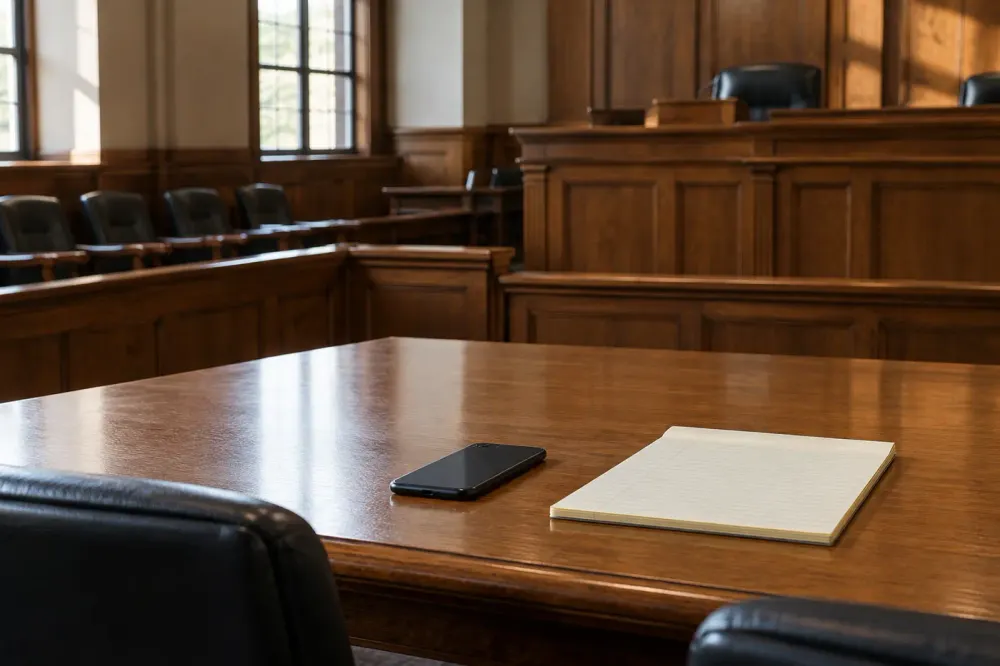
An Alabama jury is scheduled to begin hearing a case Monday that could become the first state lawsuit over TikTok’s alleged effects on young users to reach trial. The proceeding in Montgomery will test whether the state can prove that TikTok and its parent company, ByteDance, used engagement-driven design and misleading safety claims in ways that violated Alabama consumer-protection law.
The trial is expected to last two to three weeks, according to a Reuters report published Friday. Alabama alleges that TikTok’s recommendation system and product features were designed to keep minors on the app while the company publicly presented the service as safe for young people. TikTok denies wrongdoing, says it prioritizes youth safety and argues that federal law protects it from liability for content created by users. Those are allegations and defenses, not findings; jurors will decide the disputed facts.
What Alabama must prove
Alabama Attorney General Steve Marshall filed the case in Montgomery County Circuit Court in 2025 under the Alabama Deceptive Trade Practices Act. The state’s official account says TikTok marketed safety tools and parental controls while allegedly operating an algorithm that promoted prolonged use and exposed some minors to harmful material. The complaint seeks civil penalties and other relief available under state law.
The state will have to do more than show that many teenagers use TikTok or that youth mental-health problems are serious. It must connect specific representations or product practices to the elements of its consumer-protection claims. TikTok, in turn, can challenge the state’s characterization of its features, the reliability of expert testimony and any asserted link between the platform and harms. The verdict will therefore turn on evidence presented in this case, not on the broader political debate over social media.
Design versus user content
A central legal question is whether Alabama is targeting TikTok’s own conduct or trying to hold it responsible for material posted by other people. TikTok has invoked Section 230 of the Communications Decency Act, which generally says an online service cannot be treated as the publisher or speaker of information supplied by another content provider. The statutory text also permits state-law enforcement only when it is consistent with the federal protection.
Alabama frames its case around TikTok’s design decisions, recommendation system and statements about safety, rather than simply the existence of troubling videos. That distinction matters. Courts have often protected platforms from claims based on publishing third-party content, while litigation focused on a company’s own product design or alleged misrepresentations can present a different question. The trial court’s instructions will shape what jurors may consider, and any verdict could still face an appeal.
Evidence carries important limits
The public-health evidence supports concern but does not settle the legal case. A 2023 advisory from the U.S. surgeon general said social media may benefit some young people while posing meaningful risks to others. It found that the available evidence was not sufficient to conclude that social media is adequately safe for children and adolescents. It also emphasized that effects vary with the amount and type of use, the content encountered, disruptions to sleep and exercise, and an individual child’s circumstances.
The advisory cited a longitudinal study in which adolescents spending more than three hours a day on social media faced about twice the risk of poor mental-health outcomes. That is an association, not proof that an app caused an individual condition. Researchers must contend with reverse causation and confounding factors: distressed teenagers may use social media differently, and family life, school conditions and offline experiences also affect mental health. Alabama’s experts will have to explain what the research can establish without converting population-level patterns into certainty about every user.
A test for dozens of state cases
The Alabama trial has national importance because it is the first among a broad set of state enforcement cases to reach a jury. Reuters reported that at least 27 other states and the District of Columbia have sued TikTok over similar youth-safety allegations. In a separate 2024 coordinated action, a bipartisan group of attorneys general likewise accused the company of using addictive features and misleading the public, as described by the California filing.
A verdict in Montgomery would not automatically decide those other cases, which may arise under different state statutes and factual records. But it could influence settlement calculations, expert strategies and arguments about platform design. A public trial may also reveal internal evidence that has not been available in cases resolved before testimony. TikTok will have a strong incentive to prevent one state’s theory from becoming a template for others.
What to watch at trial
The most consequential moments may come before jurors reach a verdict. Rulings on which internal records, expert analyses and safety materials can be shown will determine how fully the public can evaluate the competing narratives. The scope of any sealed evidence will matter as well, because the case concerns products used by millions of minors.
Jurors will ultimately be asked to separate three questions that public debate often blends together: whether TikTok made misleading statements, whether particular design choices were unfair or harmful, and whether those acts satisfy Alabama’s legal standard for liability. A state victory could encourage more aggressive consumer-protection litigation; a TikTok victory could strengthen platform defenses, especially where claims depend heavily on third-party content. Either way, the first state trial will provide a concrete test of theories that have largely remained allegations on paper.