More than 167,639 pounds of raw pork, beef and goat meat are being recalled nationwide after federal officials said the products were made without required inspection and bore a false USDA inspection mark.
The Food Safety and Inspection Service announced the action after routine surveillance found packages linked to Star Meat Delivery Inc. of Lucama, North Carolina, carrying establishment number “EST. 1363.” The agency said that number does not have a federal grant of inspection and told consumers to treat products bearing it as misbranded and unsafe to eat, according to the recall notice.
The products were made on various dates before Sept. 22 and shipped to A&D Foods, a Georgia distributor, for delivery to retailers and restaurants around the country. No illnesses or injuries had been confirmed when the recall was announced, but USDA cautioned that uninspected food may contain undeclared allergens, harmful bacteria or other contaminants. The quantity could increase as investigators identify additional products, the Associated Press reported Thursday.
A recall spanning 23 product descriptions
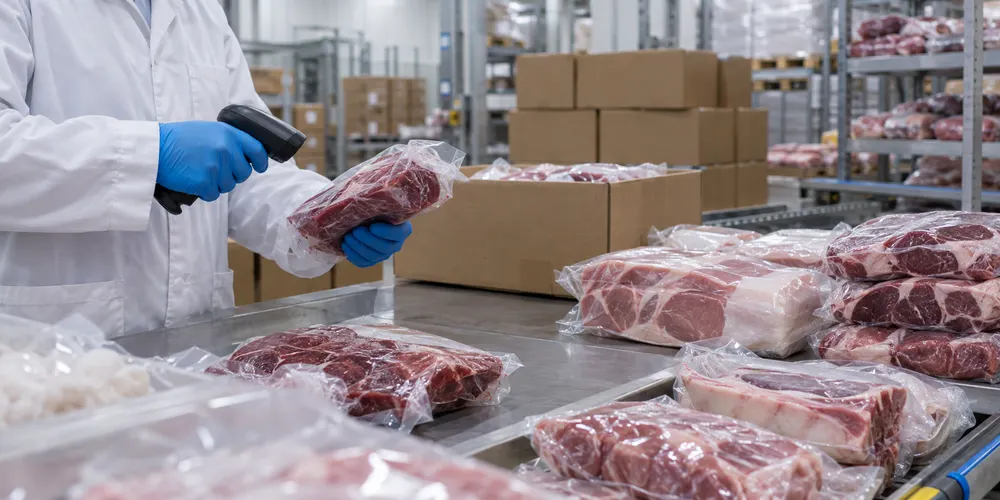
The federal list covers 23 bulk product descriptions, ranging from goat cuts and sliced ribeye to beef oxtail, short ribs, ground pork, chorizo, pork chops and menudo mix. Most were vacuum-sealed in individually wrapped packages and then packed in cardboard boxes under the A&D Foods name. The breadth of the list and its nationwide distribution make identification harder than a recall tied to one branded supermarket item.
Consumers may not see the distributor’s name or the suspect establishment number on the package in their freezer. USDA said retailers could have replaced or covered the original label with their own pricing and safe-handling stickers. A detailed product list published from the federal notice shows many items were sold in 10-, 20- or 30-pound cartons, indicating that restaurants and meat counters may have divided them before sale.
Inspection marks are traceability controls
A USDA inspection mark is not merely a marketing seal. Under federal law, meat products moving in commerce must carry required marks, labels and establishment identification, allowing inspectors and buyers to trace a product to a federally authorized facility. The number identifies the plant operating under a grant of inspection; it does not transfer automatically because the underlying meat came from another inspected supplier.
That distinction matters because federal oversight applies to handling and processing as well as slaughter. Cutting, repackaging, grinding and labeling can introduce new hazards or conceal allergens even when the incoming meat was inspected elsewhere. USDA’s label procedures require establishments to operate within the inspection system before applying the federal mark to finished products.
The company disputes USDA’s characterization
Star Meat Delivery said Thursday that “EST. 1363” had been legitimately reserved during its application for federal approval to process and package meat for A&D Foods. In a company statement, it said the meat came from a USDA-inspected supplier, denied that other products were mislabeled and said it was cooperating with authorities while completing the application.
USDA’s public notice nevertheless says the products were produced without the benefit of federal inspection and carried a false mark. Those statements are not reconciled by the fact that an application may have been underway: an application or reserved number is not the same as an active grant permitting use of the inspection mark. The agency had not publicly responded to the company’s account by late Thursday, according to the CNN report.
No reported illnesses does not establish safety
This recall is driven by a break in the inspection and labeling system, not by a confirmed outbreak or a positive test for a named pathogen. That limits what can be said about the immediate medical risk. The absence of reported illness is reassuring, but it does not demonstrate that every affected package is free of contamination, because consumers may still have frozen meat and foodborne illnesses are not always diagnosed or reported.
USDA advised restaurants and retailers not to sell or serve the products. Consumers should discard them or return them to the place of purchase, and anyone concerned about illness or injury should contact a health-care provider. Because store-applied labels may obscure the bulk package information, buyers who recently purchased unpackaged or store-wrapped beef, pork or goat may need to ask the retailer whether it received products from A&D Foods.
What the investigation must establish
The next questions are how long the products moved through the supply chain, which stores and restaurants received them, and whether the 167,639-pound estimate captures all affected inventory. USDA said it may update both the product list and labels as more information becomes available; a retail distribution list is expected on the agency’s recall page when it is ready.
The investigation also must determine how the establishment number reached the packaging and whether enforcement beyond the recall is warranted. No arrest or criminal charge had been announced by Thursday. Until USDA closes those gaps, the practical message is narrower but clear: the recall reflects missing federal oversight and an invalid inspection mark, not proof of a particular contaminant, and affected meat should not be consumed.