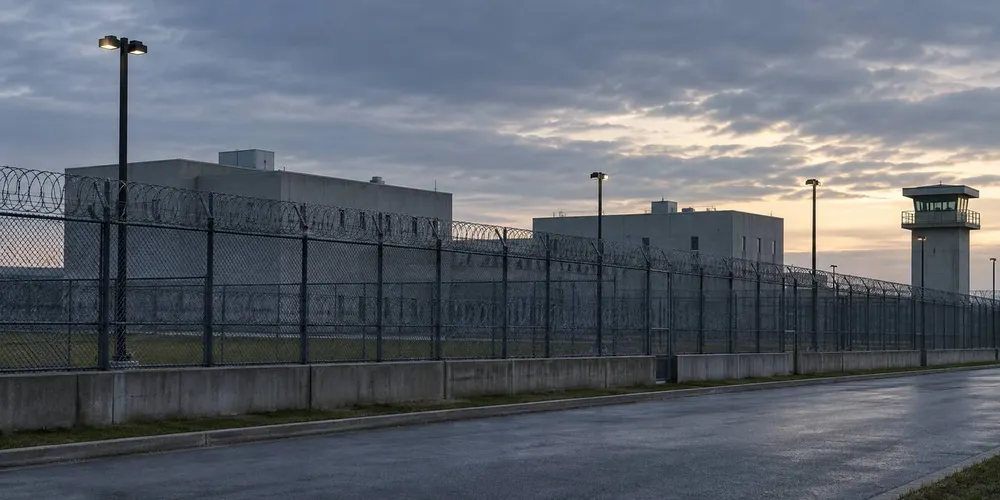
Tennessee has halted its remaining execution for 2026 and ordered an independent review after Christa Pike remained alive following two doses of pentobarbital during an attempted execution at a Nashville prison, a failure that state officials have not yet explained.
Gov. Bill Lee called the episode “deeply disturbing” on Thursday and said the public deserves answers, according to a Reuters update. An AP account said Pike was taken by ambulance to a hospital after the procedure; her condition had not been publicly disclosed by early Thursday afternoon.
The pause is broader than the immediate emergency. Lee ordered a comprehensive third-party inquiry and said Tennessee’s one remaining scheduled execution this year will not proceed. The decision turns a failed procedure involving one prisoner into a formal examination of the state’s execution system, with potential consequences for lethal-injection practices and constitutional litigation beyond Tennessee.
What happened inside the chamber
Pike, 50, was strapped to a gurney Wednesday evening after the U.S. Supreme Court lifted a federal appeals court stay. Media witnesses said she remained awake, raised her head and questioned how her arm felt. They later reported that a second set of pentobarbital syringes was administered at about 8:26 p.m. Central time. She could still be heard breathing and snoring before the microphone was cut off and witnesses were escorted out, according to the AP report and the Reuters account.
The Tennessee Department of Correction said it followed every step of the approved protocol. Its official notice said the chemical had “consistently been effective,” that the protocol authorized no additional procedures beyond those performed and that Pike had been transferred to an off-site medical facility. That statement confirms the department’s position; it does not establish why the two drug administrations failed to produce the intended result.
Pike’s lawyers filed emergency court papers alleging that she was experiencing unnecessary suffering. Those assertions remain legal claims, not findings by a court. The publicly established facts are that the execution was not completed, two sets of drugs were administered, emergency medical care followed and the governor suspended the remaining 2026 execution pending outside review.
An unprecedented drug failure
Robin Maher, executive director of the Death Penalty Information Center, described the episode as singular because other prisoners have survived execution attempts after teams failed to establish intravenous access, but no known prisoner had remained alive after the execution drug was delivered. The center’s case review and AP’s witness reporting both say the state administered two pentobarbital doses.
Tennessee adopted its single-drug pentobarbital protocol in late 2024 after an earlier review of execution procedures. The protocol provides for a second set of syringes if a prisoner is not dead after the first administration, but it does not publicly specify a further step if the second administration also fails, according to the AP review and the correction department’s state notice.
The failed procedure follows another Tennessee execution attempt in May that ended when officials could not establish an IV line. That earlier episode stopped before pentobarbital was administered, making Wednesday’s failure materially different. Lee’s new outside review will need to determine whether the problem involved the drug, its preparation, delivery, Pike’s physiology, the protocol itself or another cause. No official explanation had been released by the time of publication.
From court victory to institutional crisis
Only hours before the procedure, the Supreme Court had vacated a Sixth Circuit stay and allowed Tennessee to proceed. The court docket shows the order was granted after an emergency application from the state. Three justices dissented in a published court order, arguing that Pike’s pending claims deserved fuller consideration.
TAQ’s earlier report covered that judicial reversal. The new development is not another appeal or procedural delay: Tennessee attempted to carry out the sentence, could not complete it and has now suspended its next execution while an independent investigation begins.
Pike was sentenced to death for the 1995 murder of 19-year-old Colleen Slemmer, committed when Pike was 18. The victim’s family had waited more than three decades for the sentence to be carried out. Pike’s supporters had asked the state to consider her age, mental illness and history of abuse; prosecutors and state officials maintained that the sentence was lawful and final. The failed execution leaves neither side with resolution.
What happens next
Lee has not announced who will conduct the third-party review, its deadline or whether its findings will be public. The state also has not said whether it will seek a new execution date for Pike. Any second attempt would likely trigger fresh litigation over the Eighth Amendment’s prohibition on cruel and unusual punishment, but no court has yet ruled on that question in her case.
The immediate consequences are narrower and confirmed: Tennessee’s remaining 2026 execution is off, an external review is underway, and Pike’s medical status has not been disclosed. The larger national question—whether a two-dose failure exposes a defect in Tennessee’s protocol or a broader risk in single-drug lethal injection—will depend on evidence the state has not yet released.