The United States and nine partner countries have agreed to work together to protect the technologies and infrastructure behind advanced artificial intelligence. The San Francisco Declaration, signed Sunday in California, identifies physical and digital systems the governments want to safeguard and proposes five working groups. It sets a common agenda while leaving the details of how each country will carry it out to later work.
Australia, India, Israel, Japan, South Korea, Qatar, Singapore, the United Arab Emirates and the United Kingdom joined the United States, according to the State Department’s statement and Reuters. The meeting took place under Pax Silica, a U.S.-led effort to improve the security of supply chains for AI and related industries. The department said the governments see access to important technologies and the integrity of infrastructure as economic as well as national security concerns.
The declaration reaches beyond chips
Chips are central to the effort, but the joint text describes a broader set of inputs. It includes software, components, materials and knowledge used in production, as well as the equipment needed to make them. The governments are concerned about losses or unauthorized transfers that could give another actor economic leverage or a military or intelligence advantage. The declaration calls for diversification and cooperation on enforcement of the partners’ respective policies.
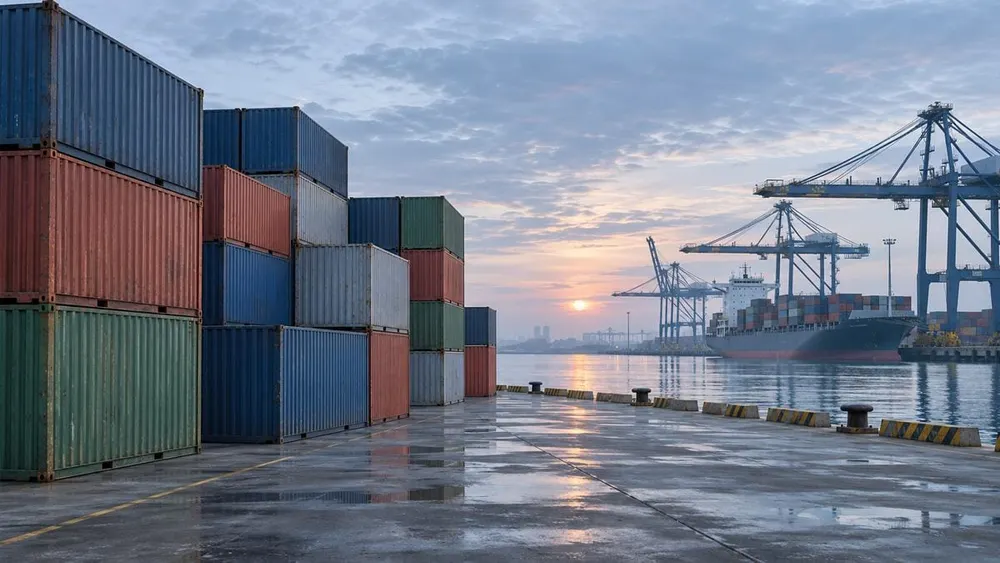
The text also treats infrastructure as part of the supply chain. Anadolu reported that it covers transportation, logistics, energy and digital systems. The declaration names ports, terminals, communications networks and the platforms that help coordinate them. That approach recognizes that a supply chain can fail when the systems moving or supporting goods are disrupted, even if factories and chip designs remain available.
The scope leaves room for different countries to contribute in different ways. One may be primarily concerned with chip production or manufacturing tools, while another may contribute logistics, energy or infrastructure. A shared description of the systems at risk gives the participants a way to compare priorities. It still leaves each government to decide how to apply its laws and allocate resources.
Five groups are meant to turn the pledge into work
The State Department announcement listed proposed groups on policy frameworks that support innovation, adoption of AI in key sectors, supply-chain cooperation, secure hubs and resilience. Those assignments separate questions that can otherwise be conflated. Encouraging businesses to use AI, for example, is a different task from agreeing which infrastructure needs coordinated protection. The working groups give the governments a place to address both under the same initiative.
The wording also reflects differences among participants. A footnote in the signed text says some countries use “artificial intelligence” where the declaration uses “super intelligence.” The policy effort is aimed at the systems needed to develop and deploy the technology. The declaration does not establish that machines have reached the kind of capability sometimes associated with that term.
Neither the declaration nor the accompanying announcement specified a shared implementation deadline, named projects or set out a new export licensing rule. Reuters reported that Washington has sought to use Pax Silica to move partners toward shared projects and coordinated export controls. The distinction matters to companies that build or sell equipment. A pledge can shape later policy without immediately changing the terms under which they can sell a product or build a plant.
What would show the agreement is taking effect
The Financial Times reported that the effort comes amid competition with China and concerns about the concentration of some critical inputs. The declaration itself describes excessive dependencies and economic coercion without naming China in the operative text. Participants can agree that concentrated supply poses a risk while still deciding separately which relationships they are prepared to change and how to diversify them.
Japan’s foreign ministry said seven governments signed the original Pax Silica declaration in Washington in December 2025. The California statement includes those countries and three others. That expansion gives the working groups more governments to coordinate across and makes the eventual details important. A protection shared by some partners may require different national steps elsewhere, depending on how each country regulates trade and infrastructure.
A first practical sign of progress would be the working groups identifying a set of shared priorities and deciding where existing national controls can work together. Investment or infrastructure announcements would offer more evidence of cooperation. For now, the government statement shows agreement on what types of assets need attention. It leaves businesses and regulators waiting for details about projects, standards and any changes to domestic rules.
The earlier Pax Silica initiative brought these issues into a shared diplomatic forum. Sunday’s declaration gives the ten signatories a more specific set of subjects to work on, from ports and power to equipment and software. The central question for the next phase is which protections governments can apply jointly and which will continue to depend on country-by-country decisions.