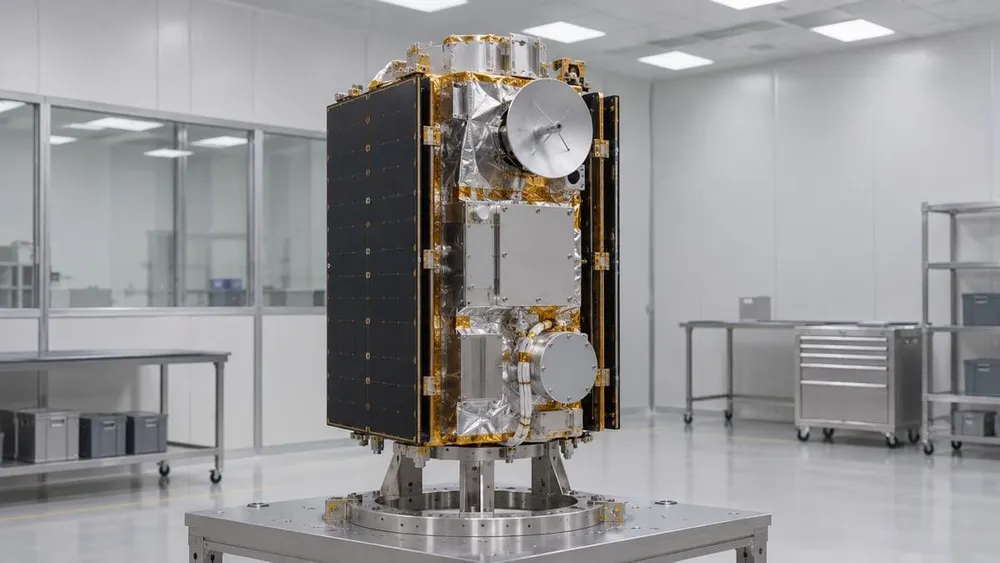
United Launch Alliance lost 40 Amazon Leo broadband satellites Sunday when its Vulcan rocket failed to deliver them to orbit after lifting off from Cape Canaveral, Florida. The company said the problem occurred about 10 minutes into the flight, according to CBS News. Amazon confirmed the payload was lost. The mission was meant to begin a series of Vulcan launches for Amazon’s satellite internet network.
The loss was the first outright mission failure for United Launch Alliance, the joint venture Boeing and Lockheed Martin formed in 2006, Reuters and Ars Technica reported. It also came on Vulcan’s first flight in nine months. The company confirmed a problem in flight but did not identify the cause in its initial statement. Investigators will have to determine what went wrong before the effect on future missions can be assessed.
Why the flight was important to Amazon
Amazon plans to use satellites in low Earth orbit to provide internet service. The mission profile describes Sunday’s batch as the largest payload yet assembled for a single Amazon Leo launch. The 40 spacecraft were meant to join those already in orbit. Reuters reported that Amazon had launched 398 satellites across 14 missions before the failure. Those launches are distinct from the 40 spacecraft lost Sunday.
One launch can place dozens of spacecraft into orbit at once. That helps a broadband operator grow the network faster, but each flight also concentrates more of the rollout into a single event. If a batch is lost, Amazon must account both for the missing satellites and for the launch capacity needed to replace them. The number deployed matters to the network’s growth because the service depends on many satellites working together as they move across the sky.
United Launch Alliance’s mission page describes Sunday’s flight as the first of 38 Vulcan missions for Amazon after eight successful deployments on its Atlas V rocket. For Amazon, the transition to Vulcan was intended to provide repeated access to space with substantial payloads. For United Launch Alliance, the flights represented a recurring commercial customer for the rocket it is using to succeed Atlas V.
Other launches offer a way to keep deploying
The planned distribution of the spacecraft was also part of the job. United Launch Alliance’s mission description specified a low Earth orbit delivery. The rocket needed to reach the intended orbit and release the batch before the satellites could become part of the network. The failure came before that handoff. In its public account, Amazon treated the entire payload as lost, so these spacecraft cannot count toward the orbital fleet regardless of how far the rocket got after leaving the ground.
Amazon does not use a single rocket provider. Its launch updates say Arianespace is targeting November 23 at the earliest for a flight carrying 36 Leo satellites from French Guiana. The separate flight gives the program a way to continue adding satellites without waiting for another Vulcan mission, provided it goes ahead. It does not show how long it will take to make up the 40 satellites that were lost.
The company has also booked flights with SpaceX, its competitor in satellite broadband, according to Ars Technica. Using more than one launch provider can reduce the impact of a problem with a single rocket. The pace still depends on available launch slots and the number of satellites each flight can carry. Moving a future batch to a different provider would also depend on whether a suitable flight can accommodate it.
Amazon officials previously told Ars Technica that they expected to have enough satellites in orbit for initial commercial service by the end of the year. The same report said additional flights would be needed for the network’s full capacity. Offering service in an initial area is a different milestone from reaching the intended scale, and the loss of a batch does not by itself establish when Amazon will meet either milestone.
What the companies still need to establish
United Launch Alliance’s initial account established the timing of the problem and that the satellites did not reach orbit. Neither that account nor Amazon’s mission update identified the failed component. A return to flight will depend on what the launch provider learns and what it needs to change or verify before another mission. Until then, the remaining launch reservations establish what the companies had planned, not a new timetable.
Amazon has said it has hundreds of satellites ready for launch, according to its mission preview. That makes a supply of launch opportunities important to turning completed spacecraft into an operating network. The next confirmed deployments will show whether the company can keep adding satellites using its other providers while it waits for clarity from United Launch Alliance. Neither company’s initial statement gave a replacement date for Sunday’s lost payload.