
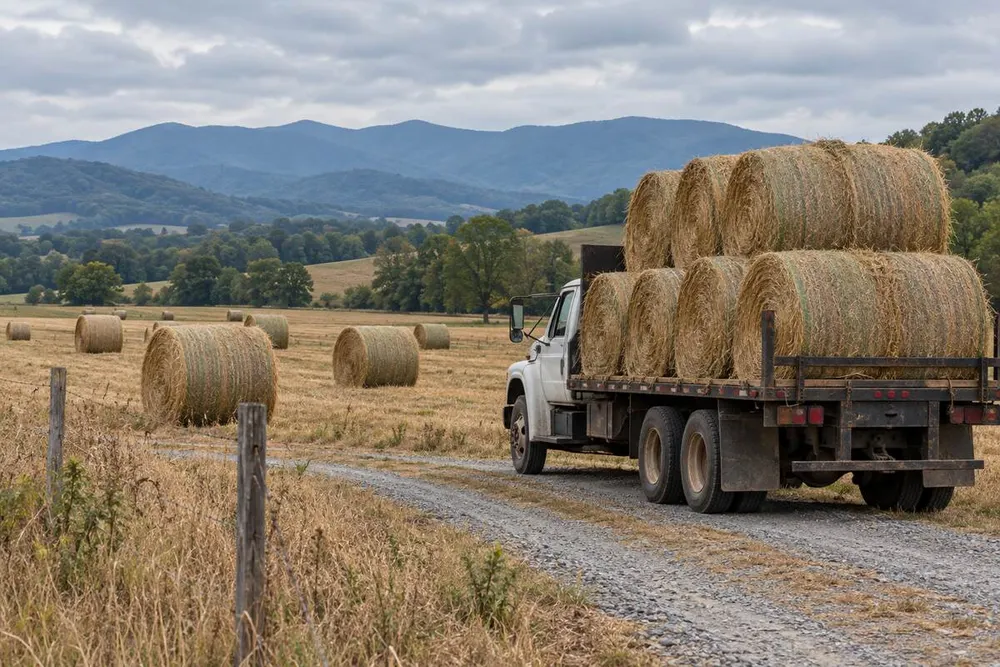
Virginia’s emergency transportation relief for a severe statewide hay shortage will begin Oct. 1, giving farmers and haulers a 30-day window to move wider loads without the usual permit process.
Gov. Abigail Spanberger declared a state of emergency on Sept. 16 after persistent drought produced an estimated 500,000-ton hay shortfall—about 1 billion pounds. Her executive order remains in force for 45 days unless amended or rescinded. The delayed start for the transport waiver gives producers time to locate hay and arrange trucks before a federally limited 30-day exemption period begins.
The waiver allows over-width hay loads on state roads without standard applications and fees and provides temporary relief from certain driver hours-of-service rules for shipments directly supporting the drought response. It covers hay moving to, through or from Virginia, including supplies brought from other states.
Important safety limits remain. The Agriculture Department says gross and axle weight limits are not waived, and haulers must obtain a permit if a load exceeds the dimensions allowed by the emergency exemption. Interstate routes also remain subject to their own restrictions, while carriers outside Virginia must follow the rules of the state in which they are operating.
The shortage developed after drought cut Virginia hay yields by an estimated 35% statewide, with losses reaching 70% in some areas, according to Virginia Cooperative Extension figures cited by the administration. Many livestock producers also began feeding stored hay early because pastures could not provide enough forage. The result is less feed available before the winter season, when cattle and other livestock normally depend heavily on stored supplies.
The scope of the drought is unusually broad. As of Sept. 8, every Virginia county and independent city except Norfolk had received a federal drought disaster designation at some point during 2026, according to the state’s resource page. Virginia Cooperative Extension has also posted the Oct. 1 date prominently for producers planning deliveries.
The emergency declaration does more than relax transportation rules. It authorizes state agencies to streamline relief, makes emergency funding available and activates Virginia’s price-gouging protections for hay procurement and transportation. Those protections prohibit unconscionable price increases during the emergency but do not set a fixed statewide hay price.
For livestock operators, the immediate task is logistical. The state recommends assessing forage inventories, contacting suppliers early and documenting drought damage with local Extension agents and Farm Service Agency offices. The Virginia Department of Agriculture and Consumer Services links to a hay clearinghouse and directories in nearby states.
A production analysis put the shortfall near one-fifth of Virginia’s 2025 hay output, underscoring why transportation flexibility matters even though it cannot create new supply. The waiver can reduce delays and widen the pool of reachable sellers; farmers still face the cost of buying and hauling feed over longer distances.
State officials and agricultural groups will be watching whether the October window moves enough hay before winter. If drought impacts or supply problems persist, the order permits additional action, but no extension or broader waiver has been announced.