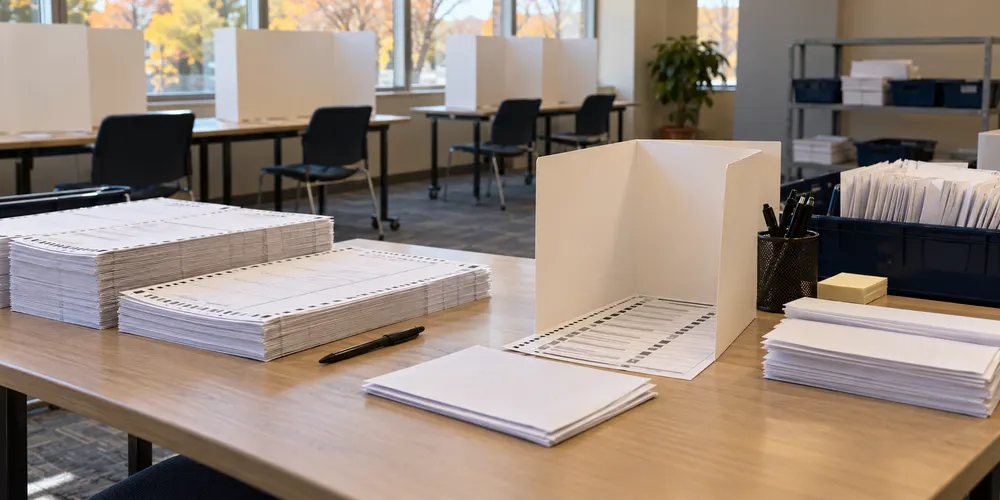
Minnesota election officials distributed 384,995 absentee and mail ballots during the first six days of voting for the Nov. 3 general election, an early surge in outbound ballots that state officials say will be tracked weekly through the fall.
The state release, dated Sept. 24, reports that 8,403 voters had cast ballots in person and another 3,919 had returned ballots by mail. That makes 12,322 ballots cast or returned by the end of the reporting period. The distribution figure is much larger because it counts ballots sent to voters, not votes already completed.
The comparison with the last midterm election shows both the scale of the mailing operation and the need to separate mailed ballots from actual turnout. In the first week of the 2022 general-election voting period, local officials sent 286,324 absentee and mail ballots and recorded 11,380 ballots cast in person or returned by mail. This year’s completed-ballot total was 942 higher at the same checkpoint, while the number distributed was nearly 99,000 higher.
Voting began Sept. 18, 46 days before Election Day. Minnesota’s official mail guide says voters may request an absentee ballot online and recommends applying by Oct. 20 to allow time for processing, delivery and return. About 150,000 registered voters live in mail-ballot precincts and receive ballots automatically, according to the Secretary of State.
Deadlines depend on how a ballot is returned. An absentee ballot delivered in person must reach the local election office by 5 p.m. on Nov. 3. Absentee ballots returned by mail and ballots from mail precincts must arrive by 8 p.m. that day. Voters can use the state’s online tracking tool to confirm when election officials mailed and received their ballot.
Early in-person voting continues at local election offices through Nov. 2. The state’s in-person guide directs voters to county or municipal election offices and notes that voters can register or update their registration when they vote early. Beginning Oct. 16, Minnesota’s new early-voting process allows voters to place their ballot directly into a tabulator rather than use the absentee-ballot envelope process.
Local administrators also face a sustained workload rather than a one-day rush. Olmsted County’s voting page, for example, directs residents to several early-voting locations and explains that ballot availability begins 46 days before the election. County-specific hours and locations can vary, making the statewide locator and local election-office pages important practical references.
The first-week figures do not forecast the final turnout or partisan result. They do show that Minnesota’s election system is already processing a large volume of ballot requests, mailings and returns more than a month before Election Day. The most useful next indicators will be weekly return totals, the split between mail and in-person voting, and whether the widening gap between ballots sent and ballots completed narrows as deadlines approach.