
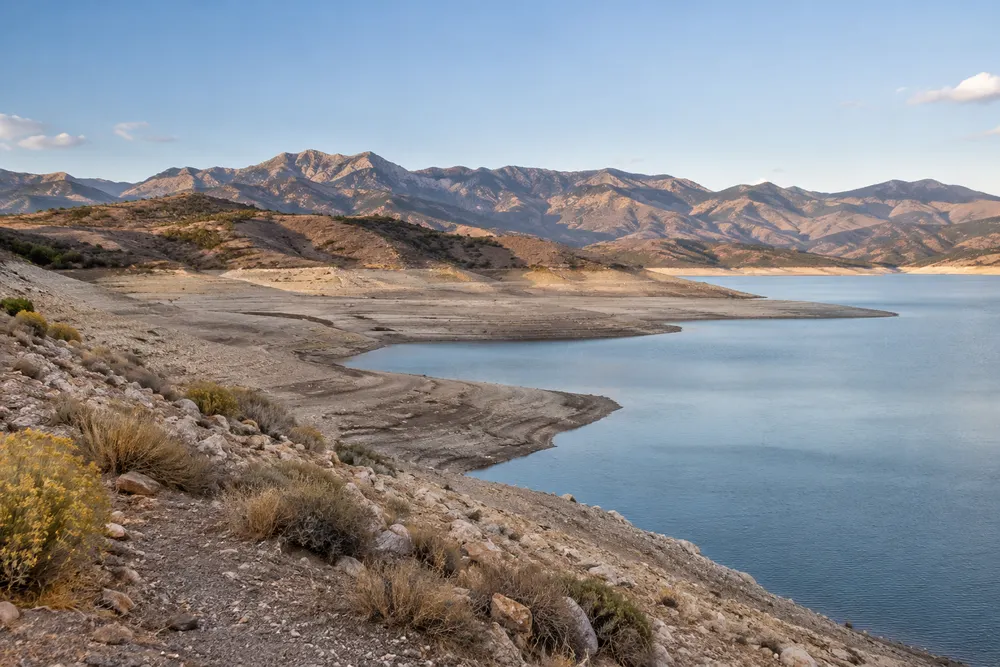
Utah’s reservoirs average 50% full as the state closes its water year, with every part of Utah now experiencing some level of drought. The Division of Water Resources reported the conditions on Sept. 17 and urged residents to reduce or stop landscape irrigation as cooler nights lower seasonal water demand.
Storage in the state reservoirs measured by the division—excluding Lake Powell and Flaming Gorge—stands 9 percentage points below normal for this point in the year and 13 points below the same time last year. The statewide reservoir data show why managers are emphasizing carryover supplies: larger reservoirs can buffer multiple dry years, while smaller systems depend more heavily on the next snowpack.
Low storage has practical effects
Palisade State Park’s reservoir was reported at 4%, and its boat ramp is closed. Utah State Parks maintains current ramp conditions for visitors because falling water can make launches unsafe or unusable. Separately, the Davis and Weber Counties Canal Company shut down its secondary-water system Sept. 15 after below-normal runoff and a hot, dry summer.
Low water also changes public-health and recreation decisions. The state warned that harmful algal blooms are occurring across Utah and directed residents to current water advisories before swimming, boating or allowing pets near affected water. Conditions can vary by waterbody and can change faster than the statewide storage average.
River conditions also remain uneven. The state reported natural flow on the Upper Provo River at 7.4 cubic feet per second, enough for about 2.4% of direct-flow rights. The Upper Sevier was running at 62 cubic feet per second, or about 10% of first-class direct-flow rights, and below levels recorded during the 2021 drought year. Those measurements describe particular systems rather than a uniform statewide shortage, but they show how sharply local availability can diverge from the statewide reservoir average.
The next water year starts Oct. 1
The U.S. Drought Monitor’s current state map confirms drought across Utah. August monsoon storms improved mountain soil moisture in much of the state, according to water managers. That provides some benefit because wetter soil can absorb less of next spring’s snowmelt before runoff reaches streams and reservoirs, though winter precipitation will remain decisive.
One prominent drawdown has an additional cause. Pineview Reservoir is being lowered so Ogden can perform construction and maintenance on a drinking-water pipeline beneath the reservoir. The city’s project site provides expected lake levels and construction updates, separating that planned work from drought-driven declines elsewhere.
For households, the state’s immediate advice is operational: adjust automatic sprinklers rather than leaving them on summer settings, monitor local secondary-water notices and check recreation advisories before travel. The figures do not forecast next year’s supply, but they establish a weaker starting point as Utah begins measuring the 2027 water year on Oct. 1.