Texas’s regular duck season begins October 24 in the High Plains Mallard Management Unit, with southern and northern openings following in November. State biologists are urging flexibility: improved wetlands in some regions do not erase longer-term population pressures or guarantee birds at a particular hunting spot.
In its October 12 season outlook, the Texas Parks and Wildlife Department said better breeding habitat could produce more juvenile ducks even while overall numbers remain a concern. That is a forecast about the coming season, not a completed count of birds arriving in Texas.
The agency’s regional assessment was uneven. Late-September rain had replenished High Plains playa wetlands. In East Texas, low summer reservoirs had exposed shorelines where seed-bearing vegetation grew, creating potential feeding habitat as water returned. The Gulf Coast remained short of freshwater after late-summer heat and dryness, with some available water supplied through pumping or irrigation canals.
Breeding estimates are not a Texas arrival count
The U.S. Fish and Wildlife Service’s September 1 population report provides a more specific national breeding-ground comparison. It estimated 33.4 million ducks in the traditional survey area, statistically unchanged from 2025 and 6% below the long-term average. Estimated ponds across Prairie Canada and the north-central United States increased 14% from the previous year but remained 9% below average.
Those estimates cover defined breeding survey areas, not every duck species or the number that will winter in Texas. Better breeding habitat, juvenile production and local autumn conditions describe different parts of the season; none establishes an individual hunter’s likely harvest.
The federal report says its findings will inform development of 2027–28 harvest rules. It is not a substitute for Texas’s posted 2026–27 regulations, which govern the openings below.
Openings and limits vary by zone
The current duck regulations list the High Plains regular season as October 24–25, followed by October 30–January 31. The South Zone runs November 7–29 and December 12–January 31. The North Zone opens November 14–29, then resumes December 5–January 31. January dates are in 2027.
The regular daily duck limit is six in the aggregate, but species restrictions apply. Dusky ducks—including mottled ducks, Mexican ducks, black ducks and their hybrids—are closed during the first five days of each zone’s regular season. A six-bird total therefore does not authorize six of any species.
Separate goose rules open regular light- and dark-goose seasons November 7 in both goose zones, but closing dates differ by zone and group. Goose-zone boundaries are different from duck-zone boundaries; hunters should check the official county and species listings rather than assume one statewide calendar.
TPWD’s rules require a valid hunting license and applicable migratory-bird credentials, including HIP certification and a federal duck stamp for waterfowl hunters 16 and older. Check the full license, endorsement and location-specific requirements before leaving. The regional habitat descriptions are dated observations, not current access or water-level guarantees.
Follow National news and Texas news from The American Quorum.
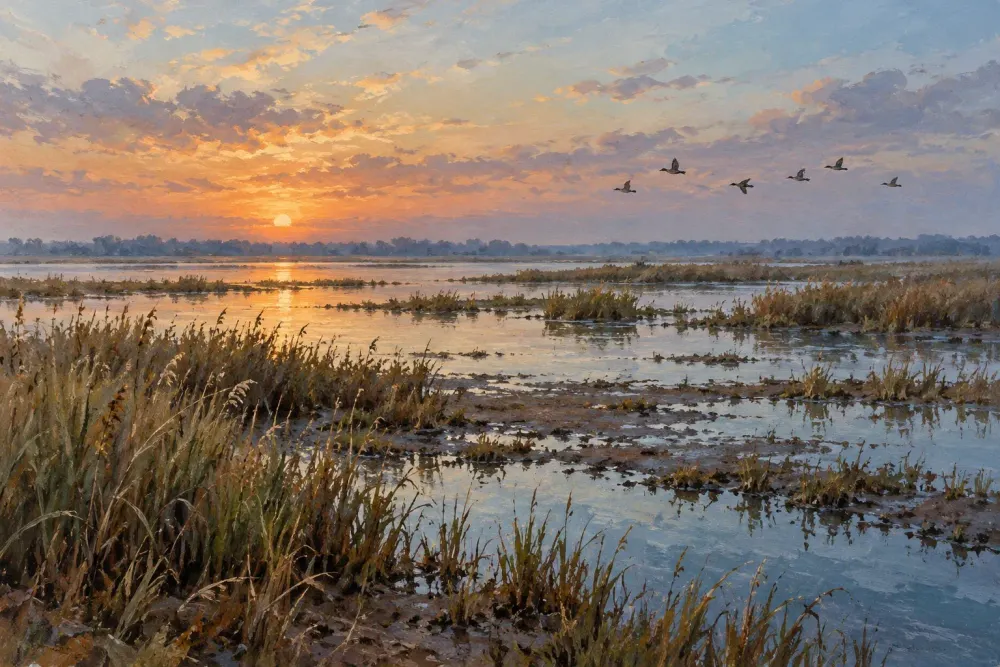
Illustration: AI-generated conceptual wetland, not a photograph of an actual Texas site or evidence of current bird abundance.