
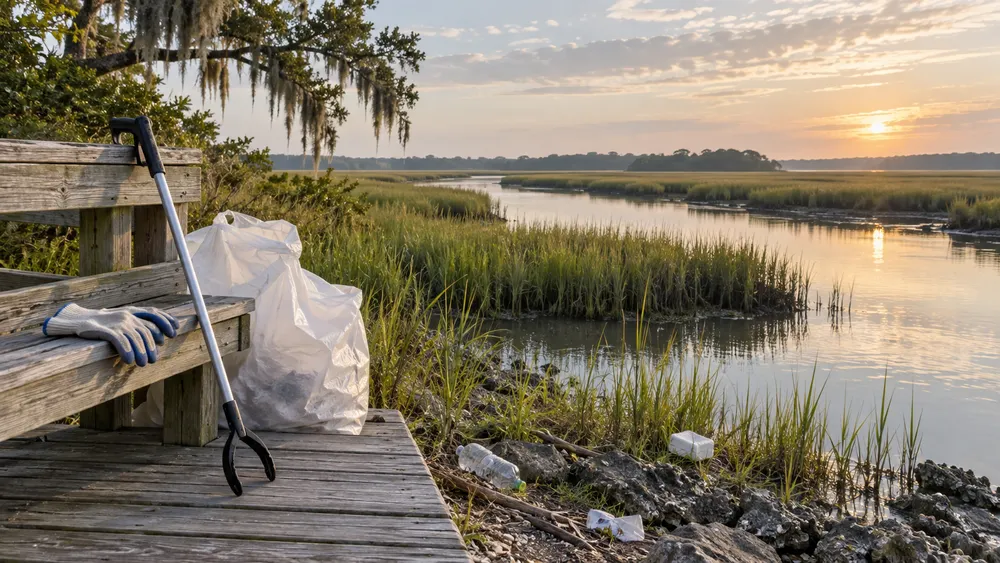
South Carolina’s largest one-day volunteer waterway cleanup returned Saturday, Sept. 19, with organizers directing volunteers to nearly 100 sites across the state. The 37th annual Beach Sweep/River Sweep covered beaches, marshes, rivers, lakes and other waterways, linking coastal crews organized by the S.C. Sea Grant Consortium with inland crews coordinated by the Department of Natural Resources.
The statewide event is broader than a single shoreline campaign. Sea Grant’s program overview says the cleanup has been held on the third Saturday of September since 1988 and operates in conjunction with Ocean Conservancy’s International Coastal Cleanup. Organizers describe it as a way to remove aquatic debris while also documenting the kinds of litter reaching South Carolina waters.
Most 2026 cleanups began at 9 a.m. Saturday, but the schedule was deliberately decentralized. The official coastal site list included locations from Cherry Grove Beach and the Waccamaw River in the north to Hilton Head, Fripp and Daufuskie islands in the south. It also showed land- and water-based work in urban creeks, parks, boat landings, marshes and beaches. Some local dates differed: several sites cleaned earlier in September, Gadsden Creek in Charleston was scheduled for Sept. 20, and a Sylvan Shores cleanup along the Stono River is set for Sept. 26.
That spread matters for residents trying to assess whether the event reached only tourist beaches. The listed projects included inland waterways, city parks and tidal creeks as well as oceanfront areas. Coastal volunteers were directed through Sea Grant, while an SCDNR volunteer map covered inland opportunities.
The agencies have not yet published a final 2026 statewide debris total. Their advance release instead supplied a benchmark from 2025: 4,150 volunteers removed nearly 24 tons of material across 972 miles. The collection included bottles, cans, food containers, clothing, toys and cigarette butts, along with larger items such as appliances, tires, dock pieces and building materials. Organizers said material is recycled where possible.
Those figures should be treated as the prior year’s result, not an estimate of what Saturday’s volunteers collected. Sea Grant maintains a separate archive of past cleanup results, but the 2026 outcome will depend on reports from local site captains after crews finish and consolidate their records.
The institutional roles are also distinct. Sea Grant leads the beach component, while SCDNR leads inland cleanups; local governments, schools, conservation groups, businesses and civic organizations host many of the individual sites. The 2026 site list named captains and meeting points for each cleanup, underscoring that the statewide count represents many locally managed operations rather than one centrally staffed event.
For communities with later dates, residents should use the current site listing rather than assume the Sept. 19 statewide date applies everywhere. For the statewide picture, the next consequential measure will be the final participation, mileage and debris totals — data that will show whether the 37th sweep matched or exceeded last year’s scale.