
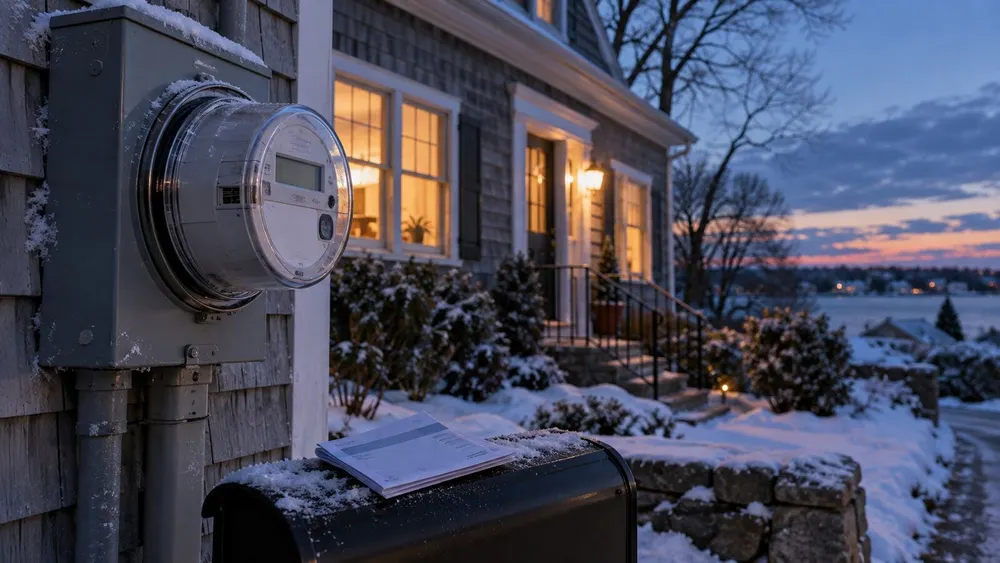
Rhode Island regulators have approved a $61.35 winter electricity credit for more than 450,000 residential accounts, distributing $28 million from carbon-auction reserves across bills in January, February and March 2027.
Customers on Rhode Island Energy’s A-16 and A-60 residential rates will receive $20.45 in each of the three months. The approval followed an Office of Energy Resources petition in PUC Docket 26-28-EL, which includes the state’s tariff advice, the utility’s proposed credit schedule and the Division of Public Utilities and Carriers’ position memorandum.
Gov. Dan McKee’s office announced approval Thursday, Sept. 24. The credits are designed to cushion an expected winter supply-rate increase rather than eliminate it. McKee’s July emergency order said Rhode Island Energy’s residential Last Resort Service rate was expected to rise about 15% from the prior winter period.
The money comes from Regional Greenhouse Gas Initiative auction reserves. Under Executive Order 26-05, McKee directed the state energy office to place $28 million into uniform residential credits while avoiding material disruption to other RGGI-backed programs. The order cited high delinquency, rising assistance requests and Rhode Island’s already elevated electricity prices as grounds for emergency action.
The fixed credit does not alter the underlying supply tariff or distribution charges. It instead appears as a temporary offset after the rest of the bill is calculated. That structure allows the same dollar benefit to reach every qualifying account, regardless of household electricity consumption during the three billing periods.
The new credit is separate from a larger set of “hold harmless” credits tied to PPL Corp.’s acquisition of the former Narragansett Electric Co. Rhode Island Energy’s compliance filing appears in a different PUC docket. Those acquisition-related credits are expected to lower electric bills by about $14 monthly beginning in October, according to the governor’s office.
During January through March, the two credits together should reduce an eligible residential bill by roughly $34 a month, or more than $100 across the three-month period. That is a credit amount, not a forecast of a household’s net savings after changes in electricity use, supply prices and other bill components.
Independent coverage from Providence Business News confirmed the commission’s $28 million approval and the first $20.45 credit scheduled for January. The public docket also shows that regulators held a public-comment hearing Sept. 14 and an evidentiary hearing Sept. 16 before reaching the decision.
The practical effect will depend on each customer’s total winter bill. The credit is a fixed dollar amount rather than a percentage discount, so it will offset a larger share of a smaller bill and a smaller share of a high-usage bill. Customers do not need to apply: the approved tariff places the credit automatically on qualifying residential accounts.
The next verification point comes with January statements. Those bills should show the first $20.45 RGGI credit alongside the separate acquisition-related credit, making clear how much of the promised relief reached each account.